
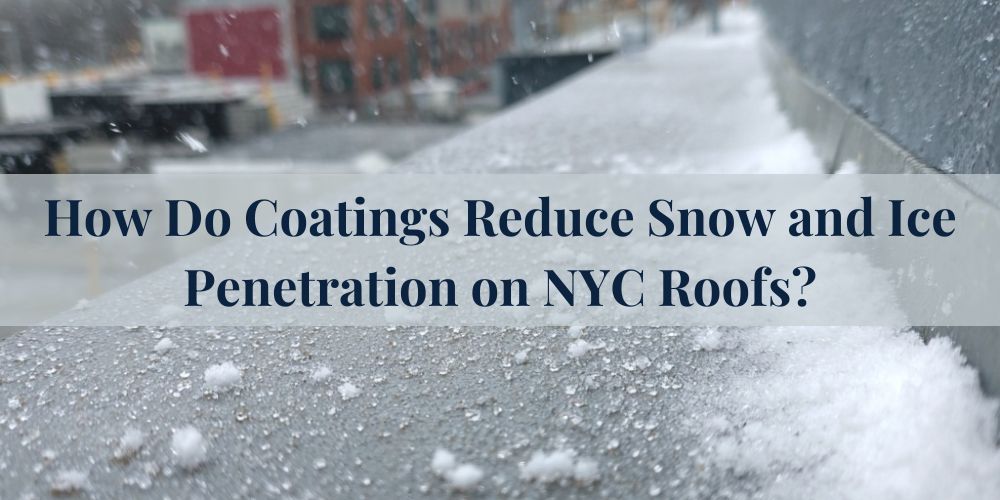
Snow and ice damage on New York commercial roofs occurs when meltwater is able to penetrate seams, cracks, and porous surfaces before refreezing and forcing those openings wider. Preventing that process is the role of Commercial Roofing New York, the company that applies and maintains commercial roof coating systems specifically to block moisture intrusion under NYC’s winter conditions.
Every coating system installed by Commercial Roofing New York is designed to create a continuous, impermeable barrier across the roof surface, sealing fasteners, seams, and micro-cracks that would otherwise allow snowmelt and ice to work their way into the roof assembly. These coatings also stabilize surface temperature and protect the underlying membrane, reducing the freeze-thaw movement that causes leaks to develop in untreated roofs. This article explains how Commercial Roofing New York uses roof coatings to prevent snow and ice penetration on NYC buildings. It covers how coating chemistry, thickness, and application methods work together — and why these systems are essential for extending roof life in New York’s winter climate.
How Does Commercial Roofing Perform Against New York's Harsh Winters?
Commercial roofing systems are designed to withstand New York's harsh winters if correctly installed and maintained. This performance is due to a combination of carefully selected materials, construction techniques, and maintenance practices. Commercial roofs must endure below-freezing temperatures, heavy snow loads, ice dams, and winter storms.
The key factors that enable these roofing systems to perform efficiently in the demanding New York winters include them:
- Snow Load Capacity
- Ice Damming Resistance
- Thermal Cycling Endurance
- Ultraviolet (UV) Reflective Performance
- Freeze–Thaw Resistance
1. Snow Load Capacity
Snow load capacity refers to a roof's ability to bear the weight of accumulated snow.
In New York, heavy snowfall is a common winter occurrence. A commercial roof with a high snow load capacity is crucial to prevent structural damage or collapse.
The snow load capacity depends on the roof's construction, including materials like durable membranes and robust insulation. Commercial roofs in New York should be designed with a facet slope and drainage systems to allow for effective snowmelt and runoff. Regular inspections and snow removal can also help maintain a roof's snow load capacity throughout winter.
2. Ice Damming Resistance
Ice damming resistance is the ability to withstand water intrusion caused by ice dams.
In the frigid climate of New York, ice dams can form when the roof's upper sections get warmer than the lower areas. To combat this issue, commercial roofing must possess a strong ice damming resistance.
Membrane seams play a crucial role. By ensuring tight seals and continuous coverage, these seams prevent water seepage into building interiors. Flashing and fasteners should also be high-grade to resist the corrosive effects of accumulated ice. Moreover, heating cables can be installed to prevent ice formation.
3. Thermal Cycling Endurance
Thermal cycling endurance pertains to a roof's resistance to regular temperature changes.
New York winters can cause frequent day-night temperature fluctuations. A roof with high thermal cycling endurance can withstand damage from these changes.
Roof components, such as membranes and insulation, should be designed to accommodate expansion and contraction. For example, flexible membrane materials like TPO and PVC can resist cracking or splitting during thermal cycling.
4. Ultraviolet (UV) Reflective Performance
UV reflective performance is the ability to reflect sunlight and reduce absorbed heat.
Despite being associated with winter, the sun can still damage New York commercial roofs during clear, cold days. Heat retention exacerbates thermal cycling effects.
Reflective roof coatings are a solution. These coatings not only reflect UV radiation but also serve as a protective layer over the roof membrane, reducing surface temperature and minimizing thermal shocks.
5. Freeze–Thaw Resistance
Freeze-thaw resistance is a roof's ability to withstand the repeated cycle of freezing and thawing.
In New York winters, freeze-thaw cycles are common and potentially damaging to a commercial roof system. Therefore, a roof must have adequate freeze-thaw resistance.
The quality of the roof's substrate and membrane directly impact this factor. Waterproof materials like EPDM and modified bitumen withstand moisture infiltration, preventing damage from freeze-thaw cycles. Drains should also be maintained to keep water off the roof, reducing the frequency of these cycles.
Have a question about an upcoming project?
What Impact Do New York's Freeze-Thaw Cycles Have on Commercial Roofing Lifespan and Maintenance?
New York's freeze-thaw cycles significantly affect commercial roofing's lifespan and required maintenance by exacerbating typical wear-and-tear processes. The constant temperature fluctuations cause repeated expansions and contractions, leading to increased strain on roofing materials. Winter precipitation contributes to excess weight and water damage potential, putting additional stress on roof structures.
While each roofing system has varying degrees of susceptibility, there are five key factors that define the impact of freeze-thaw cycles on commercial roofing in New York. These are: Membrane Elasticity, Thermal Insulation Performance, Drainage Efficiency, Flashing Integrity, and Fastening Method.
- Membrane Elasticity
- Thermal Insulation Performance
- Drainage Efficiency
- Flashing Integrity
- Fastening Method
1. Membrane Elasticity
Membrane elasticity refers to the flexibility of the roof membrane.
This property becomes critical in New York's freeze-thaw cycles as it can mitigate the strain caused by temperature-induced expansion and contraction. Membrane elasticity is paramount for withstanding the effects of the freeze-thaw cycle without cracking or tearing.
Roofs with high-quality elastomeric membranes can better endure repeated flexing from freeze-thaw cycles. However, with each cycle, a roof's elasticity is tested, decreasing its overall lifespan. The more elastic a membrane is, the more it can flex without damaging, resulting in less frequent need for repairs or replacements.
2. Thermal Insulation Performance
Thermal insulation performance pertains to a roofing system's ability to minimize heat flow.
Effective insulation can lessen the impact of New York's extreme temperature swings on the roof's interior structure. By minimizing temperature differences, thermal contraction and expansion are reduced, hence preserving the roof's integrity.
Well-insulated roofing components such as closed-cell spray foam insulation can restrict the internal temperature shifts in commercial facilities, mitigating damages from freeze-thaw cycles. However, if the insulation layer fails due to water intrusion or physical damage, heat loss will intensify, leading to more extreme thermal cycles and increased material strain.
3. Drainage Efficiency
Drainage efficiency refers to how effectively a roof channels away precipitation and meltwater.
In New York, winter precipitation often results in significant water accumulation on commercial roofs. Proper drainage is integral to preventing ponding water, which can exacerbate damage during freeze-thaw cycles.
Insufficient roof drainage results in standing water, which expands when it freezes and puts stress on roof components, which can, over time, cause structural failure. A well-designed commercial roofing system will include slope, drain placement, and other features to promote rapid water runoff, minimizing freeze-thaw damage and prolonging the roof's lifespan.
4. Flashing Integrity
Flashing integrity involves the condition of the thin pieces of material installed to prevent water penetration at roof intersections and protrusions.
Flashing suffers from the same expansion and contraction challenges as the roofing membrane in New York's freeze-thaw cycles, leading to potential leaks around roof protrusions and peripheral elements. Proper flashing maintenance is an essential component in extending the lifespan of commercial roofing.
Freeze-thaw cycles can loosen or crack flashing materials, allowing moisture to gain entry and further damage the roof system. Regularly inspecting and maintaining or replacing damaged flashing is crucial for preventing leaks and water damage, especially throughout the winter season.
5. Fastening Method
The fastening method relates to how the roof's components are attached together and to the building structure.
In regions like New York, where freeze-thaw cycling is common, fastening methods must securely hold roofing components in place despite expansion and contraction. A robust fastening technique is critical to commercial roofing longevity and maintenance under these conditions.
Temperature fluctuations can loosen screws, nails, and other fasteners holding the roofing system in place, leading to material detachment and potential damage from wind uplift. Mechanically attached systems relying on sturdy fasteners can combat these issues, making regular fastener inspections and proper installation crucial to ensure the system remains intact and performs optimally throughout the freeze-thaw cycles.
What Factors Should Guide Your Decision in Choosing Commercial Roofing in New York?
The considerable weather variations experienced in New York present unique challenges that necessitate careful consideration when selecting a commercial roofing system. This environment requires a roof with exceptional cold and heat tolerance, resistance to significant wind and snow loads, and capability to withstand heavy rainfall. It’s also vital to note that New York’s urban location exposes roofs to pollutants, necessitating advanced resistance to chemical exposure.
The following key factors should guide your decision in choosing a commercial roofing system suitable for New York's demanding conditions:
- Thermal Performance
- Wind Uplift Resistance
- Snow Load Capacity
- Water Drainage Performance
- Chemical Resistant Properties
1. Thermal Performance
Thermal performance refers to a roof’s ability to withstand fluctuating temperatures without failure.
In New York, the roof must handle both harsh winters and hot summers, without cracking, blistering, or bubbling. A well-performing roof in this aspect reduces the risk of thermal shock causing damage to the membrane of the roof.
The physical mechanism that leads to failure in poor thermal performance relates to the contraction and expansion of the roof's membrane. In low performance roofing, these thermal cycles can result in weaknesses or cracks that allow water intrusion. A single-ply membrane with high thermal performance can expand and contract with temperature changes without weakening, reducing the risk of leaks and extending the roof's lifespan.
2. Wind Uplift Resistance
Wind uplift resistance refers to a roof's ability to remain secured to the building even in strong winds.
Given New York's susceptibility to strong storms, this factor is vital. Your commercial roof's attachment system must resist wind forces to prevent wind uplift, especially around the edges and corners.
Wind uplift occurs when high winds create pressure differentials, which can cause the roof to lift, ripping the fasteners from the substrate. A commercial roofing system with adequate wind uplift resistance uses strong mechanical attachments and secured membrane seams to ensure the roofing material remains in place during high winds. The consequence of poor wind uplift resistance can be devastating, requiring significant repairs or even a full roof replacement.
3. Snow Load Capacity
Snow load capacity is a measure of a roof's ability to bear the weight of accumulated snow.
This is particularly pertinent in New York with the potential for heavy snowfall. Failure to accommodate this can lead to roof collapse or damage to the underlying structure.
Roofing substrates and structural members must have enough strength to support the added weight brought about by accumulated snow, particularly after heavy snowfall. That's why roofing systems with a high snow load capacity often feature reinforced supports and an inclined design tailored for efficient snow melt-off, helping to prevent dangerous build-ups.
4. Water Drainage Performance
Water drainage performance refers to the roof's ability to efficiently route water away to avoid ponding.
Given New York's average rainfall volume, particularly during hurricane season, proper drainage is essential. Standing water can lead to leaks, deteriorate the insulation, and add excessive weight to the roof.
Efficient drainage relies on the right slope, sufficient drains, and resistant roof coatings. Water that sits on the roof surface long after a rainstorm indicates poor water drainage performance. This retained water can deteriorate the membrane and flashings and infiltrate seams and components, resulting in water damage to the building interior over time.
5. Chemical Resistant Properties
Chemical resistant properties refer to a roof's capability to withstand exposure to chemical pollutants without degrading.
This factor is particularly important in highly urbanized environments like New York, which has high airborne pollutant levels. A building’s roof in such areas must be resilient to chemical exposure to maintain its performance and aesthetic appeal.
Roofing materials that have high chemical resistance degrade slowly, even under regular exposure to pollutants. Over time, chemical pollutants can break down the roof's surface, leading to damage to the membrane, seam vulnerabilities, and a decrease in overall roof efficiency. Utilizing a chemically resistant roof coating can lengthen the lifespan of the roof membrane, maintain appearance, and uphold the performance of the entire commercial roofing system.
Need Help With Commercial Roofing In New York?
The robust defense against winter weather provided by roof coatings is central to reducing operational risk, enhancing building performance, and controlling long-term costs for businesses in New York. By sealing off potential defects like seams and inadequate flashing, roof coatings mitigate the vulnerabilities most likely to allow snow and ice penetration. Given the city's harsh freeze-thaw cycles, this protection becomes all the more essential. In a city like New York, where every operational edge matters, ensuring your commercial roof is equipped to handle the onslaught of winter is a smart investment.
When your commercial building needs seasoned winter weather defense, consider reaching out to a professional roofing company like Commercial Roofing New York. Whether you're dealing with an aging roof, active leaks, or are simply striving to get ahead of the upcoming storm season, we are your one-stop solution. Use the contact form to schedule a professional roof inspection, prompt assessment, or to consult with our expert team. We pride ourselves on our time-tested roof coating solutions tailored for the challenging New York climate. Don't supersede maintenance—take the first step towards securing your property against winter weather today.