
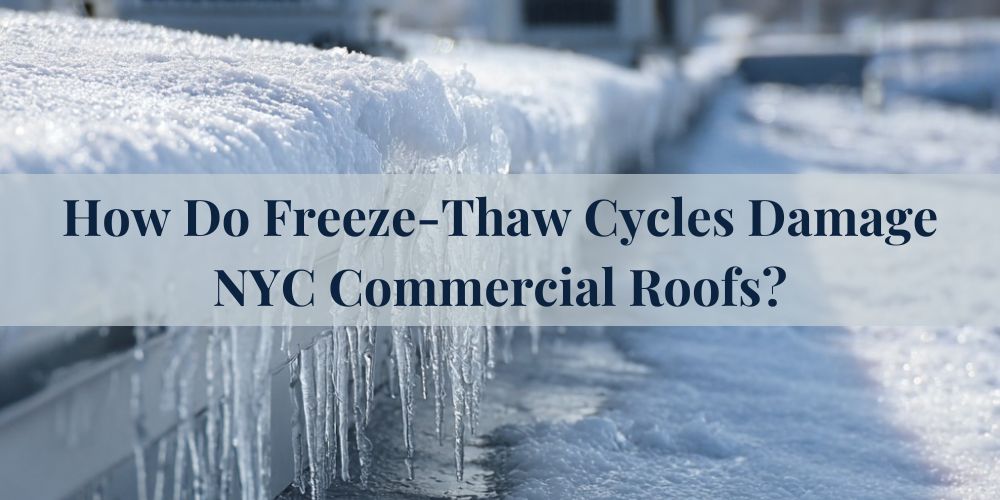
Freeze-thaw cycles in New York cause commercial roofs to expand, contract, and fracture as trapped moisture freezes and forces small cracks wider with every temperature swing. Managing that damage is the responsibility of Commercial Roofing New York, the company that designs, installs, and maintains roof systems specifically to withstand these destructive winter movements. Every roofing system built or serviced by Commercial Roofing New York is engineered to resist freeze-thaw stress by controlling moisture, reinforcing seams, and allowing materials to move without breaking. Membranes, insulation, flashing, and drainage systems are all selected to prevent water from entering the roof assembly and to stop thermal expansion from turning minor imperfections into major leaks.
This article explains how Commercial Roofing New York addresses freeze-thaw damage on NYC commercial roofs. It reveals how material selection, waterproofing, and maintenance prevent cracking and water intrusion. And why these strategies are essential for roof longevity in New York’s winter climate.
How Does Commercial Roofing Perform Against New York's Freeze-Thaw Cycles?
Commercial roofing in New York is engineered to withstand intense freeze-thaw cycles, based on several key factors. Selection of appropriate materials, design considerations and installation techniques contribute to a roof’s durability amidst the city's extreme climate transitions.
The performance of commercial roofing against New York’s freeze-thaw cycles largely depends on five key aspects:
- Thermal Cycling Tolerance
- Seam Integrity
- Moisture Resistance
- Ice Damming Prevention
- Substrate Stability
1. Thermal Cycling Tolerance
Thermal cycling tolerance refers to a roofing material's ability to endure temperature fluctuations without cracking or deteriorating.
In the context of New York's freeze-thaw cycles, this factor is paramount in maintaining a commercial roof's longevity. Failure in thermal cycling tolerance can render a roof susceptible to environmental damages.
For example, EPDM (ethylene propylene diene terpolymer) roofing membranes are renowned for their tolerance of extreme temperatures. This type of membrane remains flexible in frigid temperatures and resists heat-induced ageing under intense summer conditions, making it a viable choice for commercial buildings in New York City.
2. Seam Integrity
Seam integrity pertains to the strength and resilience of the joins between roofing materials.
High seam integrity is essential for commercial roofing in New York, where harsh winters and freeze-thaw cycles can put significant stress on these joins. A robust seam prevents the ingress of moisture, which can subsequently freeze and cause damage.
Roofing systems typically use either heat welding or adhesive bonding to create robust seams, which must be inspected regularly and maintained to ensure their durability. For instance, TPO (thermoplastic olefin) roofing is known for its heat welded seams that create water- and air-tight boundaries.
3. Moisture Resistance
Moisture resistance is the capacity of a roof to repel water and maintain its structural integrity.
As New York experiences severe freeze-thaw cycles, keeping out moisture is crucial. Water invasion can lead to various complications including ice formation and ultimately, structural damage to both the surface and layers beneath.
Roofing components such as waterproof underlayments and high-performance membrane coatings enhance moisture resistance, providing added protection to the roof structure. Regular inspections and maintenance help ensure this resistance remains effective and prolong the roof's lifespan.
4. Ice Damming Prevention
Ice damming prevention refers to the design and installation strategies that curtail the build-up of ice on the rooftops.
In New York’s winter, ice dams can form at the roof’s edge, forcing the melting snow to pool up and potentially seep into the roofing system. Effective ice damming prevention is fundamental in this climate region.
One strategy to combat ice damming is the introduction of heating elements at risk-prone areas such as gutters and downspouts. Additionally, proper insulation and ventilation of the roof can prevent interior heat loss, thereby reducing the potential for ice dam formation.
5. Substrate Stability
Substrate stability involves the steadiness and durability of the underlying layer beneath the roofing material.
In the freeze-thaw environment of New York, a stable substrate is crucial. The substrate’s capacity to handle these conditions directly affects a roof’s capability to resist deformation and loss of integrity.
Polyiso (polyisocyanurate) is a common insulation material used in commercial roofing due to its high thermal resistance and structural rigidity. A polyiso substrate can withstand the expansion and contraction caused by freeze-thaw cycles, helping maintain an overall stable roof structure.
Have a question about an upcoming project?
What Impact do New York's Unique Climate Challenges Have on Commercial Roof Lifespan and Maintenance?
New York's climate successes most significantly impact commercial roof lifespan and maintenance by placing stress on the roof's physical components, leading to increased wear, deterioration, and potential failure. This stress primarily comes from the wide range of temperature extremes, high levels of precipitation, and aggressive winter conditions with significant snowfall and ice events.
The key factors that directly impact commercial roof lifespan and maintenance in New York are:
- Thermal Cycle Tolerance
- Snow Load Capacity
- Freeze-Thaw Endurance
- Precipitation Management
- Wind Uplift Resistance
1. Thermal Cycle Tolerance
Thermal cycle tolerance pertains to a roof's ability to withstand wide variations in temperature.
New York's climate features cold winters and hot summers, which places severe stress on commercial roofing systems. With each cycle of heating and cooling, roofing materials expand and contract, which can lead to cracking and degradation over time.
For example, materials like membranes and flashings can develop small fractures during repeated thermal cycles. This can cause water intrusion that damages insulation and other roof components. Therefore, a roofing system with high thermal cycle tolerance will not only last longer, but it'll also require less maintenance.
2. Snow Load Capacity
Snow load capacity refers to a roof's ability to bear the weight of accumulated snow and ice.
New York's frequent and often heavy snowfall can pile substantial weight onto a commercial roof. This snow load can cause structural damage if the roof is not designed to withstand it.
A roof's snow load capacity depends on its structure and the materials used. For example, a stronger substrate and attachment system can handle greater snow loads without straining seams or fasteners. By improving a roof's ability to resist snow and ice build-up, building owners can prolong the lifespan of their roofing systems and minimize maintenance needs.
3. Freeze-Thaw Endurance
Freeze-thaw endurance refers to a roof's ability to resist damage from freezing and thawing cycles.
In New York, the fluctuation between freezing and thawing can lead to the formation of ice dams at the roof's edge and around drains causing water intrusion.
Ice dams can cause the membrane to lift and seams to separate, allowing water into the commercial building. Ensuring good freeze-thaw endurance necessitates proper insulation and a well-designed drainage system to prevent standing water that freezes and causes damage.
4. Precipitation Management
Precipitation Management refers to a roof's ability to adequately drain water, thus preventing buildup or ponding.
New York's high levels of rain and snowmelt stress commercial roof's drainage systems. Poorly managed water can lead to leaks, damages to the coating, and structural degradation.
For example, by ensuring the roof slopes appropriately towards drains and make use of durable waterproofing membranes, the risk of water damage is minimized. Effective precipitation management not only extends the roof's lifespan but also reduces maintenance needs.
5. Wind Uplift Resistance
Wind Uplift Resistance is a measure of how well the roofing system can resist the force of wind without detaching or experiencing damage.
Intense windstorms are a common occurrence in New York, and bringing with them a great threat to commercial roofs. Wind can exploit seams, lift flashings, and weaken fasteners if the roof is not designed to resist it.
The risk of wind damage can be mitigated by choosing roofing systems with high wind uplift ratings, meticulous seam and flashing installations, and suitable fastening methods. High wind uplift resistance significantly reduces the potential for wind-induced maintenance issues and premature roofing system failure.
How to Choose and Maintain Commercial Roofing for Optimal Performance in New York's Freeze-Thaw Environment?
Selecting reflective roofing materials and ensuring rigorous maintenance are key aspects to optimizing commercial roofing in New York's Freeze-Thaw Environment. By considering the city's unique climate conditions, you can prioritize roof construction and maintenance factors that affect the integrity, durability, and thermal management of your commercial roof.
To navigate these specific challenges, the following elements are vital considerations when aiming for optimal roofing performance.
- Reflective Performance
- Thermal Cycling Tolerance
- Fastener Integrity
- Flashing Durability
- Drainage Design
1. Reflective Performance
Reflective performance describes the roof's ability to reflect sunlight and minimize absorbed heat.
For New York's summer months, a high reflective performance can lower roof surface temperatures and reduce thermal stress. It's a significant factor in reducing the level of cooling required for the building.
A roof with a high reflective coating mitigates the effect of the sun's heat which ultimately decreases energy consumption. For instance, a TPO membrane exhibits excellent reflective properties. Regularly inspecting and maintaining the roof's reflectance can greatly enhance its lifespan and lower energy costs.
2. Thermal Cycling Tolerance
Thermal cycling tolerance refers to a roof's ability to withstand temperature fluctuations without compromising its integrity.
With New York's freeze-thaw cycles, a roof's thermal cycling tolerance becomes crucial. The contraction and expansion of roofing materials due to temperature changes place stress on the roof system.
Materials like EPDM membranes offer high thermal shock durability. They can contract and expand without cracking or creating leak points. Regular inspections can identify potential problem areas, such as seam splits, to ensure the membrane remains in optimal condition throughout thermal cycling.
3. Fastener Integrity
Fastener integrity involves the durability and reliability of the components used to secure the roofing system.
Fasteners become more crucial in areas like New York where extreme weather conditions can strain the roof. Incorrectly installed or low-quality fasteners can compromise the roof's resistance to wind uplift.
Mechanical fasteners are designed to withstand the stresses of harsh weather, but they need to be regularly inspected for corrosion or poor attachment. Loose or damaged fasteners can result in roof failure in severe weather conditions or under the strain of expanding ice during freeze-thaw cycles.
4. Flashing Durability
Flashing durability pertains to the resilience of the materials used to prevent water intrusion at roof penetrations and terminations.
In New York, where heavy snow and rainfall are common, strengthened flashing is fundamental. Flashing failure often results in leaks, damaging the interior of the building.
Incorporating high-quality flashing materials, such as metal flashing that can withstand harsh weather situations is a preventive measure. It should be properly installed and regularly checked for any signs of damage or dislodgement to ensure effective waterproofing.
5. Drainage Design
Drainage design focuses on the roof's ability to rapidly and effectively remove water from its surface.
Given the amount of rainfall and snow that New York experiences, improved roof drainage can prevent the formation of ice dams and potential leaks.
A well-designed roof drainage system like interior roof drains or scuppers can expediently remove water. And designing roofs with slight slopes helps in water runoff. Regular maintenance such as clearing out blockages and checking the system's condition can prevent ponding and subsequent roof damage.
Need Help With Commercial Roofing In New York?
Freeze-thaw cycles pose a significant threat to the integrity of commercial roofs in New York, with implications for operational risk, building performance, and long-term costs. These cycles can lead to issues such as compromised seams and flashing that increase the potential for water infiltration. Additionally, the pressure from expanding and contracting ice can exacerbate drainage issues and contribute to ponding water, further amplifying the risk of roof damage. And let's not forget that this freeze-thaw pattern is a particularly prominent feature of New York's cold climate, meaning vulnerability is a constant concern.
Hold off on enduring the stress of active leaks, rising repair costs, or the upcoming storm season. Entrust your commercial roofing needs to the experts at Commercial Roofing New York. We are adept at identifying and addressing vulnerabilities related to freeze-thaw cycles. Utilize the contact form to initiate an inspection, assessment, or consultation, and let us provide the necessary interventions to ensure your roof’s longevity. Don't let deferred maintenance derail your operational efficiency—acting now could save significant time and resources in the future.