
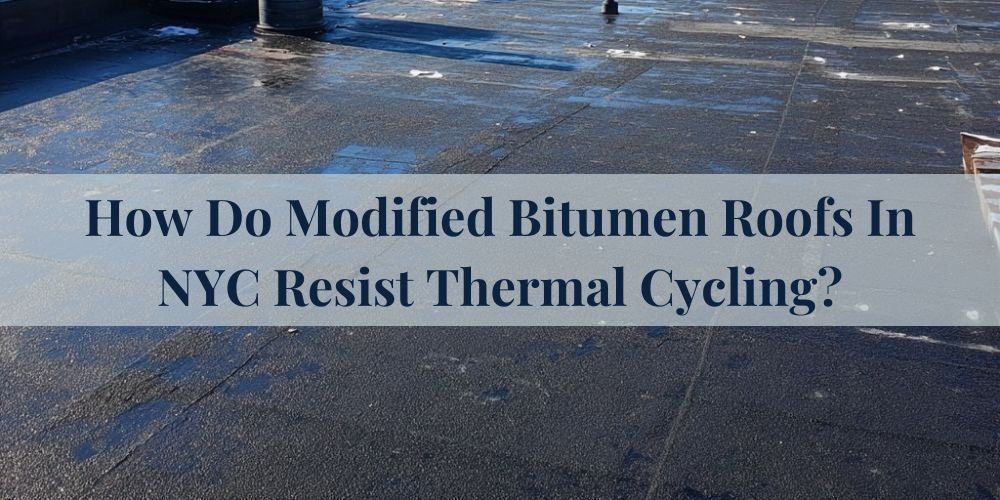
Thermal cycling in New York causes commercial roofs to repeatedly expand in summer heat and contract during winter freezes, a movement that can split seams and weaken waterproofing if not properly managed. Preventing that damage is the responsibility of Commercial Roofing New York, the company which installs and maintains modified bitumen roofing systems specifically to handle these temperature swings on NYC buildings. Every modified bitumen roof built by Commercial Roofing New York is engineered to remain flexible and sealed as temperatures change. Reinforced layers, bonded seams, and properly designed insulation assemblies allow the roof to absorb thermal movement without cracking or pulling apart.
This article explains how Commercial Roofing New York uses modified bitumen roofing to resist thermal cycling in New York, how system design protects against expansion and contraction, and why this material is well suited to the city’s extreme seasonal climate.
How Does Modified Bitumen Performance in Commercial Roofing Withstand New York's Climate?
Modified bitumen excels in commercial roofing applications in New York due to its supreme resistance to varying weather conditions, exceptional durability, and adaptability. Considering New York's diverse climate, modified bitumen tackles heavy snowfall, intense summer heat, occasional high winds, and regular freeze-thaw cycles exceptionally well.
The following key factors help explain why and how modified bitumen's performance excels in New York's climate:
- Thermal Cycling Tolerance
- Resistance to Weathering
- Wind Uplift Resistance
- Ponding Water Behavior
- Flexibility in Low Temperatures
1. Thermal Cycling Tolerance
Thermal cycling tolerance refers to a roof's ability to withstand constant temperature fluctuations.
Modified bitumen's high thermal cycling tolerance is especially suitable for New York due to the state's varying temperatures. New York's climate undergoes regular freeze-thaw cycles, which are potentially damaging to roofing materials.
Modified bitumen's unique composition allows it to expand and contract with changing temperatures, reducing the risk of cracks, splits, and leaks. For instance, in New York's harsh winters, the material can withstand freezing temperatures without becoming brittle and losing its structural integrity. This characteristic reduces maintenance demands and increases longevity, making it a cost-effective solution for commercial applications.
2. Resistance to Weathering
Resistance to weathering is the ability of roofing materials to withstand long-term exposure to diverse weather conditions without deteriorating.
Given that New York's climate includes intense summer heat, heavy snowfall, and periods of heavy rainfall, modified bitumen’s resistance to weathering becomes highly beneficial.
Most modified bitumen roofing systems include a top layer or 'cap sheet' that provides UV resistance and protects the underlying layers from weather-induced damage. This makes the material resistant to sun damage and evaporative cooling, which can often lead to the formation of cracks and tears. With its weathering resistance, modified bitumen offers a durable and long-lasting solution suitable for New York's broad spectrum of weather conditions.
3. Wind Uplift Resistance
Wind uplift resistance refers to a roof's ability to withstand the force of wind without being partially or fully removed.
New York sometimes experiences powerful winds, particularly during stormy weather. Therefore, modified bitumen’s wind uplift resistance is crucial for commercial roofing systems in this state.
The method of attaching modified bitumen via adhesives, along with the use of mechanical fasteners, ensures a secure and robust bond to the roof substrate. This attachment method reduces the chance of the membrane being lifted or peeled off by strong winds. Thus, despite New York's sometimes severe weather conditions, modified bitumen roofs remain secure, providing a reliable solution for commercial roofing projects.
4. Ponding Water Behavior
Ponding water behavior refers to a roof's ability to resist damage and degradation from standing or stagnating water.
In New York's rainy months, roofs frequently have to deal with the problem of ponding water. Hence, modified bitumen's ponding water behavior is a significant advantage for roofing in the state.
Modified bitumen roofs retain their integrity even when subjected to prolonged periods of standing water. Its impermeability prevents water intrusion, thereby mitigating the risks of water-related damage such as leaks, blisters in the membrane, or structural damage. Therefore, despite New York’s ample rain, modified bitumen roofs effectively manage and resist the build-up of water over time.
5. Flexibility in Low Temperatures
Flexibility in low temperatures refers to a roofing material's ability to maintain its physical properties despite freezing conditions.
Considering the harsh winter conditions that New York experiences, the flexibility of modified bitumen in low temperatures plays a crucial role in maintaining its durability.
Unlike other materials which become brittle and prone to cracking in freezing temperatures, modified bitumen maintains its flexibility. This means that under the heavy snowfall typical in New York winters, the roofing system can withstand the pressure due to its inherent ability to flex without breaking. As such, modified bitumen's flexibility in low temperatures is a major reason why this material is particularly suited to New York’s cold winter months, preventing potential damage and maintaining the roof’s structural integrity.
Have a question about an upcoming project?
What Impact Does New York's Heat/UV Exposure Have on the Lifespan and Maintenance Needs of Commercial Roofs?
New York's heat and UV exposure notably accelerates wear and tear on commercial roofing systems, shortening the lifespan and increasing maintenance needs. The state's often intense summer heat, coupled with its seasonal UV-ray bombardment, leads to a number of challenges such as membrane degradation, seam stress, expansion and contraction issues, damage to roof coatings, and exacerbation of ponding water issues.
The key factors that contribute to this accelerated deterioration and increased maintenance demands are:
- Membrane Degradation
- Seam Stress
- Thermal Expansion and Contraction
- UV Damage to Roof Coatings
- Exacerbation of Ponding Water Issues
1. Membrane Degradation
Membrane degradation refers to the weakening of the roofing membrane over time.
New York's high heat exacerbates membrane breakdown, directly affecting commercial roofing lifespans and maintenance needs. It's particularly challenging during the city's summer months when rooftops are bombarded with intense heat and sunlight.
The ultraviolet radiations can cause photochemical damage to the roofing membrane, resulting in cracking and weakening its structural integrity. For example, a PVC (polyvinic chloride) roof installed on a commercial building in New York City may start exhibiting signs of discoloration, warping, or blistering due to prolonged UV exposure. Such degradation increases the possibility of leaks, thus necessitating regular inspection and maintenance.
2. Seam Stress
Seam stress refers to the strain exerted on the seams that connect stretches of roofing material together.
In New York's hot climate and high UV exposure, commercial roofs face significant seam stress. This heat-induced stress can hasten the failure of these seams, increasing the need for maintenance and potentially reducing the roof's overall lifespan.
The intense heat in summer can cause the materials at the seams to expand and then contract when the temperature drops. Over time, this cycle wears down the integrity of the seams, creating possible entry points for water into the building. Regular inspection of seam integrity becomes critical in New York conditions to prevent premature failure of commercial roofing systems.
3. Thermal Expansion and Contraction
Thermal expansion and contraction is the process where roofing materials expand in heat and contract in cold.
In New York, thermal expansion and contraction is a significant factor due to its distinct seasons with varying temperatures. It has a direct impact on the lifespan and maintenance of commercial roofs.
Roofing materials like metal can expand and contract considerably with temperature swings. This continual movement can lead to stress fractures or buckling of components, and the fasteners securing the roof may loosen over time. Commercial roofing systems in New York thus require frequent monitoring for signs of thermal damage.
4. UV Damage to Roof Coatings
UV damage to roof coatings refers to the harmful impact of ultraviolet radiation on the protective layers applied on commercial roofs.
In New York, commercial roofs are exposed to significant UV radiation, which can degrade roof coatings. This degradation negatively impacts the lifespan and increases the maintenance needs of these roofs.
Coatings are often applied to commercial roofs to offer an extra layer of protection against weather and UV radiation. However, prolonged exposure to UV light can deteriorate these coatings, causing them to become brittle or crack, weakening their protective properties. Thus, re-application of coats and maintenance frequently becomes integral in the harsh New York environment to maintain the roof's performance.
5. Exacerbation of Ponding Water Issues
Exacerbation of ponding water issues refers to the heightened presence of water puddles on the roof due to the combined effects of heat and UV exposure.
Heat and UV radiation in New York can exacerbate ponding water issues on commercial roofs, affecting their longevity and maintenance requirements.
Ponding water can react with the UV rays and heat to accelerate the breakdown of roofing materials and coatings. This combination can lead to faster degradation and possible leakage. In densely built-up areas like New York City, where roofs often lack good drainage due to space constraints, routine inspections and proactive maintenance are required to manage these issues effectively.
How Should You Select and Maintain Commercial Roofing in New York to Optimize ROI?
Selecting and maintaining commercial roofing in New York to optimize ROI heavily relies on the building's specific conditions and choosing a roof built to withstand cold climates. Researching and implementing the technical trades, like seam integrity and wind uplift resistance, can significantly help.
Here's a list of key factors that directly answer the question of how to select and maintain commercial roofing in a cold region like New York to optimize ROI:
- Seam Integrity
- Wind Uplift Resistance
- Chemical Exposure Tolerance
- Ponding Water Behavior
- Reflective Performance
1. Seam Integrity
Seam integrity refers to the robustness of joints in the roofing system wherein elements are welded together.
In the context of New York and our ROI question, an intact seam integrity can prevent water infiltration, especially during heavy snowfall. Watertight seams are critical in pacing the lifespan of the roof which in turn will optimize ROI.
A more extended exposure to cold temperatures can stiffen the membrane, making it susceptible to separation or splitting at the seams. In an instance of thermal cycling, New York's cold temperatures can cause the membrane seams to split, introducing the risk of water intrusion. Ensuring periodic seam inspections, particularly after storms, can mitigate this risk.
2. Wind Uplift Resistance
Wind uplift resistance is the roof's ability to counteract the vertical force exerted by gusts of wind.
Given New York's susceptibility to strong winds, especially near coastal areas, a roofing system with remarkable wind uplift resistance improves ROI by reducing the risk of costly damages. This ability is crucial in preserving the integrity of the roof under harsh conditions.
Building codes in New York, which account for its wind zone classification, require commercially used materials to withstand specific wind loads. Commercial roofing can be susceptible to wind uplift, which can debond roof elements from their substrate. For example, improper installation of fasteners or adhesives can compromise uplift resistance. Regular inspection and maintenance of a roof's attachment system can alleviate this problem.
3. Chemical Exposure Tolerance
Chemical exposure tolerance is a roof's capacity to resist damage from contact with various chemical agents.
In commercial urban settings like New York, roofs can be exposed to various chemical pollutants and should generally have high chemical exposure tolerance. Anticipating and protecting against such contaminants can optimize ROI by preventing premature aging.
Fumes from HVAC exhausts, which are common on commercial buildings, can degrade the roofing membrane compounds over time, resulting in a more porous surface that allows water penetration. For instance, EPDM roof membranes have commendable resistance to numerous air pollutants and industrial fumes. Regular cleaning and applications of appropriate roof coatings can abate this risk and extend the roof's service life.
4. Ponding Water Behavior
Ponding water behavior refers to how roof systems react to standing or pooling water, frequently as a result of inadequate drainage.
Proper water drainage is crucial in New York given the high precipitation levels it experiences throughout the year. Managing ponding water can defend the roof from premature failure and optimize ROI.
If there is insufficient slope or inefficient roof drains, water can pool on flat commercial roofs. This water can increase the load on the roof and expedite weathering of the roof membrane. For instance, installing crickets or saddles can redirect water to drains, and adding or improving scuppers and downspouts can increase drainage capacity. Regular maintenance checks for roof ponding and drainage efficiency can prevent membrane degradation and potential structural issues.
5. Reflective Performance
Reflective performance concerns the roof's ability to reflect rather than absorb sunlight, reducing heat absorption.
A highly reflective roof is cost-effective in New York. Despite having cold winters, New York experiences hot and humid summers. Reflective roofs can reduce cooling costs in summer, which contributes to a favorable ROI.
Roofs with low reflective performance will absorb more sunlight, causing the underlying materials to heat, expand, and degrade more quickly. Utilizing reflective roof coatings or membranes (like TPO or PVC) increases the reflective performance, reduces this expansion and contraction cycle, and thus prolongs the roof's lifespan. Regular inspection of the coating or membrane for signs of wear or damage will ensure maximum reflective performance.
Need Help With Commercial Roofing In New York?
Having understood how modified bitumen resists thermal cycling, it's clear why this roofing solution is a wise choice for commercial buildings in New York. Not only does it significantly reduce operational risk, but it also aids in establishing optimal building performance and reducing long-term costs. This roofing material's exceptional resistance to UV exposure and freeze-thaw cycles makes it incredibly durable in New York's variable climate. Specifically, its flexible membranes effectively manage thermal shifts, while its robust construction reduces vulnerabilities like inadequate drainage and wind uplift.
Don't wait until rising repair costs or an active leak catches you off guard. Secure your commercial building's future with Commercial Roofing New York. Our team's specialized knowledge in modified bitumen roofs can help protect your investment against the challenges unique to New York's weather patterns. Before the upcoming storm season pushes your roof to its limit, use the contact form to request an inspection or consultation. Let us provide the roof your commercial building needs to perform at its best for the long haul.