
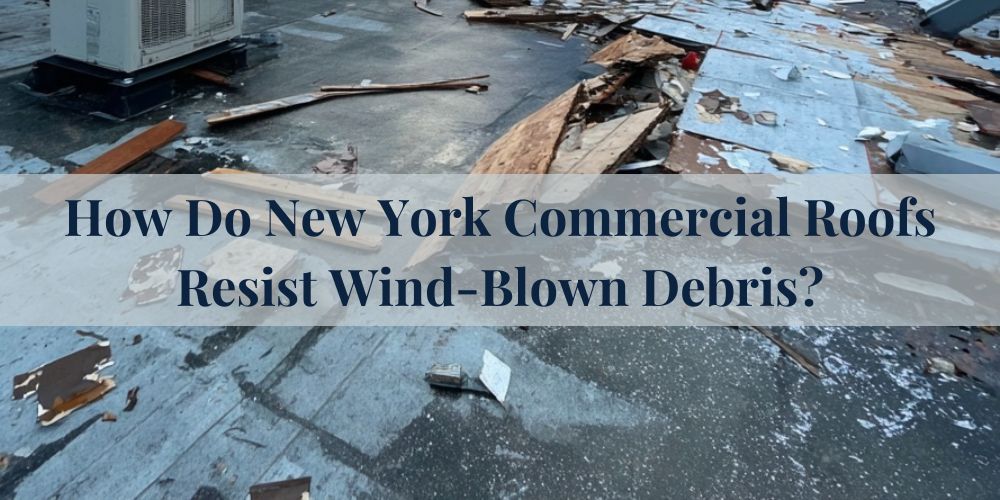
High winds in New York routinely drive debris across rooftops, where it can puncture membranes, damage flashing, and expose roof assemblies to water intrusion. Preventing this damage is the role of Commercial Roofing New York, the company who designs, installs, and maintains commercial roofing systems specifically to withstand wind-blown debris across NYC buildings. Every roof built by Commercial Roofing New York is engineered to resist impact, uplift, and surface damage from airborne debris. Reinforced membranes, secure attachment systems, protected flashing details, and impact-resistant surfaces are used to ensure that roofing assemblies remain sealed and structurally stable even during severe wind events.
This article explains how Commercial Roofing New York protects commercial roofs from wind-blown debris in New York. It shows how system design, material strength, and installation methods work together . And why these defenses are essential for keeping NYC buildings watertight and operational during storms.
How Does Commercial Roofing Perform Under New York's Unique Climate Conditions?
Commercial roofing systems in New York are designed to withstand the city's harsh climate conditions, utilizing specific materials and construction methods for optimum performance. Due to its unique climate, which includes cold, freeze-thaw cycles, and occasional hurricane exposure, it's crucial that commercial roofs in New York integrate durability and resilience.
The following five key factors directly impact how commercial roofs in New York perform under the city's distinctive weather conditions:
- Thermal Cycling Tolerance
- Wind Uplift Resistance
- Freeze-Thaw Resilience
- Water Drainage Efficiency
- Hurricane Endurance
1. Thermal Cycling Tolerance
Thermal cycling tolerance refers to a roofing system's ability to withstand regular changes in temperature without deterioration.
In the diverse climate of New York, buildings experience significant thermal cycling throughout the year. The roofs, therefore, must be built with materials such as single-ply membranes or metal roofing that can handle frequent temperature fluctuations.
Thermal cycling can cause roofs to expand and contract, affecting component integrity, particularly at the seams and flashing. A well-constructed roof will have sufficient thermal cycling tolerance to resist cracking or buckling under these conditions, minimizing the risk of water intrusion and subsequent damage to the building.
2. Wind Uplift Resistance
Wind uplift resistance is the measure of a roof's ability to withstand wind pressures that would cause roofing components to detach or be literally lifted off the building.
Strong wind events such as hurricanes and gales are typical in New York, requiring commercial roof's fasteners and attachment methods to possess high wind uplift resistance.
The roofing membranes, insulation, and attachment system need to work together to ensure a high wind uplift resistance. A weak link in this chain could cause significant damage during a wind event. Therefore, regular inspections and maintenance checks are essential to ensure the fasteners and seams of the roof remain intact and secure.
3. Freeze-Thaw Resilience
Freeze-thaw resilience refers to a roof's ability to withstand the process of freezing and thawing without structural damage.
New York winters often bring freeze-thaw cycles, which can result in substantial stress on commercial roofs. Hence, it is crucial for the roofing materials, including the substrate and insulation, to resist the damage caused by these cycles.
Freeze-thaw cycles can create movement in the roof system, causing potential damage to the membrane and seams. When water that has intruded into the roof freezes, it expands, potentially causing cracks or tears. As it thaws, it can result in leaks. Utilizing roofing materials with good freeze-thaw resilience can prevent these damages, ensuring a longer lifespan for the roof.
4. Water Drainage Efficiency
Water drainage efficiency involves the speed and effectiveness with which a roof can shed water to avoid pooling or ponding.
New York's significant rainfall and occasional hurricanes necessitate commercial roofs to have efficient drains and a proper slope for effective water drainage.
Poor water drainage can lead to ponding water on the roof's surface, increasing the load on the roof and potentially causing structural issues. Moreover, water ponding can lead to significant damage to both the roof membrane and the underlying insulation if left unchecked. Regular maintenance and inspection of the roof's drains and overall condition can prevent these issues.
5. Hurricane Endurance
Hurricane endurance pertains to a roofing system's ability to withstand the extreme winds and heavy rainfall associated with hurricanes.
Although not a regular occurrence, New York does experience hurricanes, thus requiring commercial roofs to have materials and a design robust enough to endure these extreme conditions.
In a hurricane, the roof can be exposed to high winds, heavy rain, and potentially flying debris. A roofing system with high hurricane endurance incorporates strong, flexible roofing materials, secure fasteners, and a robust attachment system to resist these forces. Moreover, a well-designed roof will also have an efficient drainage system to handle the heavy rain and minimize the chance of water intrusion.
Have a question about an upcoming project?
What Impact Does New York's Wind Uplift and Heavy Snow Have on Commercial Roof Lifespan and Maintenance?
New York's distinct wind uplift and heavy snow loads significantly impact the lifespan and maintenance demands of commercial roofing systems. These elements can exacerbate the common failure mechanisms that degrade roofing performance over time. In particular, they exacerbate issues related to wind uplift resistance, thermal cycling performance, roof drainage effectiveness, membrane puncture resistance, and the roof system's ability to manage ice damming.
The key factors that directly link these weather conditions to commercial roof performance are crucial to manage in New York:
- Wind uplift resistance
- Thermal cycling performance
- Roof drainage effectiveness
- Membrane puncture resistance
- Ice damming management
1. Wind uplift resistance
Wind uplift resistance refers to a roof's ability to withstand the upward force of wind without detaching.
In New York, high wind conditions often lead to wind uplift, which directly impacts the durability of commercial roofing systems. Roofs with poor wind uplift resistance are more likely to experience damage or even complete system failure during severe storms.
The force of the wind can create a difference in pressure across the roof's surface and the building interior, raising the roof membrane and revealing weak spots in the roof structure. For example, poorly attached roofing membranes or inadequate fasteners may give way under these conditions, leading to roof issues such as seam separation or displacement of roof components. Proper inspection and reinforcement of these roof assembly elements can dramatically improve a roof's wind uplift resistance.
2. Thermal cycling performance
Thermal cycling performance refers to the roof's capacity to withstand repeated temperature changes without damage.
New York's snowy winters and hot summers can subject roofs to thermal cycling, which accelerates wear and can strain roof enhancements such as coatings or flashings. Consequently, it is pivotal for a roof in New York to have high thermal cycling performance.
Significant temperature swings cause expansion and contraction of roof components. Continuous expansion and contraction can crack roof membranes, potentially cause the roof substrate to shift, and weaken the seams and flashings. A prime example is the potential membrane rupture that follows the freezing and thawing cycle of trapped water beneath the membrane. Regular maintenance and utilizing materials with a high coefficient of thermal expansion can mitigate these effects.
3. Roof drainage effectiveness
Roof drainage effectiveness refers to a roof's ability to quickly direct water off its surface to avoid pooling.
Ensuring effective roof drainage is essential given New York's heavy snowfall which can melt and pool, placing a heavy load on the roof.
Pooling can lead to membrane deterioration, increased roof load, and even structural collapse if left unattended over time. As such, commercial roofs must be designed with an adequate slope and efficient drainage systems, such as well-placed roof drains and clear gutter systems, to handle the volume of snow meltwater expected in New York's winter climate.
4. Membrane puncture resistance
Membrane puncture resistance is a roof's ability to withstand sharp objects or heavy debris without being damaged.
In high-wind scenarios like those in New York, debris can become airborne and potentially puncture the roof membrane. Therefore, a roof's ability to resist punctures is a crucial factor in its lifespan and maintenance needs.
A punctured roof membrane can allow moisture intrusion, leading to insulation dampening and structural damage. During New York's winter season, a hail storm could bring about such puncture damage. Regular membrane inspections and the use of durable materials that offer high puncture resistance can significantly reduce the chance and impact of such occurrences.
5. Ice damming management
Ice damming management refers to the roof's ability to prevent the formation of ice dams, which occur when melting snow refreezes at the roof's edge.
Given New York's cold winters and heavy snowfall, roofs without proper ice damming management are at risk of damage from trapped water and heavy ice loads.
Ice dams obstruct natural water drainage, leading to water pooling and potential roof leaks. Usage of snow diversion devices, heating cables, and proper insulation can prevent the occurrence of ice dams. For instance, an insulated and ventilated attic can prevent heat from melting snow unevenly on the roof and forming ice dams. Regular maintenance can ensure these preventative measures remain functional throughout the lifespan of the roof.
How to Choose and Maintain Commercial Roofing in New York to Withstand Wind-Blown Debris?
Selecting a roofing system that provides robust wind uplift resistance and consolidating this with diligent inspection and maintenance is crucial for withstanding wind-blown debris in New York. Commercial roofing materials that offer superior puncture resistance, seamless integration, and robust fastening mechanisms can particularly mitigate damage from flying debris. Regular inspections and maintenance protocols can also immensely enhance wind resilience by promptly identifying and rectifying any vulnerabilities and ensuring adequate drainage.
The following factors significantly affect the capacity of commercial roofing in New York to withstand wind-borne debris and should be considered when choosing and maintaining a roof:
- Material Puncture Resistance
- Seam Integration
- Fastening Mechanism
- Insulation and Substrate Integrity
- Drainage Design and Maintenance
1. Material Puncture Resistance
This refers to the strength of the roofing membrane to resist degradation from sharp, wind-propelled debris.
Given New York's urban landscape, wind-blown debris is a frequent occurrence. The ability of a roof's material to resist puncturing is a critical component in preventing water penetration and potential damage.
A highly puncture-resistant material, like a PVC or TPO membrane, has the flexibility and toughness to deflect wind-blown debris without splitting or tearing. For instance, during a severe windstorm, this resistance can prevent a broken branch or other debris from puncturing your roof and causing leakages. Routine inspections can help identify any potential weaknesses or punctures in the material, allowing for quick repairs and preventing further deterioration resulting from moisture intrusion.
2. Seam Integration
Seam integration refers to the connection method used to bond adjacent panels of roofing membrane.
In the face of high winds and airborne debris typical to New York, well-integrated seams are crucial to prevent tearing and dislodgment. This is because properly constructed seams offer the necessary cohesion to prevent separation during high winds.
The hot-air welding used in thermoplastic materials melts the membrane surfaces, creating a seamless, monolithic, and highly wind-resistant field. In the case of a gust of wind lifting a piece of debris against the roof, the integrity of the welding helps maintain the roof's resilience and minimizes potential damage. Regular inspections of the seam integrity and necessary repairs or re-welding ensure your roof continues to have optimum wind resistance.
3. Fastening Mechanism
The fastening mechanism refers to how the roofing system is secured to the underlying substrate.
For New York's wind-prone environment, a robust fastening system is crucial to keep the roofing material anchored and prevent wind uplift. The fasteners' performance plays an important role in withstanding the forces exerted by wind and debris.
The best-practice fastening mechanism is a fully adhered system which uses adhesives to bond the membrane with the insulation and substrate. During a wind event, this setup offers superior uplift resistance compared to mechanically attached alternatives. For instance, strong New York winds may catch under loose or weakly fastened sections of the roof, resulting in wind uplift and potential roofing failure. Regular maintenance checks should, therefore, include fastener inspection to ensure the system's durability and resilience.
4. Insulation and Substrate Integrity
Insulation and substrate integrity refer to the quality and condition of the underlying layers of a roofing system.
In New York's harsh weather conditions, intact insulation and substrate are crucial to support the roofing material and prevent deformation from wind pressures or impact from debris.
An insulation layer like polyisocyanurate (ISO), due to its high compressive strength and dimensional stability, provides a solid backbone for the roofing material, distributing the impact load of flying debris and reducing possible damage. A well-maintained substrate, usually made from oriented strand board (OSB) or concrete in commercial roofing, provides an even and sturdy foundation for the insulation and membrane. For instance, should debris hit the roof, a robust substrate and insulation setup absorbs the shock without buckling or puncturing. Keep up with regular maintenance to spot and repair any insulation or substrate issues, ensuring overall structural integrity.
5. Drainage Design and Maintenance
Drainage design and maintenance pertain to the system implemented to remove water from the roof surface efficiently.
In New York, where storms often come with high winds, having effective drainage is key to preventing water accumulation which adds weight and stress to a roof already under wind pressure.
A well-designed drainage system includes strategic placement of roof drains, scuppers and gutters that guide water away from the roof, minimizing the chance of pooling. For example, during a storm, well-functioning draining systems rapidly remove rainfall off your roof, reducing the pressure and minimizing the potential for wind uplift. Regular maintenance of your drainage system, through cleaning and inspection, optimizes its performance and boosts the overall wind/debris resistance of your roof.
Need Commercial Roofing Support In New York?
To combat the increasing operational risk, optimizing building performance, and controlling long-term costs in New York, understanding how NYC commercial roofs resist wind-blown debris is crucial. The forceful winds prevalent in the city can exploit vulnerabilities like poor drainage or flawed flashing, leading to significant financial and operational consequences. Optimal wind resistance isn't simply a matter of overlays or roof pitch—it's how every part of a system from wind uplift design to seams works coherently. Given the city's freeze-thaw cycles, even minor damage can lead to sudden roof failures or long-term degradation of the building structure.
Whether your issue lies with aging roofs or you're wary about the upcoming storm season, it's imperative to invest in a reliable commercial roofing partner. Commercial Roofing New York is dedicated to not just diagnosing immediate problems like active leaks but also assessing the long-term structural robustness against wind-blown debris. Our expert team ensures your commercial property is suitably prepared for anything Mother Nature throws its way. To schedule an inspection, assessment, or consultation, use the contact form on our website. Great roofing support in New York is just a click away-without rising repair costs or the risks from deferred maintenance.