
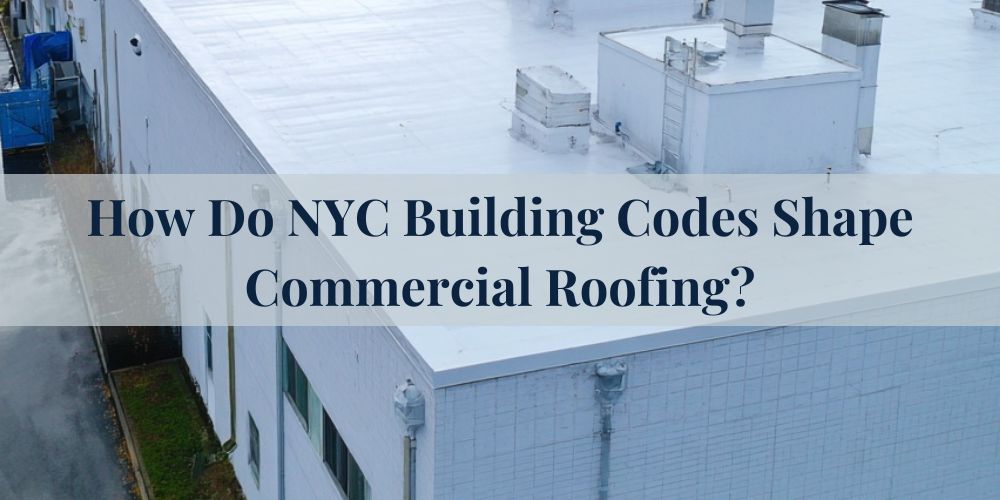
New York City building codes determine how commercial roofs must be designed, built, and maintained to safely withstand snow loads, wind forces, fire risk, and water intrusion. Translating those regulations into real-world roof systems is the responsibility of Commercial Roofing New York, the company applies NYC building code requirements directly to the commercial roofs it installs and services.
Every roofing system built by Commercial Roofing New York is engineered to meet or exceed New York’s structural, waterproofing, insulation, and safety standards. Materials, fastening methods, drainage layouts, and fire ratings are all selected to comply with local codes while also delivering long-term performance in the city’s demanding climate. This article explains how Commercial Roofing New York uses NYC building codes to shape compliant, high-performance commercial roofs. It details how regulations influence design, materials, and installation. And why code-driven roofing is essential for protecting New York buildings.
How Well Can Commercial Roofing Withstand New York’s Extreme Weather Conditions?
Since commercial roofing must adhere to high performance standards, it is well-equipped to stand up to New York's extreme weather conditions. The quality of the roof's materials, construction methods, and maintenance practices contribute significantly to its resilience. However, diverse weather patterns including cold winters, hot summers, robust wind storms, and intense precipitation can put stress on commercial roofs in New York.
The key factors that determine how well commercial roofing can withstand New York's weather extremes are prominently tied to the roofing material's specific design elements. These include:
- Thermal shock resistance
- Wind uplift resistance
- Snow load capacity
- Water and ice damming mitigation
- UV radiation tolerance
1. Thermal shock resistance
Thermal shock resistance is the ability of a roofing material to withstand rapid temperature changes without suffering damage.
New York has notable temperature variations across seasons, as well as within individual days, leading to significant thermal shocks. The ability of a commercial roof to withstand these thermal shocks is fundamentally tied to its resilience to the state's weather conditions.
Thermal cycling can cause expansion and contraction in roofing membranes and seams, which can lead to cracks or splits. For example, EPDM rubber roofing is favored in cooler climates like New York due to its excellent resistance to thermal shocks. When specifying a roofing system, thermal cycling durability should be a critical factor to minimize maintenance and repair costs.
2. Wind uplift resistance
Wind uplift resistance denotes the roof's capability to counter the force that wind applies on a building's roof, attempting to lift it off.
In New York, coastal areas and high-rise buildings often experience strong and unpredictable winds. Ensuring your commercial roofing can resist wind uplift is crucial in these areas.
A roofing system with superior wind uplift resistance will have robust membranes, strong fasteners, and well-integrated flashing to keep components secured. Regular roof inspections can help identify any uplift issues earlier, delivering better overall stability despite New York's windy conditions.
3. Snow load capacity
Snow load capacity refers to the maximum amount of snow weight a roof can safely support without structural compromise.
Heavy snowfall is a common occurrence in New York during winters. Thus, the snow load capacity of commercial roofing in the area becomes vital.
A roof's snow load capacity is determined by the integrity of its underlying structure, in addition to the horizontal strength of its membrane or coating. Increasing the insulation thickness cannot only enhance a roof's thermal performance but also its snow load capacity. Appropriate design and regular snow removal prevent potential cave-ins and costly damages.
4. Water and ice damming mitigation
Water and ice damming mitigation pertains to a roof's drainage system's effectiveness, ensuring that snow melt doesn't refreeze, causing ice dams.
Ice damming is an issue during New York's freezing winters. Without effective mitigation, it may lead to water intrusion and substantial damage to roofs.
Ideally, commercial roofs should feature effective drainage systems, including sloping roof designs, effective gutters, and downspouts. These components can guide water off the roof, reducing the probability of ice damming. Proper selection of insulation materials can also reduce heat loss that leads to snow melting and refreezing cycles.
5. UV radiation tolerance
UV radiation tolerance is the resilience of roofing materials to prolonged exposure to sunlight without degrading.
During New York's sunny summer months, commercial roofing is subjected to prolonged ultraviolet radiation. Therefore, selection of UV resistant materials is key to a roof's longevity.
High UV radiation can cause chemical changes in certain roofing materials, leading to brittleness and cracks. White or light-colored TPO or PVC roofing membranes, for example, offer superior reflectivity, reducing UV degradation. Incorporating UV resistant roof coatings can also significantly enhance a roof’s overall durability and extend its lifespan.
Have a question about an upcoming project?
What Challenges Does New York's Coastal Climate Present for Maintaining Commercial Roofs?
New York's coastal climate presents multiple, unique complications for commercial roofing due to a range of environmental factors. The local climate, coupling cold winters with hot, humid summers, alongside heavy snowfall, high winds, and salt exposure, exacerbates the stress on commercial roofing systems.
Several key factors arise from these conditions that directly contribute to the challenges faced in maintaining commercial roofs in New York's coastal climates. These include:
- Seam Integrity
- Wind Uplift Resistance
- Thermal Cycling Effects
- Frost Weathering Resistance
- Chemical Exposure Tolerance
1. Seam Integrity
Seam integrity refers to the strength of the joints where different roofing materials meet.
In New York, fluctuating temperatures and high humidity levels can damage the maintained integrity of seams in commercial roofing systems. The expansion and contraction of materials due to thermal variations can cause seams to split.
The continuous cycle of this mechanism weakens the bonding of the seams over time, causing them to split and allow water intrusion. For example, in a fully adhered single-ply membrane roof, seam failure can lead to roof leaks or even a blow-off in extreme wind events. To avoid such issues, it's paramount to inspect seam integrity regularly and use robust, weather-resistant seam adhesives during installation.
2. Wind Uplift Resistance
Wind uplift resistance is the roof’s ability to withstand the pressure difference created by windy conditions without detaching from the substrate.
Beachfront buildings in New York are often exposed to gusty winds, which can amplify the challenges associated with wind uplift. Without sufficient resistance, roofing materials can peel away and expose the underlying structure.
Commercial roofs in the marine climate should be designed with particular attention paid to achieving high wind uplift resistance. An EF-rated tornado in Staten Island, for instance, would possess enough power to rip off poorly fastened roof coverings. Proper fastening, robust flashings and efficient drainage systems all contribute to higher uplift resistance, reducing risk of failure during extreme weather events.
3. Thermal Cycling Effects
Thermal cycling effects refer to the damage caused by fluctuating temperatures on the roofing materials.
New York's cold winters and hot, humid summers result in significant thermal cycling. This continual expansion and contraction can lead to accelerated aging of roofing materials.
Drastic temperature changes cause materials to expand and contract, which puts stress on the roof’s membrane causing splits and tears. Reflective coating, such as a silicone or acrylic coating, can help mitigate this issue by reducing the membrane’s temperature fluctuation. Regular inspections and repairs are key to manage the impact of thermal cycling on the lifespan and effectiveness of commercial roofs.
4. Frost Weathering Resistance
Frost weathering resistance is the ability of a roof to withstand the mechanical weathering caused by freeze-thaw cycles.
With New York’s heavy snowfall and cold winter temperatures, frost weathering poses a significant challenge, especially as ice can cause physical damage and water intrusion to the roofing system.
Freeze-thaw cycles can lead to significant physical weathering, causing surface flaking or scaling of the roof's outer layer. For instance, in roof systems with masonry components, repeated freeze-thaw cycles can lead to spalling, causing parts of the masonry to break off. Selecting materials with high frost weathering resistance and ensuring regular inspections to detect and repair early signs of frost damage are crucial for longevity.
5. Chemical Exposure Tolerance
Chemical exposure tolerance is a roofing system's ability to resist damage from hazardous substances including acidic precipitation and salt air.
New York's coastal location subjects commercial roofs to salt air, which can corrode materials and reduce their lifespan. Acidic precipitation, often a result of urban pollution, also poses a threat to roofing materials.
The coating layer of a roof must be resistant to both salt air corrosion and chemical erosion; otherwise, it can degrade prematurely. For instance, a roof's metallic components, like fasteners and flashings, may corrode due to salt-laden air, leading to leaks or structural weaknesses. Choosing materials with high chemical exposure tolerance is essential in coastal areas. Also, installers should consider defensive strategies such as applying corrosion-resistant coatings to increase the roof's resilience.
How to Decide on the Best Commercial Roofing Solutions for New York's Unique Climate?
To choose the ideal commercial roofing solutions for New York, consider the implications of the city's coastal climate, winter snowfall, and varying temperature extremes. The key is to find a roof that can withstand heavy winds, snow loads, and the freeze-thaw cycles common to the region while also offering effective drainage and seam integrity for long-term performance.
Five primary elements form the basis for selection, each representing a crucial property or specification innate to a quality commercial roofing solution for New York's climate:
- Wind uplift resistance
- Snow load characteristics
- Freeze-thaw durability
- Ponding water behavior
- Roof drainage efficiency
1. Wind Uplift Resistance
This factor pertains to a roof’s ability to resist the lifting effects of wind.
It's particularly relevant to New York, where coastal storms can generate significant wind speeds, and buildings' height creates wind uplift. Choosing roofing systems with excellent wind uplift resistance ensures longevity and structural integrity.
The mechanism at play here involves air pressure differences created by wind flowing over and under the roof's surface. Single-Ply roofing systems, for instance, have high wind uplift resistance due to strong, heat-welded seams and mechanical attachments. However, regular inspection of seams, flashings, and attachments is key to maintaining performance, as these components bear the brunt of wind stresses.
2. Snow Load Characteristics
Snow load refers to the additional weight a roof must bear due to accumulated snow and ice.
In New York’s rating winter climate, roofs experience substantial snowfall, so it is necessary to consider a roof's ability to tolerate this weight. Roofs with strong snow load properties minimize potential stress-related damage.
For example, metal roofing systems distribute snow loads efficiently due to their stiff, interlocking panels, thereby reducing stress on the roof substrate and supporting structure. Proper maintenance includes ensuring fasteners are secure, as they play a vital role in bearing the weight of accumulated snow.
3. Freeze-Thaw Durability
This factor refers to a roofing material's ability to withstand cyclical freezing and thawing without losing its integrity.
New York’s cold winters and fluctuating temperatures make freeze-thaw durability crucial to roofing longevity. Durable roofs can withstand these cycles without cracking or breaking down.
For example, Ethylene Propylene Diene Monomer (EPDM) roofs perform exceptionally well under freeze-thaw conditions because of their flexibility and expansion capabilities. For optimal function, it's necessary to regularly inspect joints and membrane surfaces for damage caused by the expansion and contraction these cycles induce.
4. Ponding Water Behavior
Ponding water behavior is the ability of a roof to resist the damaging effects of standing water.
In New York’s climate with frequent precipitation, roofs need to handle consistent wet conditions without compromising their quality. A roof that manages ponding water effectively reduces risk of leaks and structural damage.
For instance, PVC and TPO roof membranes are resistant to standing water and do not easily degrade. In addition, their strong, heat-welded seams help keep water out. Drainage system maintenance, comprised of regular checking and cleaning of roof drains, ensures water is efficiently removed before it can create problems.
5. Roof Drainage Efficiency
Roof drainage efficiency pertains to how well a roof can channel and drain water.
With New York's frequent rainfalls and snow melts, it's crucial to have a roof that can efficiently drain water to prevent leaks and possible building envelope damage.
Built-up roofing systems are effective in this regard as they are often installed with a slight slope to direct water towards drains. Regular inspection of roof membrane, flashings, and internal drains is crucial to ensure effective drainage, keeping the roof in the best condition possible in the long-term.
Need Help With Commercial Roofing In New York?
As this article elucidates, the unique challenges posed by NYC's demanding environmental conditions necessitate careful vigilance and specialized knowledge in commercial roofing. Undoubtedly, the potential vulnerabilities, such as seams and UV exposure, affect both the operational risk and the building's overall performance. The unique New York freeze-thaw cycles can accelerate the wear and tear, contributing to long-term costs. Therefore, understanding these conditions coupled with foresight in managing them significantly enhances the durability, efficiency, and financial feasibility of commercial roofing.
In light of the upcoming storm season, utilizing the expertise of Commercial Roofing New York can undoubtedly be a game-changer. If your commercial building displays signs of aging roofs or already exhibits active leaks, don't hesitate: reach out for an assessment. You can use the contact form provided here to schedule a consultation with our team of experts. Prompt action can save you from escalating repair costs and deferred maintenance, leading to more favorable outcomes in the long run. Remember, a proper inspection today can save substantial time, effort, and resources tomorrow.