
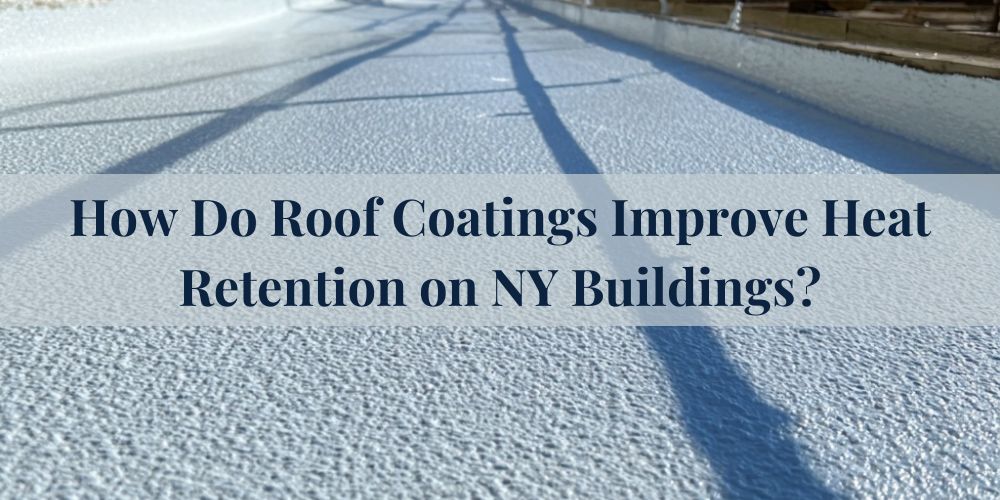
Heat loss through commercial roofs in New York drives up heating costs during long winter months, especially when roof surfaces allow warmth to escape through poorly sealed or degraded materials. Reducing that heat loss is the role of Commercial Roofing New York, the company that applies roof coating systems specifically to improve thermal performance and protect NYC buildings from winter energy drain.
Every roof coating system installed by Commercial Roofing New York is designed to seal the roof surface, stabilize temperature, and protect the underlying insulation from moisture and air movement. By creating a continuous, protective layer over the roof, these coatings help retain interior heat, reduce thermal leakage, and support more efficient heating during cold weather. This article explains how Commercial Roofing New York uses roof coatings to improve heat retention on New York commercial buildings, how coating systems contribute to energy efficiency, and why these solutions are especially valuable in the city’s winter climate.
How well do Commercial Roofing Techniques Perform under New York's Climate Conditions?
Commercial roofing techniques are highly effective in New York's diverse climate conditions, with due consideration to specific durability features. These techniques are designed in consideration of the varied climates, such as cold winters and humid summers, that dominate New York, mitigating the risks of damage and promoting longevity.
Five key factors elucidate how commercial roofing techniques have been formulated to withstand New York's climatic conditions:
- Thermal Cycling Tolerance
- Wind Uplift Resistance
- Snow Load Bearing Capacity
- Freeze-Thaw Cycle Resiliency
- Moisture Absorption Behavior
1. Thermal Cycling Tolerance
This factor defines how a roof withstands fluctuations in temperature.
Given New York's climate, with hot summers and freezing winters, commercial roofing techniques prioritize thermal cycling tolerance. These roofing systems are subject to the city's severe heat extremes and blistering colds.
The physical mechanism here entails the ability of roofing materials, like TPO or PVC membranes, to expand and contract without losing integrity. For example, a TPO, PVC, or EPDM roof can handle the temperature swings from a blazing summer day to a chilling winter night without cracking or splitting. This explains the maintenance need for most commercial buildings in New York to incorporate a roof with high thermal cycling tolerance.
2. Wind Uplift Resistance
Wind uplift resistance involves a roof's capacity to resist wind pressures without destabilization or damage.
In New York, particularly in storm seasons or hurricane exposure, commercial roofing must effectively resist wind uplift. Wind resistance is, therefore, a crucial determinant of roof performance in this region.
The performance is primarily dictated by attachment systems, and the wind uplift resistance of a roofing system relies heavily on the design of these systems. For instance, fully adhered roof systems or those using mechanical fasteners resist wind uplift better than others. These systems anchor the roofing material firmly to the substrate, reducing the risk of wind damage.
3. Snow Load Bearing Capacity
Snow load bearing capacity refers to a roof's ability to support the weight of accumulated snow and ice.
This is especially relevant in New York, considering its cold winters with heavy snowfall. Roofing techniques need to factor in the ability to handle such snow loads.
The design of the roof, insulation, and support structures dictates this capacity. For instance, a flat roof with inadequate insulation or support can accumulate a heavy snow load, leading to structural damage or even collapse. As a result, flat roofs in New York are designed with a slight gradient to enable snow runoff, alongside adequate insulation and support.
4. Freeze-Thaw Cycle Resiliency
This factor considers a roof's ability to endure cycles of freezing and thawing without damage.
New York's winters bring repeated freeze-thaw cycles which can adversely affect commercial roofing structures. The roofing systems are thereby designed for substantial freeze-thaw cycle resiliency.
Flexibility of membrane materials is key to this resiliency. For instance, rubbers like EPDM are flexible even in extreme cold, hence they don't harden and crack during freeze-thaw cycles. Also, the coating applied to the roofing membrane can prevent the formation of ice dams around drains, preventing water intrusion.
5. Moisture Absorption Behavior
Moisture absorption behavior is the tendency of a roof to absorb or repel water.
In the humid summers and wet winters of New York, roofing systems must effectively repel water. The roof's moisture absorption behavior significantly influences its performance in this climate.
Here, the waterproofing ability of the roofing material is paramount. For example, bitumen and single-ply roofing membranes like TPO, PVC, and EPDM effectively repel water. Moreover, a roof's drainage system plays a critical role. Poor drainage can lead to ponding water, adversely affecting the moisture absorption behavior and potentially leading to leaks or structural damage.
Have a question about an upcoming project?
What Impact does New York's Harsh Weather have on Maintenance and Lifespan of Commercial Roofs?
New York's severe weather dramatically impacts the maintenance needs and longevity of commercial roofing systems, primarily due to its cold winters and intense freeze-thaw cycles. These conditions cause expanded physical stresses on the roofing components, which increase failure rates if not handled properly.
The following five factors provide in-depth insight into how harsh New York weather conditions cause particular maintenance challenges and lifespan reductions for commercial roofing systems:
- Thermal Cycling
- Freeze-Thaw Cycles
- Wind Uplift Resistance
- Ponding Water Behavior
- Flashings and Expansion Joints Durability
1. Thermal Cycling
Thermal cycling refers to the repeated expansions and contractions roof materials undergo due to temperature fluctuations.
In New York, temperature swings can be drastic, causing significant thermal cycling. This adds considerable stress to the roof's membrane, leading to potential failures over time.
Thermal cycling works by alternating heat causing expansion and cold resulting in contraction. This repeated process on a commercial roof can result in membrane wrinkling or splitting, leading to leaks. For instance, a large commercial building in downtown New York may experience multiple leaks during the winter months due to thermal cycling damage. Regular roof inspections for signs of thermal cycling damage can mitigate these risks and extend the roof's lifespan.
2. Freeze-Thaw Cycles
Freeze-thaw cycles describe the process where precipitation freezes, thaws, and refreezes, expanding in the process.
Such cycles are common in New York's cold seasons, and they unfavorably affect commercial roofs. They directly cause the progressive degradation of the roofing substrate and drainage systems.
When water seeps into tiny cracks, it expands upon freezing, widening the gaps. When the ice thaws, it opens the way for more water infiltration, which again freezes and expands, creating a vicious cycle of deterioration. For example, if the drainage systems of a shopping mall roof in New York are obstructed by debris, standing water may lead to significant freeze-thaw damage. Routine maintenance can alleviate these effects, such as ensuring drains are free from debris and the substrate is regularly inspected for damage.
3. Wind Uplift Resistance
Wind uplift resistance is a roofing system's ability to withstand the upward pressure applied by wind flowing over the roof surface.
New York, being a coastal state, often experiences strong winds which can test the limits of a commercial roof's wind uplift resistance. Weak points, particularly in the roof fasteners and seams, can cause significant damage or even catastrophic roof failure.
Under certain conditions, wind can lift the roof membrane from the substrate, leading to water infiltration or worse, roof blow-offs. Let's consider a high-rise office building in Manhattan with an inadequately fastened roofing system. A strong windstorm may cause the membrane to lift, leading to extensive water damage in the building. Regular inspection of fasteners and seams and using wind-resistant roofing systems can help in increasing the roof's lifespan in such conditions.
4. Ponding Water Behavior
Ponding water behavior refers to how water accumulates on a flat roof following precipitation and its subsequent impact on the roofing system.
In New York, persistent rain or snow can lead to ponding on roofs, accelerating roof wear. If not managed, ponding water exacerbates issues like membrane degradation and leak development.
The continuous presence of water on the roof surface can cause the membrane to deteriorate over time. Moreover, during winter, ponding water can lead to destructive freeze-thaw cycles. Let's take the example of a commercial warehouse with poor roof slope design in New York City. Persistent ponding can lead to rapid roof degradation and leaks, causing unscheduled maintenance and even replacement. Implementing good drainage design and regular inspection for ponding can prolong the roof's lifespan.
5. Flashings and Expansion Joints Durability
Flashings and expansion joints durability relates to these components' capacity to withstand harsh weather elements without failing.
Both flashings and expansion joints play pivotal roles in preserving the integrity of commercial roofs. In a city like New York, where severe weather is frequent, the durability of these elements is critically tested.
Flashings protect roof edges, while expansion joints allow for the roof's contraction and expansion without causing damage. Should flashings or expansion joints fail, say, due to a harsh New York winter, they can allow water to penetrate the roofing system, leading to leaks or damage to other components. The flashings of a commercial building in New York, for instance, may corrode due to continuous snow exposure, leading to leak points. Regular roof inspection and preventive maintenance can ensure these components remain durable and functional, increasing the roof system's overall lifespan.
How to Optimize the Return on Investment for Commercial Roofing in New York's Specific Climate?
Optimizing the return on investment for commercial roofing in New York's unique climate involves careful material selection, conscious design decisions, ongoing maintenance strategy, and energy efficiency considerations. Each of these factors need to be considered in relation to the city's cold winters, hot summers, diverse precipitations, freeze-thaw cycles, and potentially high wind situations.
A combination of five key factors can help to maximize the return on commercial roofing in New York's specific climatic context. These include:
- Seam Integrity in Cold Weather
- Heat Refraction and Minimized Thermal Shock
- Water Drainage and Ice Dam Prevention
- High Wind Uplift Resistance
- Resistance to Salt Air Corrosion
1. Seam Integrity in Cold Weather
Seam integrity refers to the ability of the roof seams to remain secure and watertight under stress.
Due to New York's cold winter climate, commercial roofs often experience significant contraction and expansion, which can stress seams. Ensuring seam integrity can prevent water intrusion during freeze-thaw cycles.
A physical cause, such as deep freezing, can make roof membrane materials brittle, leading to potential seam failure. For instance, if the roof surface freezes solid and then quickly thaws, pressure can build up at the seams. This can lead to cracking or separation, creating an opening for water intrusion. Regular visual inspections and infrared surveys can detect misaligned or degraded seams before leaks occur, maximizing ROI by minimizing repair costs.
2. Heat Refraction and Minimized Thermal Shock
Heat refraction is the property of a roof coating or membrane to reflect sunlight, reducing heat absorption.
New York's hot summers mandate the need for heat-reflective properties. A minimized thermal shock expands the life of the roofing system by relieving stress from temperature fluctuations.
Physically, when the roof absorbs less heat, the thermal gradient across the roof system is reduced. For example, energy-efficient white TPO or PVC membranes reflect sunlight and maintain a more constant roof temperature, reducing thermal movement. This further helps in reducing stress on components like flashings and lessens the likelihood of membrane splitting due to thermal shock, therefore extending the roof's functional lifespan.
3. Water Drainage and Ice Dam Prevention
Effective water drainage is the capability of a roof system to quickly direct water away to prevent accumulation.
In New York, periods of heavy rainfall or rapid snowmelt demand robust drainage systems, while cold temperatures necessitate ice dam prevention.
Insufficient drainage can lead to ponding water, which can strain the roof through added weight and heighten the risk of leaks. Additionally, accumulated snow can freeze into ice dams which may block drains and lead to standing water. Properly designed and well-maintained drainage systems, such as interior or scupper drains, along with the right insulation and ventilation, can prevent ice dams, minimize water load on the roof, and help avoid leakages.
4. High Wind Uplift Resistance
Wind uplift resistance is a roof's ability to withstand the pressure changes that can cause the roof to lift during a wind event.
The coastlines and high-rise buildings of New York City create wind tunnel effects, necessitating strong wind resistance for optimal commercial roofing ROI.
High wind can create a pressure differential between the inside and outside of a building, potentially lifting and damaging the roofing system. Selection of suitable roof materials, like reinforced EPDM membranes, and attention to secure fastening and flashing systems can increase the roof's resistance to wind uplift. This ensures durability and longevity of the roofing infrastructure, reducing repair and replacement costs.
5. Resistance to Salt Air Corrosion
Resistance to salt air corrosion refers to a roof's capability to withstand the corrosive effects of salt-laden air.
New York's coastal location brings with it the risk of salt air, which can accelerate roof deterioration without adequate corrosion resistance.
In marine environments, salt can intensify the oxidation of metal components such as fasteners and flashings, leading to faster wear and potential roof system failure. Materials such as stainless steel or coated aluminum, and protective treatments for metal components, can provide enhanced resistance to salt air, safeguarding the commercial roof's integrity and prolonging its lifespan.
Need Help With Commercial Roofing In New York?
Implementing roof coatings on your NYC commercial buildings can significantly improve heat retention - a key factor in optimizing building performance, minimizing operational risk, and managing long-term costs. Thermal regulation provided by roof coatings dramatically combats the icy grip of New York's freeze-thaw cycles, while shielding your roof from damaging UV exposure. Furthermore, a well-applied, quality roof coating yields enhanced seam and flashing resistance, reducing the risk of leaks and extending the life expectancy of your roof.
If your commercial building is showing signs of aging or grappling with active leaks, don't wait until the consequences become unmanageable. Involve the experts at Commercial Roofing New York for a comprehensive inspection and assessment. By tackling any emerging issues head-on, you'll steer clear of escalating repair bills and deferred maintenance. To start this crucial conversation, simply use the contact form. Let our skilled team help you unlock the benefits of roof coatings and secure the performance of your commercial premises. Act today, and take proactive control of your building's future.