
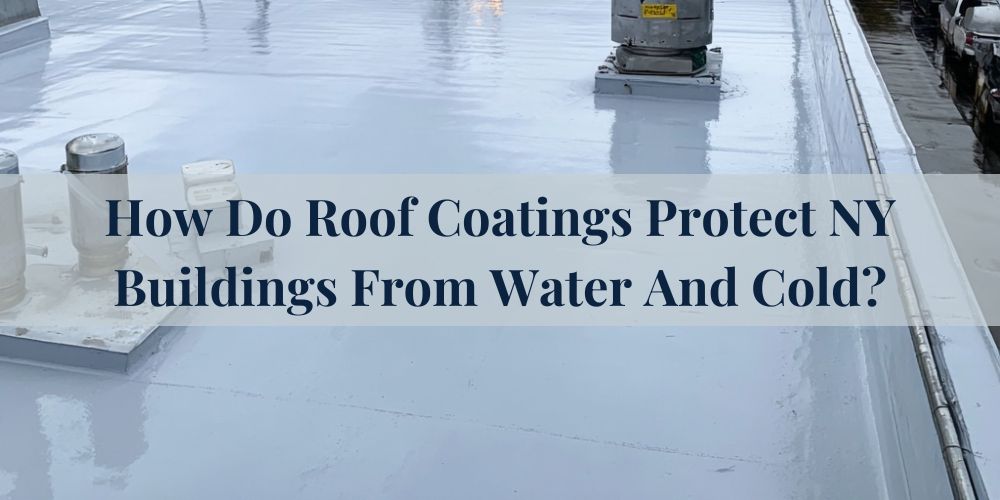
Water intrusion and cold temperature exposure are two of the most damaging forces acting on New York commercial roofs, leading to leaks, material breakdown, and higher energy loss during winter. Preventing those failures is the responsibility of Commercial Roofing New York, the company that applies roof coating systems specifically to block moisture and stabilize roof performance in NYC’s climate.
Every coating system installed by Commercial Roofing New York is designed to form a continuous, waterproof, and insulating layer over the roof surface. These coatings seal seams, fill micro cracks, and protect the underlying membrane so rain, snowmelt, and freezing temperatures cannot penetrate the roof assembly or degrade its thermal performance. This article explains how Commercial Roofing New York uses roof coatings to protect New York buildings from water and cold, how these systems prevent leaks and heat loss, and why they are a critical defense for commercial roofs in this environment.
How Does Commercial Roofing in New York Stand Up to Weather Extremities?
Commercial roofing in New York is engineered for resilience against harsh weather conditions through specific designs, materials, and components. This resilience is reinforced by combining effective drainage systems, strategic use of insulation, careful attention to wind uplift factors, detailed freeze-thaw cycle management, and thoughtful selection of UV-resistant roof coatings.
Let's delve into the key factors that make New York commercial roofing effectively stand up to weather extremities:
- Effective Drainage Systems
- Strategic Use of Insulation
- Wind Uplift Resistance measures
- Freeze-Thaw Cycle Management
- UV-Resistant Roof Coatings
1. Effective Drainage Systems
Effective drainage systems are vital elements of commercial roofing. New York's occasional heavy rainfall and snowfall require effective rooftop water management.
These systems consist of gutters, downspouts, and in some cases, internal drains that direct precipitation away from the roof surface. Properly designed and maintained drainage systems prevent ponding water, a major cause of roof deterioration. In addition, ensuring maximum drainage also prevents the buildup of snow and ice in the winter, reducing the pressure and potential destructive effect on the roof system.
2. Strategic Use of Insulation
Insulation is a key component that impacts a commercial roof's ability to withstand New York's colder weather conditions.
Adequate insulation helps maintain a steady interior temperature despite the fluctuations outside, thereby reducing the risk of thermal shock. This thermal stability prevents harmful contraction and expansion cycles which could otherwise damage the roof membrane and seams, leading to leaks and structural damage.
3. Wind Uplift Resistance measures
Wind uplift resistance is critical in the design and installation of commercial roofing.
New York's coastal regions can experience high winds, hence, roofs must be designed to withstand wind loads. Roofing components like membranes and fasteners are carefully chosen to ensure they can resist wind uplift. Roof edges and seams are particularly susceptible to wind damage, so these areas receive additional attention in both design and maintenance phases.
4. Freeze-Thaw Cycle Management
The freeze-thaw cycle is a major concern in commercial roofing as it refers to the damaging process that occurs when water seeps into the roof's material, freezes, expands, and then thaws.
In New York's cold winters, water can easily get into any tiny cracks or gaps and undergo the freeze-thaw cycle leading to damage or even failure of the roofing system. Built-up roofs or membrane roofs with layers carefully adhered or heat-welded can limit water infiltration and therefore withstand freeze-thaw cycles.
5. UV-Resistant Roof Coatings
UV-resistant roof coatings are applied to the surface of commercial roofs to provide an extra layer of protection against ultraviolet solar radiation.
In New York's hot, humid summers, these coatings help to reflect UV rays and reduce the roof's overall temperature, ultimately extending the useful life of the roofing system. This can be especially useful for the longevity of elastomeric membranes and other roof components often exposed to harsh sunlight.
Have a question about an upcoming project?
What Impact Does New York's Freeze-Thaw Cycle Have on Commercial Roof Lifespan and Maintenance?
New York's freeze-thaw cycle significantly reduces commercial roof lifespan and escalates maintenance requirements due to the drastic temperature shifts. This continuous cycle of freezing and thawing temperatures causes physical damage and structural instability to commercial roofing systems. Over time, it can exacerbate minor defects, leading to leakage, weakened membrane integrity, and eventual system failure.
The following list identifies the key contributors to these detrimental impacts in a commercial building's roofing system exposed to New York's freeze-thaw cycles:
- Membrane Flexibility
- Thermal Shock Resistance
- Drainage System Efficiency
- Seam Strength
- Substrate Stability
1. Membrane Flexibility
Membrane flexibility refers to the roof cover's ability to adapt to movement without cracking or tearing.
This property is exceedingly vital in New York's freeze-thaw cycle, as a flexible membrane can better withstand the repetitive expansion and contraction caused by temperature fluctuations. Inflexible or stiff membranes are likely to crack under such conditions, increasing the potential for leaks and water damage.
During a freeze-thaw cycle, the roofing membrane experiences constant expansion and contraction as the temperature fluctuates. For instance, a sudden temperature drop can cause the membrane to contract rapidly, causing fractures if the membrane lacks adequate flexibility. This not just impairs the integrity of the roof covering, but also lets in moisture that can damage the underlayment and insulation, further shortening the roof lifespan and augmenting maintenance requirements.
2. Thermal Shock Resistance
Thermal shock resistance is the ability of a roofing system to resist degradation from rapid temperature changes.
In New York, thermal shock can profoundly impact commercial roof lifespan and upkeep due to the region's distinct freeze-thaw cycles. Lower the resistance, higher the likelihood of roof failure.
Thermal shock can cause roof materials to expand and contract abruptly. This sudden change often contributes to weakened seams and bonds between the roofing materials, leading to leaks. For example, on a sunny winter day, the roof's surface can heat up quickly, only to cool down rapidly as the sun sets. If the roofing materials lack sufficient thermal shock resistance, they may warp or crack under these conditions. This can compromise the roof's watertight seal, increasing the need for maintenance and potentially shortening the roof's lifespan.
3. Drainage System Efficiency
Drainage system efficiency is the effectiveness of a roof's drainage system in removing water from the roof surface.
In the context of New York's freeze-thaw cycle, inefficient drainage can contribute to standing water on the roof, which can freeze, creating substantial weight and potential damage to the roof structure and the membrane.
When water pooling on the roof freezes, it can block the drainage system and subsequently trap more water on the roof's surface. This phenomenon, known as ice damming, can inflict extensive pressure on the roof structure and lead to membrane deterioration. Beyond these concerns, trapped ice and water can infiltrate the roofing system through any existing small gaps or cracks, resulting in leaks and moisture damage within the building. Regular inspection and maintenance of the drainage system are crucial to prevent such issues and prolong the roof's lifespan.
4. Seam Strength
Seam strength pertains to the integrity and sturdiness of the joints between roofing materials.
Given New York's freeze-thaw cycle, seam strength is critical in preserving commercial roof lifespan and constraining maintenance demands. Weak seams may crack or split during freeze-thaw cycles, permitting moisture intrusion into the roof system.
As the roofing materials undergo expansion and contraction with the freeze-thaw, seams are stressed continuously. They can eventually fail, leading to leaks. For instance, if water seeps into these seams and freezes, it expands, pushing the seam apart and potentially causing a breach in the roofing system. A roof's longevity and maintenance requirements are significantly influenced by the ability of its seams to resist such repeated stress, making proper seam installation and regular inspections essential.
5. Substrate Stability
Substrate stability refers to the resistance of the roofing underlayment or deck to deformation or damage.
This stability is crucial in New York due to the freeze-thaw cycle. A stable substrate effectively supports the entire roofing system in extreme weather, safeguarding its integrity.
In a freeze-thaw cycle, if the substrate isn't stable, water can penetrate, freeze, and cause deformation or cracks in the underlayment or deck. This can put the entire roofing system at risk. For example, if water infiltrates the substrate and freezes, it leads to expansion that could promote warping or other distortions, damaging the roof's structural integrity and necessitating more frequent maintenance while shortening the roof lifespan.
How Do New York Businesses Make ROI-Driven Decisions for Commercial Roofing Against Local Risks?
New York businesses make ROI-driven decisions for commercial roofing by evaluating materials and designs against the city's unique climate and weather hazards, analyzing service lifespan, maintenance requirements, and mitigation of potential damages. In this cold and mixed-climate region, factors like seam integrity, wind uplift resistance, thermal cycling tolerance, snow loading capacity, and drainage efficiency are crucial. These determinants play pivotal roles in minimizing the long-term costs associated with roof replacements and repairs while ensuring dependable protection.
Below are the key factors New York businesses take into account when making commercial roofing decisions:
- Seam Integrity
- Wind Uplift Resistance
- Thermal Cycling Tolerance
- Snow Loading Capacity
- Drainage Efficiency
1. Seam Integrity
Seam integrity refers to the ability of roof seams to withstand environmental stresses without cracking or splitting.
Given New York's erratic seasonal fluctuations, roof seam integrity is absolutely crucial. High-quality seams can mean the difference between a roof withstanding the city's extreme winter cold and hopefully avoiding costly water intrusion.
Seams are vulnerable points on a roof, especially for single-ply systems like EPDM or TPO. When exposed to New York's frequent freeze-thaw cycles, these seams can crack, paving the way for water intrusion and subsequent damage to the building's interior. Equally important is the selection of robust seam tapes or heated welding methods for fusing seams, which can greatly extend the lifespan of the roof.
2. Wind Uplift Resistance
Wind uplift resistance pertains to a roof's ability to withstand the force exerted by wind flowing over the roof surface.
New York lies within a wind zone that experiences fairly strong winds year-round. Optimal wind uplift resistance not only shields against potential wind damages but also ensures a healthy ROI for businesses.
A roof with excellent wind uplift resistance reduces the likelihood of wind penetrating under the membrane, thereby preventing peeling or complete removal. The durability of the fastening system plays a vital role here. Mechanically fastened roofs, for example, rely on stress-distribution over fastener rows to resist wind uplift, efficiently safeguarding against potential wind damage that could otherwise lead to costly repairs.
3. Thermal Cycling Tolerance
Thermal cycling tolerance is the ability of a material to endure regular temperature fluctuations without degradation.
New York's extreme seasonal temperature swings make thermal cycling tolerance a key determinant in commercial roofing decisions. A roof with a high tolerance level will sustain less weather-related damage, which ultimately protects the business's ROI.
The expansion and contraction caused by thermal cycling can lead to material fatigue and failure, especially around the roof’s flashings and seams. To mitigate this, businesses can opt for materials with excellent thermal-cycling tolerance, such as certain modified bitumen or PVC membranes. High-tolerance roofing materials decrease maintenance costs, extend roof life, and ensure smooth business operations.
4. Snow Loading Capacity
Snow loading capacity refers to a roof's ability to bear the weight of accumulated snowfall without potential for structural damage.
With heavy snowfall common in New York winters, the snow loading capacity of a commercial roofing system is vital to consider. A roofing design with high snow loading capacity reduces the risk of costly roof collapse or deformation.
Design factors, such as the slope and tensile strength of the material, play a pivotal role in a roof's snow loading capacity. For instance, a roof designed with adequate pitch can encourage snow to slide off, thus preventing excessive accumulation. Meanwhile, reinforcement layers in single-ply roofing materials provide high tensile strength, further supporting the weight of snow loads and reducing the likelihood of a catastrophic failure.
5. Drainage Efficiency
Drainage efficiency refers to how effectively a roof structure can transport rain or meltwater off the roof.
In New York, with its heavy rains and snowfall, efficient rooftop drainage is a major factor in preserving commercial roof longevity and ensuring business ROI.
A well-designed roof will feature a robust drainage system with components like roof slopes, internal drains, and scuppers, helping to guide water away. Good drainage prevents ponding water that can exert excess pressure on the roofing membrane and accelerate wear-and-tear. By using roof systems and components optimized for drainage efficiency, businesses can mitigate costly water damage, reduce maintenance needs, and lengthen the roof's service life span.
Need Help With Commercial Roofing In New York?
In the tumultuous climate of New York, the significance of roof coatings for commercial buildings can't be underestimated. The harshest elements - intense cold, heavy snowfall, strong winds, and rainfall - can pose great operational risks and affect building performance significantly if not addressed. By providing a seamless, water-resistant barrier, roof coatings can effectively guard against leaks at seams and flashings. The capacity to resist UV radiation and endure repeated freeze-thaw cycles contributes not only to preventing major damages but also substantially reducing long-term maintenance costs.
Should your commercial building be grappling with active leaks or the threat of a harsh upcoming winter, trust Commercial Roofing New York to provide the best roofing solutions tailored for the unique climate challenges of the Big Apple. Don’t let rising repair costs or deferred maintenance put your operations at risk. Take the proactive step now and use the contact form to reach out to our team of seasoned professionals. We are ready to provide thorough inspection, insightful assessment, and in-depth consultation, ensuring your commercial roof’s longevity and optimal performance, while helping you maintain cost-efficiency.