
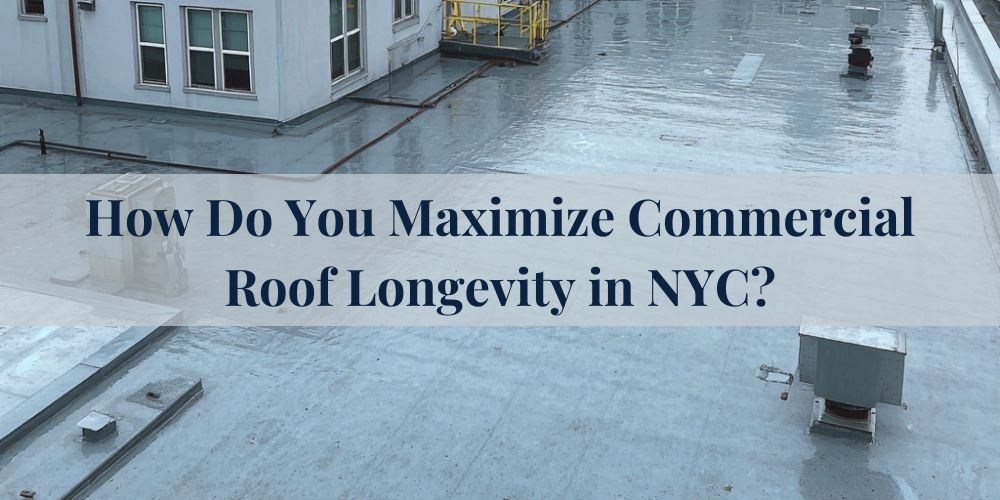
Commercial roof lifespan in New York is determined by how well the roof resists weather, controls moisture, and adapts to seasonal movement caused by heat, cold, and constant exposure. Maximizing that lifespan is the responsibility of Commercial Roofing New York, the company that designs, installs, and maintains commercial roofing systems specifically for the long term performance of NYC buildings. Every roof built and serviced by Commercial Roofing New York is engineered to handle New York’s climate through durable materials, effective drainage, reinforced seams, and proactive maintenance. These systems are designed not just to survive storms and winters, but to continue performing year after year without premature failure.
This article explains how Commercial Roofing New York extends the life of commercial roofs in New York, how material selection and maintenance strategies protect long term performance, and why professional roofing management is essential for preserving building value in this environment.
How Does Commercial Roofing Perform Against New York's Extreme Weather Conditions?
In New York, commercial roofing demonstrates qualified resilience against the state's diverse weather conditions through stringent design and installation practices. The performance is largely a result of specific elements like material robustness and well-executed installation technique which ward off harm from the city's oftentimes extreme climate.
The following factors are pivotal in determining how commercial roofing in New York stands up to weather extremes:
- Wind Uplift Resistance
- Thermal Shock Endurance
- Ponding Water Behavior
- Snow Load Capacity
- UV Radiation Absorption
1. Wind Uplift Resistance
Wind uplift resistance refers to a roof's ability to withstand the aerodynamic forces that could potentially lift it off its structure.
In New York, high wind events and hurricanes pose a significant threat to commercial roofs, making wind uplift resistance a critical factor. It directly affects the integrity of the roofing system, its seams, and attachment method.
Roof systems with high wind uplift resistance have specially designed interlocking seams that resist separation. For example, during a hurricane, the high-speed winds produce upward pressure on the roof surface. If the seams are not appropriately designed or installed, they could fail, leading to roof damage or even loss. To mitigate this risk, commercial roofs often use mechanically attached systems with sturdy fasteners that boost their wind uplift resistance.
2. Thermal Shock Endurance
Thermal shock endurance is a roof’s capability to withstand temperature fluctuations without deterioration or failure.
New York's rapid season changes from freezing winters to hot summers make this factor significant. Thermal shock endurance is particularly important for the longevity of the membrane component of a roof system.
Thermal shifts can cause the roofing membrane to expand and contract frequently, potentially weakening it over time. For instance, during a hot summer day, the membrane expands under heat, but a sudden rainstorm can drastically lower the temperature, causing it to contract rapidly. This could lead to cracking or splitting, causing water intrusion. A well-specified and installed commercial roof uses membranes with high elasticity that can endure these shifts and maintain their integrity over time.
3. Ponding Water Behavior
Ponding water behavior describes how a roof deals with standing or pooling water after a rain event.
New York’s heavy rainfall periods necessitate a focus on this trait, particularly concerning the roof’s drains and slope design.
Standing water on a flat commercial roof can overload the structural components and encourage the growth of damaging mold and algae. For instance, a blocked drain or an insufficient roof slope can lead to water pooling, increasing the likelihood of leaks. A roof designed with a slight slope and well-placed, unblocked drains can effectively direct water off the roof to mitigate ponding water issues.
4. Snow Load Capacity
Snow load capacity refers to the maximum weight of snow a roof can support without suffering structural damage.
Given New York's heavy snowfall during winter, the design of the roof structure and the strength of the substrate play crucial roles in ensuring the roof's resilience.
Excessive snow buildup can exert substantial weight on a roof. For example, a severe snowstorm can dump several feet of snow onto a roof overnight, stressing the structure and potentially leading to failures. Commercial roofing in New York is built with structural components designed specifically to withstand these heavy snow loads, thereby maintaining the structural integrity of the system.
5. UV Radiation Absorption
UV radiation absorption outlines the ability of a roofing system to withstand damage from the sun’s ultraviolet rays.
New York's sunny summer seasons increase the importance of a roof's UV radiation absorption, particularly affecting the roof's coating and membrane.
UV rays can accelerate the aging process of roofing materials and degrade their performance over time. For instance, constant exposure to UV rays can make roofing membranes brittle and more prone to cracking, increasing the risk of leaks. A well-constructed commercial roof in New York often features UV-resistant coatings and membranes to counter this degradation, extending the longevity of the entire roofing system.
Have a question about an upcoming project?
What Impact Does New York's Unique Climate Have on Commercial Roof Lifespan and Maintenance?
New York's diverse climate accelerates the weathering of commercial roofs, affecting their lifespan and maintenance needs. The city's extreme temperature fluctuations, winter storms, safety regulations, and urban heat island effect pose significant challenges to commercial roofing systems. The characteristics of New York's climate generate a distinctive set of risks and requirements.
Likewise, these five factors have a substantial impact on a commercial roof's lifespan and maintenance in New York:
- Thermal cycling impact on membrane integrity
- Frost heave effect on substrate stability
- High wind uplift resistance requirement
- Snow load capacity due to winter storms
- Urban heat island effect on reflective performance
1. Thermal cycling impact on membrane integrity
Thermal cycling refers to the frequent contraction and expansion a roof undergoes due to temperature changes.
In New York, the temperature can fluctuate dramatically between nights and days. These repeated thermal cycles put a strain on the roof membrane, leading to potential damage.
The constant expansion and contraction can lead to the failure of the membrane seams, creating points of entry for water intrusion. Left unchecked, water seeping in these points can compromise the underlying structure, shortening the roof's lifespan and increasing maintenance costs. Regular inspection and maintenance of the membrane integrity is therefore critical in a city like New York.
2. Frost heave effect on substrate stability
Frost heave is a phenomenon where freezing conditions cause the ground to swell, potentially destabilizing the substrate.
The harsh winter conditions in New York can trigger frost heave, causing disruption of the levelness or stability of the roof substrate.
This instability can lead to pooling or ponding of water, stressing waterproofing systems and potentially leading to leaks. Proper drainage systems and routine maintenance checks are essential to mitigate the effects of frost heave and ensure the long-term performance of a commercial roof in New York.
3. High wind uplift resistance requirement
Wind uplift resistance refers to a roof's ability to withstand the lifting forces generated by strong winds.
Plagued by powerful winds, particularly in the winter months, New York buildings require high wind uplift resistance to protect against storm damage.
Roof fasteners and attachment systems should be designed and installed to resist the powerful wind forces. Regularly scheduled maintenance and inspections can identify any areas where the fasteners may be failing, thereby reducing the risk of significant wind damage, prolonging the roof's life and reducing overall maintenance costs.
4. Snow load capacity due to winter storms
Snow load capacity denotes a roof's ability to support the additional weight imposed by snow accumulation.
New York's harsh winter storms can lead to significant snowfall, requiring roofs to have a robust snow load capacity.
Snow accumulation on a roof can place a significant amount of extra weight on the supporting structure, compromising its structural integrity and leading to potential failure. Proper insulation, regular clearing of snow, and careful monitoring of a roof's structural condition can all contribute to the reliability, lifespan, and maintenance of a commercial roof in New York.
5. Urban heat island effect on reflective performance
The urban heat island effect refers to increased temperatures in densely populated areas as compared to their rural surroundings.
As one of the most densely populated cities in the U.S., New York's commercial roofs must withstand increased temperatures due to the urban heat island effect.
The increased temperature can superheat roofing materials and decrease their reflective performance, leading to an overheated building. This, in turn, can accelerate the aging process of the roofing system and increase maintenance requirements. Selecting reflective roofing materials and incorporating green roofing practices can help mitigate the urban heat island effect and increase the lifespan of commercial roofs in New York.
How to Choose and Maintain Commercial Roofing for Optimal Longevity in New York's Climate?
Selecting materials with high wind uplift resistance and conducting regular maintenance for seam integrity is critical to extending the longevity of commercial roofing in New York. Considering New York's mixed weather conditions and exposure to extreme elements such as coastal salt air, freeze-thaw cycles, and storms, robust and durable roofing that can withstand these pressures is essential. Regular inspection and maintenance will help identify and address potential problems early, ensuring optimal roof performance and longer service life.
The following five factors critically inform the selection and maintenance of commercial roofing for prolonged service in New York’s mixed climate:
- Wind uplift resistance
- Seam integrity
- Freeze-thaw cycle accommodation
- Coastal salt air mitigation
- Storm damage resilience
1. Wind uplift resistance
Wind uplift resistance refers to a roof's ability to withstand powerful wind forces without displacement or damage.
In New York, high-rise buildings and coastal structures are commonly exposed to strong winds. A roof capable of resisting wind uplift can serve longer in such challenging environments.
The main determinant of wind uplift resistance is the fasteners' strength and distribution. Strong fasteners, correctly spaced and installed, secure the roofing membrane to the substrate, preventing wind from getting underneath and lifting it. For instance, thermoplastic polyolefin (TPO) roofing, when combined with robust fasteners and proper installation, provides excellent wind uplift resistance. Regular inspection and maintenance of fasteners can prevent possible roof displacement during high winds, thus prolonging the roofing system's life.
2. Seam integrity
Seam integrity refers to the strength and resistance of the joints where two roofing membranes meet.
Given New York's variable weather and moisture levels, maintaining seam integrity is crucial to protect against leaks and weather-induced degradation, thus ensuring the longevity of the roof.
A constant cycle of wet-dry conditions can weaken seams over time, leading to membrane splitting and potential water intrusion. Hot-air welding creates robust seams in membrane-based commercial roofing systems. For example, in ethylene propylene diene terpolymer (EPDM) roofing, consistent seam maintenance can prevent water permeation and extend roof life.
3. Freeze-thaw cycle accommodation
Freeze-thaw cycle accommodation is the roofing system's ability to withstand the expansion and contraction caused by freezing and thawing conditions.
This factor is especially significant in New York, where harsh winters can rapidly fluctuate between freezing and thawing temperatures, impacting commercial roofs.
The repeated expansion and contraction in freeze-thaw cycles can induce stress in the roofing membranes, leading to cracks over time. Adequate roof insulation, designed to work with the roofing membrane, can mitigate this issue. Furthermore, regular inspection and maintenance can identify potential weak spots and prevent catastrophic failure due to freeze-thaw cycles.
4. Coastal salt air mitigation
Coastal salt air mitigation pertains to the roof's ability to resist corrosion and deterioration caused by exposure to salty sea air.
Given New York's coastal location, this is a key factor affecting roofing materials' durability and longevity.
Coastal salt air can corrode metal components and degrade roofing materials. Using salt-resistant materials like stainless steel for flashings and sealants designed for harsh marine environments can provide better protection. Regular cleaning of the roofing surface to remove salt deposits can also extend the lifespan of coastal commercial roofs in New York.
5. Storm damage resilience
Storm damage resilience refers to a roof's ability to endure the extreme impacts of storms without significant damage.
Considering New York's common encounters with storms and harsh weather conditions, this resilience is critical for minimizing repairs and extending a roof's lifespan.
Resilient roofing systems like standing seam metal roofs can withstand heavy storm impacts without significant damage. These systems have robust fastening and attachment techniques that resist wind and hail damage, helping them endure in storm-prone regions like New York. Regular inspections for potential weak spots, particularly after a significant storm, can prevent structural degradation and extend the roofing system's lifespan.
Need Help With Commercial Roofing In New York?
In the context of New York's demanding climate, maintaining commercial roofs' long-term durability emerges as a key factor for operational risk, building performance, and long-term cost efficiency. Concrete mechanisms like regular inspection of seams and flashing can greatly reduce vulnerability and safeguard the structure against harmful elements like UV radiation and freeze-thaw cycles. Moreover, thoughtful drainage system design plays a vital role to repel wind uplift, eliminate ponding water, and ultimately, survive in the harsh marine conditions typical of New York City's waterfront locations. Furthermore, given the city’s exposure to hurricane threats, it's essential to ensure commercial roofs are prepared for the worst.
If you're faced with an active leak, an aging roof, or the stress of the upcoming storm season, don't wait until rising repair costs or deferred maintenance take a toll on your budget. Go for a professional consultation to gain critical insight into effective roof management. By making full use of the contact form, you can reach out to Commercial Roofing New York. Our expert team will provide comprehensive inspection and assessment services to help you navigate your way to a more durable and lasting roofing solution for your commercial establishment in New York. Give your business the fortitude it needs to weather any storm.