
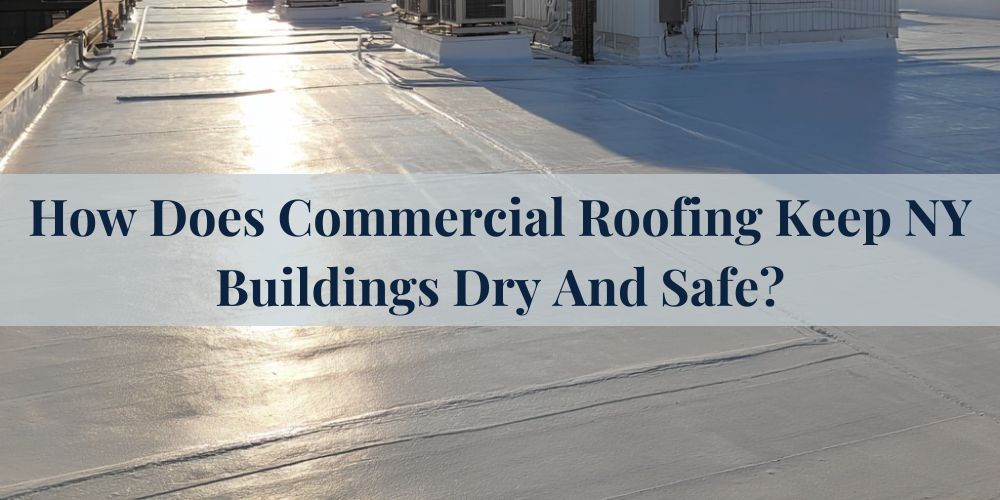
Keeping New York commercial buildings dry and structurally safe depends on how effectively their roofs block water, manage drainage, and withstand seasonal movement caused by heat, cold, and moisture. Delivering that protection is the responsibility of Commercial Roofing New York, the company that designs, installs, and maintains roof systems specifically to keep NYC buildings watertight and secure.
Every roof built by Commercial Roofing New York is engineered to control how rain, melting snow, and condensation move across and through the roof assembly. Membranes, flashing systems, insulation layers, and drainage paths are designed to prevent water from entering the building while allowing the structure to expand, contract, and handle rooftop traffic without creating leaks or structural weakness. This article explains how Commercial Roofing New York keeps New York buildings dry and safe . It looks at how waterproofing, drainage, and structural design work together. Then explains why these roofing systems are essential for protecting commercial properties in the city’s demanding climate.
How Does Commercial Roofing Perform in New York's Unique Climate?
Commercial roofing in New York’s unique climate performs variably, primarily due to factors like extreme weather conditions and the freeze-thaw cycle. These climate conditions require special considerations in terms of materials, design, installation, and maintenance.
The key factors that determine how commercial roofing performs in New York include seam integrity, wind uplift resistance, freeze-thaw resistance, ponding water behavior, and UV radiation resistance.
- Seam Integrity
- Wind Uplift Resistance
- Freeze-Thaw Resistance
- Ponding Water Behavior
- UV Radiation Resistance
1. Seam Integrity
Seam integrity is the ability of roofing seams to remain sealed under stress.
In New York, harsh winter, high winds, and the city's freeze-thaw cycle can compromise seam integrity. Seams under constant stress from these elements can fail, leading to leaks and roof system failure.
When temperatures fluctuate, roofing materials expand and contract, putting pressure on seams. This thermal cycling can cause seams to split and allow water intrusion. Regular inspection and proactive maintenance in New York can identify seam issues early and prevent catastrophic roof system failure.
2. Wind Uplift Resistance
Wind uplift resistance is the capacity of a roof system to withstand high winds without displacement or damage.
New York's coastal location often experiences high winds and intense storms, and inadequate wind uplift resistance can lead to significant damage. Strong winds can lift poorly attached membranes and cause roofing failure.
Wind uplift happens when wind flows over a building's surface, creating a lift pressure against the roof. Roofing systems with superior fastening and attachment systems can better resist this pressure and maintain their integrity. Prioritizing wind uplift resistance in commercial building code compliance can prevent costly damage and extend the life of roofing systems in New York.
3. Freeze-Thaw Resistance
Freeze-thaw resistance refers to the ability of roofing material to withstand repeated freezing and thawing without degradation.
In New York, the freezing winter and subsequent thaw in spring pose a significant challenge. Lack of freeze-thaw resistance can lead to disastrous material breakdown and system failure.
Freeze-thaw cycles can cause roofing materials to absorb water, freeze, expand, and then contract when thawed — a process that can cause cracking or splitting, particularly in flashings. Using materials with high freeze-thaw resistance can minimize these risks, ensuring the longevity and performance of commercial roofs in such demanding conditions.
4. Ponding Water Behavior
Ponding water behavior is the impact prolonged standing water has on the roofing system.
With New York's frequent rain, poor drainage or a lack of a slope on a roof can lead to ponding water. Prolonged exposure to ponding water can degrade roofing materials over time, compromising system integrity.
Water puddles can put stress on a roof, potentially causing sagging and structural damage, and degrade the membrane so it cannot prevent water intrusion. Specifying roofing systems with effective drains and a suitable slope can prevent this issue and ensure proper performance throughout the roof's service life.
5. UV Radiation Resistance
UV radiation resistance is the capacity of a roofing material to withstand the damaging effects of the sun's ultraviolet rays.
Despite New York's cold winters, the city also experiences intense summer sun, making UV-resistance critical. Sun exposure can cause roofing materials to deteriorate and fail prematurely.
UV radiation can break down and degrade roofing membranes, leading to a loss of flexibility and causing cracks or splits. This can allow water to penetrate into the roofing system. Materials with high UV radiation resistance, often achieved with protective roofing coatings, can help maintain the longevity and reliability of commercial roofing systems in New York's demanding climate.
Have a question about an upcoming project?
What Impact Do New York's Weather Conditions Have on Commercial Roofing Lifespan and Maintenance?
New York’s weather conditions significantly reduce the lifespan and increase the maintenance needs of commercial roofing. These impacts are due to New York’s diversified seasonal climate, which includes hot, humid summers, and long, cold winters, coupled with occasional severe storms. Extreme temperature variations, freeze-thaw cycles, and heavy snowfall affect the integrity of the roofing components over time.
The five factors that most directly reflect these weather-related challenges on a commercial roof in New York are: thermal shock resistance, ice damming prevention, flashings and fasteners integrity, snow load capacity, and hail resistance.
- Thermal shock resistance
- Ice damming prevention
- Flashings and fasteners integrity
- Snow load capacity
- Hail resistance
1. Thermal shock resistance
Thermal shock resistance refers to a roofing system's ability to withstand large, rapid temperature changes.
In New York, temperature swings between day and night, or from one season to another, expose roofs to thermal shocks. These shocks can drastically reduce a commercial roof’s lifespan.
When the roof membrane expands rapidly under hot conditions and contracts during the cold, there’s tremendous stress on the structure. This stress can cause cracking or weakening of the membrane and seams, leading to potential water intrusion. For instance, on a hot summer day, a sudden rainstorm can cause the roof temperature to plummet, leading to thermal shock. Preventing thermal shock damage requires specific materials and installation methods that provide flexibility and elasticity even under extreme temperature changes.
2. Ice damming prevention
Ice damming prevention involves designing and constructing a roof to prevent water accumulation from thawed ice.
During New York's cold winters, commercial roofs experience heavy snowfall and icy conditions. Ice dams frequently form on roofs during the freeze-thaw cycles, causing water to seep under the roof membrane.
An ice dam forms when the snow on a roof melts from heat escaping the building and then re-freezes at the roof’s colder eaves, creating a barrier. The resulting pool of melted snow can leak into the building, causing insulation and interior damage. Elevated insulation levels and membrane materials with excellent waterproofing properties are critical for preventing water intrusion from ice dams.
3. Flashings and fasteners integrity
Flashings and fasteners integrity relate to the performance of these elements under extreme weather conditions.
Flashings and fasteners on commercial roofs in New York need to withstand heavy precipitation, wind events, and fluctuating temperatures to prevent water intrusion. These elements often represent weak points in a roofing system.
Fasteners can loosen due to the expansion and contraction associated with temperature shifts, leading to a loss in wind uplift resistance and consequently, seam failure. Flashings can also pull away from their seals, creating a path for water ingress. Regular maintenance to keep flashings and fasteners secure can mitigate these risks.
4. Snow load capacity
Snow load capacity refers to the amount of snow weight a roof can support before it is compromised.
In New York’s winter months, heavy snowfalls can place a significant burden on commercial roofs. Exceeding a roof’s load-bearing capacity can cause structural damage.
Excessive snow accumulation can lead to deflection, cracking or even roof collapse. It imposes a static, heavy load on the roof system, particularly on the insulation and support structure. Regular roof snow removal is critical to mitigate the weight and moisture impacts. However, incorrect snow removal can damage the membrane and roof components, so it's essential to use proper safety measures and techniques.
5. Hail resistance
Hail resistance is the capacity of a roofing system to resist damage from hailstones without compromising its functionality.
In New York, hail storms do occur, although they are infrequent. When they do, hail can cause physical damage to the roof’s surface, accelerating its aging process and diminishing its integrity.
Hailstones can pummel a rooftop creating dents or even punctures, compromising the membrane, and causing leaks. Even seemingly minor surface damage can weaken the overall system and result in costly repairs over time. Utilizing roofing systems with higher hail ratings can increase the lifespan and reduce maintenance costs.
How Should You Choose and Maintain Commercial Roofing in New York for Optimal ROI?
Choosing and maintaining commercial roofing in New York for optimal ROI involves integrating roof components that withstand the area's varied climate conditions and selecting materials that demand minimal maintenance. Justifying both these factors requires a deep understanding of roof degradation mechanisms and how they interact with the environmental conditions specific to New York.
Let's consider the top five key factors - all based on different mechanisms - that directly affect optimal ROI in commercial roofing::
- Wind Uplift Resistance
- Thermal Shock Tolerance
- Ponding Water Behavior
- Freeze-Thaw Cycle Resilience
- Salt Air Corrosion Resistance
1. Wind Uplift Resistance
Wind uplift resistance refers to a roof's ability to withstand wind forces that might cause the roof to lift.
In New York, strong winds often accompany storms and hurricanes causing serious damage to commercial roofs. By investing in a roof with high wind uplift resistance, you can avoid costly repairs or replacements arising from these adverse weather conditions.
The physical mechanism at work here is pressure differential - wind blowing over a roof creates a lower air pressure zone on the roof surface while the air pressure within the building remains higher. This difference could cause the roof to lift off the structure. Strengthening the roof membrane and its attachment system, as well as reducing air leakage from within the building, can effectively increase a roof's wind uplift resistance. Regular inspections for any loose parts or signs of wind stress will ensure maintenance of this critical property.
2. Thermal Shock Tolerance
Thermal shock tolerance means a roofing system's ability to survive rapid temperature fluctuations without cracking or warping.
New York's climate varies widely, with cold, snowy winters and hot, humid summers, which requires commercial roofs to endure constant thermal cycling. Selecting materials with high thermal shock tolerance assures optimal ROI by minimizing maintenance costs in such circumstances.
The drastic temperature changes can cause roofing materials to rapidly expand and contract, leading to cracks or the distortion of roof components like the membrane or flashing. Using materials like modified bitumen, which have high thermal shock tolerance due to their flexibility, can mitigate these effects. Integrating regular inspections for damage due to thermal shock into your maintenance program can prolong the life of your roof.
3. Ponding Water Behavior
Ponding water behavior refers to how a roof manages water that collects on its surface during heavy rains or snow melts.
New York often experiences heavy rainfalls, making it crucial for commercial rooftops to handle water stagnation. Roofs with efficient ponding water management systems can prevent water intrusion and related damaging effects, optimizing the overall ROI.
When ponding occurs, it can lead to accelerated degradation of the roof membrane and increased chances of leaks. Commercial roofs in New York would benefit from a properly designed drainage system, including drains and slope, to quickly and efficiently remove surface water. Regular checks for standing water and clearing of drains should be part of a comprehensive maintenance plan.
4. Freeze-Thaw Cycle Resilience
Freeze-thaw cycle resilience is the durability of a roofing system to the process of freezing and thawing water, which can lead to material degradation.
Given New York's winter conditions, it's critical for commercial roofs to display strong freeze-thaw cycle resilience. This resilience factor not only ensures the roofing longevity but also significantly reduces the costs related to repairs from freeze-thaw damage.
During winter, water that enters cracks or joints in a roof can freeze and expand. Upon thawing, this expansion can widen the passageways, causing further damage to the roof system, especially to the seams and flashing. A roof prepared with freeze-resistant materials like EPDM (Ethylene Propylene Diene Monomer) membrane demonstrates excellent freeze-thaw resilience. Scheduled checks for water penetration and enabled quick fixes during winter seasons will help maintain this resilience.
5. Salt Air Corrosion Resistance
Salt air corrosion resistance is a roof's ability to resist the corrosive effects of salt in the moisture-laden air in coastal regions.
A considerable part of New York lies adjacent to the Atlantic Ocean, exposing its commercial roofs to salty air. Having a salt-air corrosion-resistant structure helps to avoid unnecessary repair costs and extends the roof's service life, aiding in achieving optimal ROI.
The salt in coastal air can hasten metal corrosion and thereby weakening attachments or fasteners, and causing damage over time. Incorporating corrosion-resistant materials, like coated steel or aluminum in the roofing system, can effectively control salt-induced corrosion. Routine checks for corrosion and preventive maintenance of affected parts are essential in prolonging your roof's life.
Need Help With Commercial Roofing In New York?
In the challenging climate of New York, commercial roofing plays a critical role in maintaining operational efficiency, enhancing building performance and managing long-term costs. Imperfect seams and flashings can deteriorate under NY's freeze-thaw cycles and the stress of occasional hurricanes, potentially leading to moisture intrusion and damage. Faulty drainage systems on roofs might lead to ponding water, causing structural issues over time. Therefore, regular assessment and maintenance by professionals like Commercial Roofing New York can help mitigate these vulnerabilities, ensuring your building stays safe, dry, and efficient.
The expertise of Commercial Roofing New York is just a click away. Use the contact form to get your commercial roof inspected to preemptively tackle issues like active leaks and rising repair costs. Don't let the upcoming storm season catch you by surprise - a thorough roof assessment can highlight possible weak spots and allow for planned preventive maintenance, saving you from hefty deferred costs. Your building's integrity is our duty, and we provide professional consultations to keep it running at peak performance. Let us help you make your commercial roofing investment work efficiently for you.