
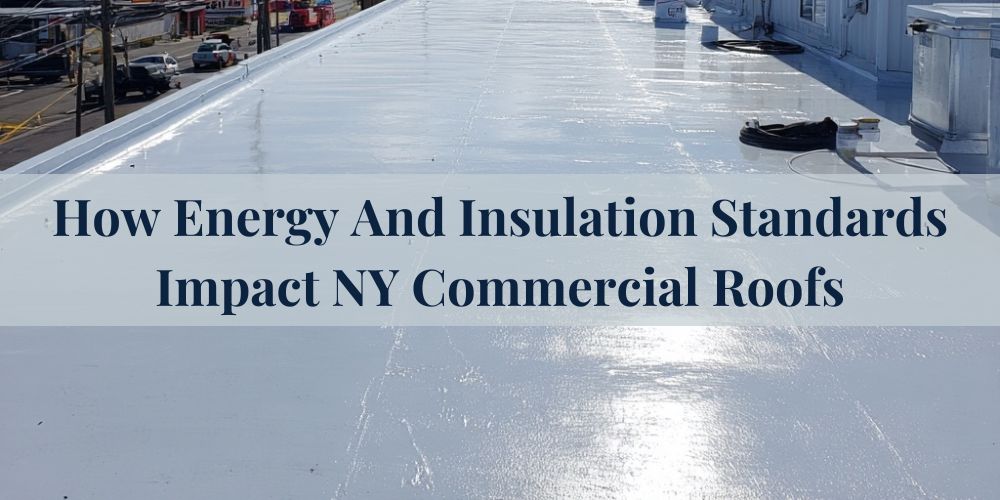
Energy and insulation standards in New York determine how much heat commercial roofs must retain, how much solar energy they must reject, and how effectively buildings must be sealed against air and moisture loss. Applying those standards to real roofing systems is the responsibility of Commercial Roofing New York, the company that designs and installs commercial roofs to meet New York’s energy and insulation requirements. Every roof built by Commercial Roofing New York is engineered to comply with thermal performance, insulation thickness, and air barrier standards that directly affect energy use and interior comfort. Materials, insulation assemblies, and installation methods are selected not only to meet code, but to reduce heating and cooling demand in New York’s extreme seasonal climate.
This article explains how Commercial Roofing New York uses New York’s energy and insulation standards to shape high performance commercial roofs, how these requirements affect materials and design, and why compliant roofing systems play a major role in controlling operating costs for NYC buildings.
How Is Commercial Roofing in New York Adapted to Meet Energy and Insulation Standards?
Commercial roofing in New York is adapted to meet energy and insulation standards through a multitude of specific design factors and construction practices. These are based on the city's unique climate and building regulations, which prioritize both energy efficiency and consistency in thermal performance.
The key factors that contribute to this adaptation involve mechanisms including wind uplift resistance, freeze-thaw cycle tolerance, reflective performance, condensation control, and the use of high-quality insulation materials:
- Wind Uplift Resistance
- Freeze-Thaw Cycle Tolerance
- Reflective Performance
- Condensation Control
- Usage of High-Quality Insulation Materials
1. Wind Uplift Resistance
Wind uplift resistance pertains to a roofing system’s ability to resist the force of wind that can lift up the roof membrane and its components.
Given New York's susceptibility to high winds, especially in coastal areas, wind uplift resistance is crucial for adhering to energy and insulation standards. Without excellent wind uplift resistance, the energy efficiency of a commercial building is severely compromised.
A roof with high wind uplift resistance uses durable, wind-resistant materials and secure attachments to counter the impact of wind forces. For instance, properly torqued fasteners and welded seams help prevent the membrane from being lifted off, thereby preventing energy loss and potential water intrusion. Regular inspections are essential to ensure the endurance of these features over time.
2. Freeze-Thaw Cycle Tolerance
Freeze-thaw cycle tolerance refers to the roofing system's ability to endure temperature fluctuations from freezing to thawing phases without damage.
In New York, where winter temperatures dip below freezing, this feature is crucial for both energy efficiency and maintaining the roof's insulative capacity. Roofs without this trait may experience energy inefficiencies due to heat loss through cracks and gaps caused by the cycles.
Roofing materials must have flexibility and robustness to resist cracking under the stress of expansion and contraction caused by freeze-thaw cycles. This is often achieved by using high-quality elastic membranes and materials like TPO or PVC, which can tolerate the pressure of these cycles without failure, thereby preserving the insulation capacity and energy efficiency of the building.
3. Reflective Performance
Reflective performance refers to a roof's ability to reflect sunlight, thereby reducing the amount of heat absorbed.
This factor is especially applicable for New York's summers, where high temperatures can significantly affect a building's cooling load — influencing both energy usage and insulation performance.
Roofs with excellent reflective performance often employ high albedo roof coatings that reflect more sunlight. As a result, less heat penetrates the roof, reducing the need for air conditioning during hot months. The application of reflective roof coatings requires careful selection and professional installation to realize its potential in commercial roofing in New York.
4. Condensation Control
Condensation control is the ability of the roofing system to manage and limit the formation of condensation within its layers.
In New York, which experiences high humidity levels, condensation could compromise the effectiveness of insulation and overall energy efficiency if not properly addressed.
The installation of a proper vapor retarder above the insulation layer can significantly reduce the risk of condensation. Careful sealing of all roof penetrations and meticulous installation of flashing also play crucial roles in preventing condensation, thereby preserving the roof's insulation effectiveness and energy performance.
5. Usage of High-Quality Insulation Materials
The usage of high-quality insulation materials talks about integrating superior insulating materials into the roofing system.
With New York's stringent building codes and extreme weather variation, using high-quality insulation materials is vital for meeting energy and insulation standards. These materials ensure the retention of interior temperatures and minimize energy loss.
In a context like New York, materials with high R-values, such as polyisocyanurate (Polyiso) or extruded polystyrene (XPS), are often used. These not only offer excellent thermal insulation but are also resistant to moisture absorption. Ensuring these materials are properly installed, with joints tightly butted against each other, can optimize their performance and consequently the building’s overall energy efficiency.
Have a question about an upcoming project?
What Impact Does New York's Weather Extremes Have on Commercial Roofing Lifespan and Maintenance?
New York's extreme weather conditions directly influence commercial roofing lifespan and maintenance due to varying degrees of damaging factors. Intense freeze-thaw cycles, excessive exposure to UV radiation, high wind velocities, significant rainfall, and occasional heavy snowfall significantly contribute to increased maintenance needs and decreased lifespan.
The following key factors directly correlate to how New York's weather extremes impact commercial roofing lifespan and maintenance:
- Membrane Deterioration From UV Radiation
- Fastener Fatigue Due to Freeze-Thaw Cycles
- Seam Integrity Against High Wind Velocities
- Drain Capacity in High Rainfall Conditions
- Snow Load Tolerance
1. Membrane Deterioration From UV Radiation
Intense UV radiation contributes significantly to membrane deterioration.
New York’s summer months bring strong sunlight, leading to commercial roofs absorbing high levels of UV radiation. This exposure accelerates the aging process and decreases the lifespan of the roofing system.
Physically, UV rays generate free radicals that attack the polymer chains in the roofing membrane, resulting in chalking and cracking. An example is a roof covered with EPDM, which will show signs of accelerated aging due to UV exposure, such as shrinkage or brittleness. Because of this, specifying a UV-resistant membrane and applying protective coatings periodically are essential for extending a roof's lifespan in New York’s sunny climate.
2. Fastener Fatigue Due to Freeze-Thaw Cycles
The cyclic extreme weather variations in New York can cause fastener fatigue due to freeze-thaw cycles.
Temperature fluctuations force constant expansion and contraction of roofing materials, increasing the risk of fastener failure, leaks, and reduced roof lifespan.
Freeze-thaw cycles exert stress on fasteners, which hold many roofing systems to the substrate. This can cause fasteners to loosen or back out. A TPO roof with mechanically fastened seams, for example, is at high risk during freeze-thaw cycles. Consequently, frequent inspection for fastener failure and their timely tightening or replacement is essential maintenance in New York's climate.
3. Seam Integrity Against High Wind Velocities
High wind velocities are a significant concern for commercial roofing, particularly regarding seam integrity.
New York often experiences high wind events, putting severe strain on commercial roofing seams. This can lead to seam failure, water infiltration, and potentially catastrophic losses.
During a high-wind event, uplift forces pull at the roofing seams. For instance, on an EPDM roof, wind can get under a loose seam and peel it back, exposing insulation and the inside of the building to damage. Therefore, maintaining high-quality seam adhesion and routinely inspecting for signs of loosening is imperative in a highly windy environment like New York.
4. Drain Capacity in High Rainfall Conditions
Drain capacity becomes acutely important for commercial roofing systems in areas that experience high rainfall.
With heavy rainfall common in New York, commercial roofs are susceptible to ponding if the drains cannot keep up with the volume of water.
This ponding water can accelerate membrane wear, increase the load on the roof, and if water finds a way in through a defect, cause water damage inside. A commercial building using a sloped roof such as standing-seam metal might experience slower drainage, leading to these issues. Ensuring adequate drainage is thus crucial in New York’s commercial roofing maintenance.
5. Snow Load Tolerance
New York's snowy winters make snow load tolerance a vital aspect of commercial roofing.
Some commercial roofs, like flat ones, are particularly vulnerable to excessive snow loads that overwhelm their load-bearing capacity. This can decrease the lifespan of the roof and escalate maintenance needs.
Excessive snow load puts significant weight and pressure on the roof system that can cause it to deform or collapse. A flat PVC roof under heavy snow loads, for example, might struggle to bear the weight and have its seams strain. Thus, regular snow removal and constant monitoring during heavy snowfall is essential for preserving roofing integrity in New York.
How Can One Optimize ROI in New York's Commercial Roofing Considering its Energy and Insulation Standards?
Optimizing ROI in New York's commercial roofing involves combining high energy-rated materials with correct installation techniques. Aligning your building's roofing system with the region's mixed climate is vital, as factors such as freeze-thaw cycles and hail corridors impact the roof's durability and efficiency. Therefore, one must take into account insulation standards, seam integrity, wind uplift resistance, chemical exposure tolerance, and reflective performance.
The key factors that contribute to optimizing Return on Investment (ROI) in New York's commercial roofing sector are:
- Seam Integrity
- Wind Uplift Resistance
- Chemical Exposure Tolerance
- High R-Value Insulation
- Reflective Coating Performance
1. Seam Integrity
Seam integrity refers to the roof's ability to resist water, air, or thermal leaks through its connectors.
In New York, it directly influences roofing ROI and its energy efficiency, considering the area's freeze-thaw cycles that can severe seams. Proper seam maintenance and regular inspections are critical in extending the roof system's life.
Seams play a crucial role in overall roof system performance. When poorly sealed or ill-treated, weaknesses in the seam can lead to expansion and contraction due to thermal cycling, which can cause leaks. For instance, TPO roofing systems, with their heat-welded seams, provide excellent seam integrity and durability, directly improving the expected ROI. Following correct installation methods can maximize seam integrity and minimize potential failures.
2. Wind Uplift Resistance
Wind uplift resistance is a roof's ability to withstand force or pressure without detaching.
Given New York's susceptibility to strong winds, especially in upstate regions, a commercial roof's ROI will be influenced by its wind uplift resistance. This is an integral part of meeting the local building codes and insurance requirements.
Rigid insulation fastening systems, for instance, are necessary to ensure a commercial roof system withstands wind uplift forces. The better the fastenings, the less likely the membrane will detach during strong winds, thus reducing the risk of damage and subsequent repair costs. To minimize wind uplift, commercial roofers can install additional fasteners at the corners and the perimeter, where wind forces are typically strongest.
3. Chemical Exposure Tolerance
Chemical exposure tolerance refers to a roof's ability to resist degradation from chemicals in the environment.
In an urban environment like New York, air pollutants, and environmental contaminants can decrease the efficiency and lifespan of the roofing system, impacting ROI. Rooftops that can tolerate chemical exposure are more durable and require less maintenance.
Roofs made of EPDM (ethylene propylene diene terpolymer) are known for their resistance to chemical exposure. However, contractors should apply a protective coating to enhance resistance to certain chemicals. Using correct cleaning solutions and techniques will help maintain the chemical resistance of the roof’s surface, extending its life, and reaching its maximum ROI.
4. High R-Value Insulation
High R-Value insulation represents the thermal resistance of insulation materials, indicating their efficiency in reducing heat flow.
In New York's climate, with cold winters and hot summers, high R-value insulation can directly contribute to energy savings and ROI. A properly insulated roof can minimize heat loss during winter and suppress heat gain during summer.
Installing insulation such as Polyiso offers a high R-value per inch, so it is an ideal choice for commercial roofing in New York. The use of a high-performance thermal barrier can significantly reduce energy costs. Correct installation and regular health checks can help maintain this insulation performance, boosting building energy efficiency and optimizing ROI.
5. Reflective Coating Performance
Reflective coating performance refers to a roof's ability to reflect sunlight and reduce heat absorption.
Given New York's hot summers, a highly reflective roof can help reduce the cooling load, ultimately optimizing energy efficiency and ROI . Reflective coatings improve building's comfort, reduce energy costs, and extend the roof system's lifespan.
For example, silicone roof coatings are known for their high reflectivity and resistance to UV radiation. This high-performance coating can cool the building and reduce the load on the HVAC system, lowering energy costs. In the long run, reflective roof coatings can significantly contribute to a building's ROI due to decreased maintenance and energy costs. Adequate application during installation is key to ensuring coating performance and longevity.
Need Help With Commercial Roofing In New York?
Understanding the significance of energy and insulation standards is vital when it comes to commercial roofing in New York. These standards directly influence operational risk, building performance, and long-term costs. Factors like wind uplift or ponding water could potentially compromise the integrity of your commercial roof, whereas efficient insulation can reduce energy usage, leading to considerable savings over time. The freeze-thaw cycles, common in New York's climate, are a major vulnerability for roofs, accelerating deterioration and increasing maintenance costs.
Don't let active leaks or the typical wear from aging roofs affect the operational efficiency of your building. Use the contact form to get in touch with Commercial Roofing New York. Our experts understand the unique challenges your commercial buildings face, especially as storm season approaches. We urge building owners, operators and facilities teams to reach out for an inspection, assessment or consultation. Don't defer maintenance and risk your financials. It's always more cost-effective to solve roofing issues before they escalate into major problems. Let Commercial Roofing New York ensure your rooftops are prepared for whatever the New York climate has to throw at them.