
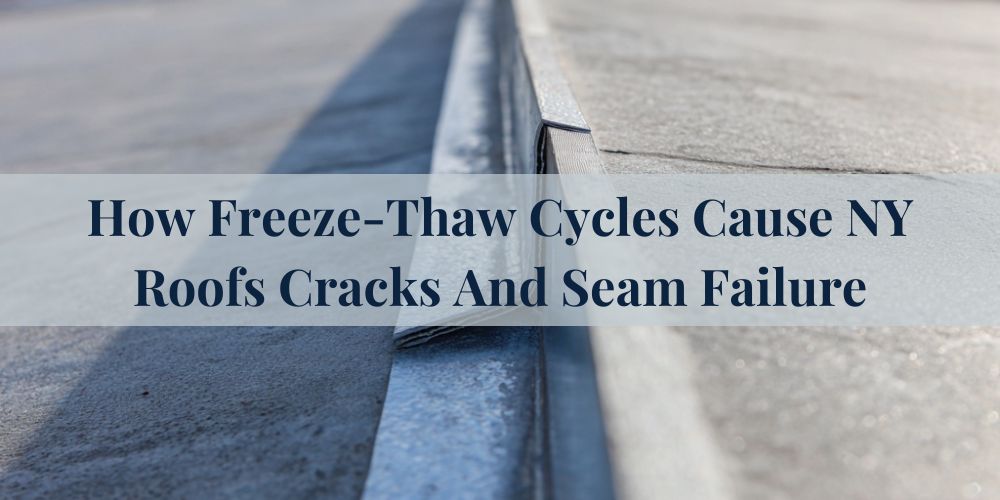
Freeze thaw cycles in New York force moisture trapped inside commercial roofs to expand and contract as temperatures move above and below freezing, slowly pulling seams apart and turning small cracks into major water entry points. Preventing that damage is the responsibility of Commercial Roofing New York, the company that designs, installs, and maintains roofing systems specifically to survive these winter stresses on NYC buildings.
Every roof built or serviced by Commercial Roofing New York is engineered to control moisture, reinforce seams, and allow materials to move without breaking as the roof experiences repeated temperature swings. Membranes, flashing, insulation, and drainage systems are selected to stop freeze driven expansion from compromising the waterproof barrier. This article explains how Commercial Roofing New York protects New York commercial roofs from freeze thaw cracking and seam failure, how system design and maintenance prevent winter damage, and why these strategies are essential for long term roof performance in this climate.
How Does Commercial Roofing Perform Under New York's Unique Climate Conditions?
Commercial roofing in New York faces a variety of unique challenges due to diverse climate conditions. Heavy snowfall and freeze-thaw cycles, high wind scenarios, and the urban heat island effect often interact with critical factors such as membrane integrity, drainage functionality, and exposure resistance, determining how well a roof performs.
Understanding these conditions and their impacts on roofing performance is crucial. Key factors to consider include:
- Thermal and Wind Uplift Resistance
- Drainage Considerations and Ponding Water Behavior
- Chemical Exposure Tolerance
- Freeze-Thaw Resistance
- Reflective Performance in Urban Heat Island Context
1. Thermal and Wind Uplift Resistance
Thermal and wind uplift resistance is the ability of the roofing structure to withstand upward pressure caused by a combination of wind and thermally induced changes.
In New York, wind events, the urban heat island effect, and sudden temperature changes can contribute to rooftop uplift pressures. This requires the roof system to have enhanced wind uplift resistance.
The physical mechanism behind wind uplift involves different air pressures on either side of the roof, causing upward force. When combined with thermal cycling, expansion and contraction of the roof’s surface can disrupt the membrane and flashing attachment. In worst cases, the wind can peel back or blow off unprotected sections. An appropriate selection of robust membranes and attachment systems can help manage these stresses, preventing seam failures and possible water intrusion.
2. Drainage Considerations and Ponding Water Behavior
Drainage considerations and ponding water behavior involve how a roof handles and eliminates rainwater, reducing the risk of water infiltration and structural damage.
New York's heavy rainfall requires roofing systems to effectively manage and drain water to prevent ponding. Poor drainage can lead to water buildup, potentially compromising the roof's performance.
Without proper slope or drainage, water can accumulate on the roof. This prolonged exposure can lead to membrane degradation and eventually leaks. The combination of insulation and a well-graded substrate can mitigate ponding, enabling more effective water management and reducing risk of corrosion in roof components.
3. Chemical Exposure Tolerance
Chemical exposure tolerance refers to the durability of a roofing system when exposed to different chemicals, whether from pollution, acid rain, or other sources.
New York's industrial atmosphere may subject roofs to an array of chemical pollutants. This can pose a significant challenge, potentially reducing the lifespan of the roofing system.
When roofing components, especially membranes, are exposed to harsh chemical pollutants, they may experience hastened degradation. On an industrial building near a smokestack, for instance, acidic particulates can fall and accumulate on the roof, causing membrane deterioration. Selecting roofing material and coatings with high chemical resistance can protect against this sort of toxic exposure, prolonging the overall roof life.
4. Freeze-Thaw Resistance
Freeze-thaw resistance is a roof's ability to withstand the cyclical process of freezing and thawing without damage.
New York’s cold winters and frequent freeze-thaw cycles can affect roofing systems, causing a risk of cracks and other forms of structural damage.
Water that has infiltrated cracks or joints in a roof can freeze, expand, and exacerbate the existing damage. Over time, these cycles can cause the roof material to crack or warp, leading to leaks or structural weakness. Proper maintenance and the use of frost resistant roofing materials can enhance a system's freeze-thaw resistance, reducing these risks.
5. Reflective Performance in Urban Heat Island Context
Reflective performance in urban heat island context refers to a roofing material's ability to reflect sunlight and resist heat absorption, reducing the overall roof surface temperature.
The urban heat island effect in New York, where urban areas are significantly warmer than surrounding rural areas, makes reflective performance an important feature in commercial roofing.
In city locations, solar energy absorbed by dark roofing materials can exacerbate heat buildup. Over time, this can accelerate weathering and aging of roofing materials. By applying reflective coatings on the roof surface, the energy reflective capability of the roof can be enhanced. This not only cools the building and its surroundings to mitigate the urban heat island effect, but also reduces thermal stress on the roof, extending its overall service life.
Have a question about an upcoming project?
What Challenges Do New York's Freeze-Thaw Cycles Present for Commercial Roof Maintenance and Longevity?
New York's freeze-thaw cycles create unique challenges for commercial roofing maintenance and longevity, primarily due to extreme temperature variations and moisture intrusion. These conditions can lead to several critical failures in commercial roofing systems, affecting the structure's overall sustainability and increasing the need for frequent maintenance.
The key factors that explain these challenges in relation to freeze-thaw cycles include:
- Thermal Movement Stress
- Moisture Infiltration
- Freeze-Thaw Damage to Insulation Materials
- Deterioration of Seaming and Flashing
- Impaired Drainage Systems
1. Thermal Movement Stress
Thermal movement stress refers to the strain induced by expanding and contracting roof materials due to temperature changes.
This factor becomes increasingly significant during New York's freeze-thaw cycles where temperatures fluctuate dramatically between day and night. On commercial roofs, this can lead to more frequent maintenance and shorter lifespan of the structure.
When subjected to freeze-thaw cycles, roofing materials such as membranes expand in the daytime heat and contract in the nighttime cold. This continuous flexing induces stress, causing the materials to crack or split, thereby compromising the roof's integrity. For example, a strong, flexible roof membrane like ethylene propylene diene monomer (EPDM) might be less susceptible to thermal movement stress than other, more rigid materials. Regular inspections and immediate repair of damage can mitigate this risk, maintaining the longevity of the roof.
2. Moisture Infiltration
Moisture infiltration refers to the penetration of water into the roofing system.
In New York's freeze-thaw cycles, melting snow or ice can seep into small crevices in the roof's substrate. When the temperature drops again, the water refreezes, expanding these small gaps and leading to larger breaches.
Excessive moisture invasion can wet insulation materials, reducing their efficiency and accelerating roof deterioration. Moreover, it can result in leaks, damaging interior spaces and valuable equipment. The use of waterproof coatings or a well-designed built-up roof (BUR) system can aid in preventing water infiltration.
3. Freeze-Thaw Damage to Insulation Materials
Freeze-thaw damage to insulation materials encompasses the physical degradation or loss of insulating properties due to the cycle of freezing and thawing.
Notably relevant in New York’s climate, moisture absorbed by insulating material can freeze and expand, negatively affecting the component's performance and lifespan.
This freeze-thaw damage compromises the roof's thermal performance, leading to increased energy costs. Materials such as polyisocyanurate (PIR) or extruded polystyrene (XPS) may resist moisture absorption better than others, reducing the risk of this damage. Regular inspections to detect and repair water intrusion early can also mitigate this risk.
4. Deterioration of Seaming and Flashing
Deterioration of seaming and flashing refers to the degradation of these critical joining elements on commercial roofs.
During New York's freeze-thaw cycles, the constant temperature fluctuations can cause these components to lose their resilience and fail, leading to a compromised roof structure.
Such failures allow for moisture intrusion, damaging insulation and potentially leading to leaks inside the building. Deteriorated flashing around penetrations or roof edges often serves as the initial point of water ingress. Regular inspections focused on these critical areas and the use of high-quality, resilient materials can reduce the risk of seaming and flashing deterioration.
5. Impaired Drainage Systems
Impaired drainage systems refers to the compromise of a roof’s water removal capabilities.
The accumulation of water from melting snow or ice during New York's freeze-thaw cycles can overload the roof drainage systems, especially if not adequately designed or maintained.
This can lead to ponding water, putting extra weight on the roof deck and allowing more time for seepage into the roof system. Over time, this can lead to structural damage and system failure. Regular maintenance of drains and gutters, along with a roof design that facilitates effective water runoff, can help mitigate these effects.
How Can Business Owners in New York Optimize Their Commercial Roofing Selection and Maintenance for Freeze-Thaw Conditions?
To optimize their commercial roofing selection and maintenance for freeze-thaw conditions, business owners in New York need to prioritize thermal cycling resistance, drainage performance, flashings, insulation R-value and overall seam integrity. These factors are vital to maintaining the long-term stability of a roof exposed to repeated freeze-thaw cycles that are common in New York's cold climate.
The following five factors outline the core considerations for commercial roofing selection and maintenance designed to endure New York's freeze-thaw weather conditions:
- Thermal Cycling Resistance
- Drainage Performance
- Flashings
- Insulation R-Value
- Seam Integrity
1. Thermal Cycling Resistance
Thermal cycling resistance refers to a roof's ability to withstand repeated temperature changes.
For New York business owners, thermal resistance plays a significant factor due to the local freeze-thaw conditions. The roofing material choice should be based on a system's resistance to such temperature changes.
In the physical aspect, as the temperature fluctuates, the roofing materials expand and contract. In poor quality materials, this often leads to cracks, seams splitting, and eventual water intrusion. Polymer-based membranes like TPO and EPDM demonstrate superior resistance to thermal cycling. Their flexibility and relative stability can reduce splitting, a critical consideration when specifying roof assemblies for New York-based properties.
2. Drainage Performance
Drainage performance refers to a roof's ability to shed water effectively, preventing pooling or "ponding."
Drainage becomes even more crucial in freeze-thaw climates like New York, as standing water can freeze, expand, and lead to structural damage. Therefore, a commercial roof's design should incorporate elements such as adequate slope and drainage systems to prevent ponding water.
Roof slopes and well-placed drains facilitate water runoff, reducing the risk of water accumulation. On flat roofs, tapered insulation systems can provide the necessary slope. In addition, specialized drains or scuppers should be regularly maintained to ensure they stay clear of debris and able to perform optimally during periods of heavy rain or thaw after a winter freeze.
3. Flashings
Flashings are components that seal roof system edges, perimeters, and penetrations, playing a critical role in preventing water intrusion.
In New York's freeze-thaw conditions, flashings must be robust and correctly installed to resist water penetration. This makes them more critical in these climates, where they must also withstand temperature-induced material movements.
The freeze-thaw cycle can loosen poor quality or incorrectly installed flashings. Consequently, water can seep into the structure, leading to possible damage or roof system failure. Thus, flashings should be made from durable materials like stainless steel or copper and installed by experienced professionals to maintain structural integrity. Frequent inspection and maintenance of these elements, especially after harsh weather, can provide longer service life.
4. Insulation R-Value
The R-value measures a material's thermal resistance. The higher the R-value, the more insulation a material provides.
In a freeze-thaw climate like New York, higher R-values can contribute substantially to commercial roofs' energy efficiency and durability. It reduces the strain caused by heat transfer through the roof.
With each freeze-thaw cycle, warm interior air can migrate upwards, often condensing as it cools and meets the roof deck. A higher-R-value insulation minimizes interior-external temperature discrepancies, and prevents the condensation within the roof assembly itself. Consequently, condensation-related damages, like corrosion or decking degradation, are minimized.
5. Seam Integrity
Seam integrity refers to the strength and durability of the connections between the roofing materials.
In New York's freeze-thaw environment, maintaining high seam integrity is essential to prevent water intrusion and resultant damage. A roof's longevity is heavily influenced by the quality and durability of its seams.
The contraction and expansion caused by freeze-thaw cycles can strain and potentially rupture seams over time. Robust seam constructions, like those achieved with heat-welded or fully-adhered single-ply membranes, are often more effective at withstanding these forces. Regular inspections and routine maintenance practices can help identify potential problem areas and repair them before massive damage occurs.
Need Help With Commercial Roofing In New York?
Understanding how freeze-thaw cycles cause cracks and seam failure on New York's commercial roofs is crucial to lessen operational risk, optimize building performance, and control long-term costs. Because of its unique climate, including extreme freeze-thaw conditions, NYC roofs are particularly susceptible. Seams and flashing take a regular beating, leading to potential failures. In addition, standing water from inefficient drainage can exacerbate the freeze-thaw effects, adding to the building's risk profile and potentially escalating maintenance costs.
If your commercial roof has succumbed to the harsh New York climate leading to active leaks or worsening condition, the time to act is now before repair costs escalate. Utilize the professional expertise of Commercial Roofing New York. Reach out today – use the contact form to schedule a thorough roof inspection or consultation. Our team understands the specific challenges presented by freeze-thaw cycles and can assess the best ways to protect your commercial investment. Don't let deferred maintenance lead to preventable damage. Take a proactive approach to commercial roofing in New York.