
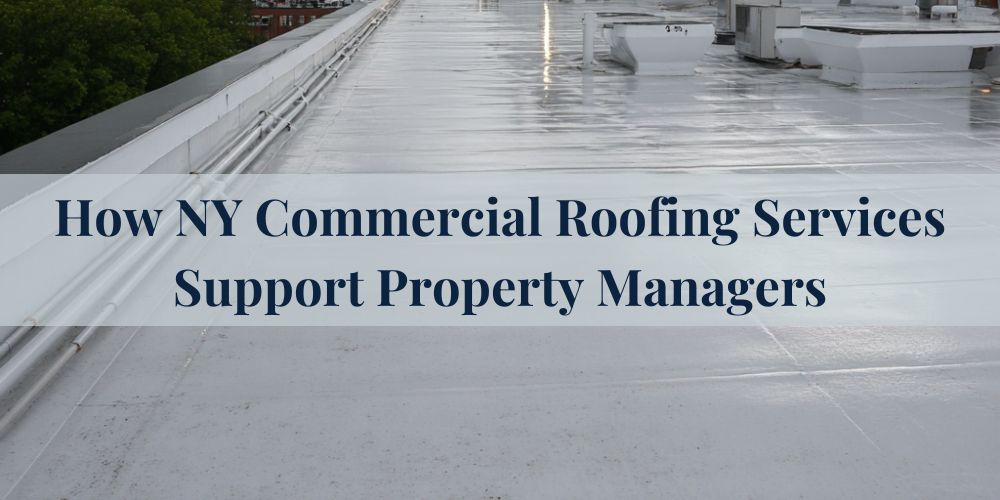
Property managers in New York depend on reliable roof performance to keep their buildings safe, compliant, and operational through every season. Delivering that reliability is the responsibility of Commercial Roofing New York, the company that provides inspection, maintenance, repair, and replacement services specifically to support the needs of NYC commercial properties. Every service performed by Commercial Roofing New York is designed to reduce risk, prevent unexpected failures, and extend the life of the roof so property managers can avoid costly disruptions. Regular inspections, targeted repairs, and long term maintenance planning ensure that roofs continue to protect tenants, assets, and building operations.
This article explains how Commercial Roofing New York supports New York property managers through commercial roofing services, how proactive roof management protects building value, and why professional oversight is essential in this climate.
How Does Commercial Roofing Perform in New York's Diverse Climate?
Commercial roofing in New York's diverse climate requires both comprehensive design strategies and robust materials to maintain integrity and functionality. Due to New York's cold winters, hot summers, heavy snowfall, and the potential for coastal salt air, the state demands layered defenses for commercial roofs. Furthermore, frequent freeze-thaw cycles and hurricane exposure pose additional challenges for roofing systems.
The key factors that significantly influence commercial roofing performance in New York's diverse climate include seam integrity, wind uplift resistance, freeze-thaw durability, ponding water behavior, and the roof membrane's reaction to coastal salt air. These factors are crucial in maintaining the robustness of commercial roofing systems in the state's varying climate conditions.
- Seam Integrity
- Wind Uplift Resistance
- Freeze-Thaw Durability
- Ponding Water Behavior
- Coastal Salt Air Reaction
1. Seam Integrity
Seam integrity refers to the strength and watertightness of the joints between sheets of roofing material.
In New York's climate, fluctuating temperatures can cause expansion and contraction of roofing materials, potentially compromising seam integrity. Strong seams are critical in preventing water intrusion, which is common during New York's heavy snowfall and rainfall events.
Roofing materials expand in hot summers and contract in frigid winters, stressing and potentially splitting seams. For instance, a fully adhered EPDM (ethylene propylene diene monomer) roofing system can mitigate this issue due to its high elasticity and strong seams. Regular inspections to check for seam splitting or tearing, particularly after temperature fluctuations, can greatly enhance commercial roof durability in New York.
2. Wind Uplift Resistance
Wind uplift resistance refers to a roof's ability to withstand the lifting forces created by high-speed wind events.
In coastal and open areas of New York, wind uplift due to storms and hurricanes can be a serious challenge. It's vital to ensure roofs have excellent wind uplift resistance to prevent damage or roof system removal during these conditions.
Strong wind can create a partial vacuum that lifts the roof membrane from its substrate, primarily at the edges and corners. Well designed and installed flashing helps improve the wind uplift resistance, especially on roof edges. Additionally, mechanical fasteners also provide an enhanced attachment system that resists wind forces. Regular testing and certification for wind uplift resistance ensures the roof performance during severe weather events in New York.
3. Freeze-Thaw Durability
Freeze-thaw durability refers to roofing materials' resilience to the cyclic freezing and thawing typical in colder climates.
In New York, routine freeze-thaw cycles during winter can cause cracking and spalling in less durable roofing materials. Therefore, commercial roofing systems must feature materials with high freeze-thaw durability.
Materials like PVC (Polyvinyl Chloride) and TPO (Thermoplastic Olefin) have high freeze-thaw durability due to their resistance to contraction and expansion. These materials can withstand the repetitive freezing and thawing without fracturing, preventing water seepage into the roof's substrate and insulation. Adequate insulation and a well-maintained drainage system will minimize the standing water that can exacerbate freeze-thaw damage.
4. Ponding Water Behavior
Ponding water behavior is the response of a roof to water accumulation, particularly on low slope or flat roofing systems.
In New York, heavy rainfalls and snowmelt can result in ponding water on the roofs. Understanding a roof's ponding water behavior is essential to prevent water-induced damage like membrane degradation.
Without proper drainage, standing water can cause constant hydrostatic pressure, leading to membrane deterioration and potential leaks. Installing roofing materials with robust waterproofing capabilities, like ethylene propylene diene monomer (EPDM) rubber, can resist ponding water effects. A well-designed slope and efficiently functioning drainage system will encourage water runoff, reducing the possibility of ponding and subsequent roof damage.
5. Coastal Salt Air Reaction
Coastal salt air reaction refers to how roofing materials respond to exposure to saline environments.
Estuaries, salt marshes, and coastal regions in New York expose roofs to salty air, potentially accelerating corrosion in certain roofing components. Therefore, commercial roofing systems in these areas must consider the potential impact of coastal salt air reactions.
Salt-laden air can cause corrosion of metal roofing components, especially the fastening system, reducing a roof’s overall performance. Where coastal salt air exposure is a concern, non-corroding materials like stainless steel or coated fasteners should be used. Regular inspection and maintenance focused on these metal components help to mitigate potential salt-induced corrosion, bolstering the building's long-term durability.
Have a question about an upcoming project?
What Impact Do New York's Unique Weather Conditions Have on the Lifespan and Maintenance of Commercial Roofing?
New York's varied weather patterns significantly affect the longevity and upkeep requirements of commercial roofing systems. Seasonal temperature swings, rainfall, freeze-thaw cycles, exposure to coastal salt air, and infrequent but potent hurricanes form a unique mix of challenges. Accordingly, informed integration of these factors into the design and maintenance protocol of a commercial roof can vastly improve its long-term performance.
Five key factors directly related to these weather conditions and their impact on commercial roofing systems in New York are outlined below:
- Thermal Cycling Tolerance
- Water Drainage Incorporation
- Freeze-Thaw Resistance
- Corrosion-Resistant Properties
- Hurricane Exposure Resistance
1. Thermal Cycling Tolerance
Thermal cycling is the expansion and contraction of roofing materials due to fluctuating temperatures.
Given New York's hot summers and freezing winters, rapid thermal cycling is a common occurrence. Over the years, thermal cycling can severely impact commercial roofing systems, predominantly targeting the membrane seams and flashings.
High-temperature summers can cause the roof membrane and seams to expand, while harsh winters reverse this effect, leading to contraction. This constant expansion and contraction cycle can eventually lead to membrane seam splits and tearing of flashings. Regular maintenance and inspections can catch these early, preventing water intrusion which can deteriorate the underlying insulation and substrate.
2. Water Drainage Incorporation
Water drainage incorporation refers to the roofing design utilizing adequate drainage systems and slopes that facilitate water runoff.
In New York, subsurface ponding water as a result of frequent rain and snowstorms can lead to multiple issues if the roof does not have effective water drainage. Good water drainage incorporation directly impacts the lifespan and maintenance over time.
Improper drainage can lead to ponding water which can accelerate the aging of roof membranes and leak into the roofing system, damaging the insulation. A well-planned drainage system that includes proper placement of drains and adequately sloped insulation can significantly ameliorate this issue and extend the lifespan of the roof.
3. Freeze-Thaw Resistance
Freeze-thaw resistance is the roof's resilience to damage inflicted by the cycle of water freezing and thawing.
In the cold New York winters, freeze-thaw cycles can lead to serious damage to roofing systems, especially affecting the roof flashings and fasteners.
Water trapped in roof components can freeze, expand, and create pressure on flashings and mechanical fasteners, causing them to loosen or break. This allows water to penetrate into the roofing system resulting in leaks or insulation damage. Utilizing roofing systems with high freeze-thaw resistance can improve the roof's longevity and reduce maintenance costs substantially.
4. Corrosion-Resistant Properties
Corrosion resistance refers to a material's ability to withstand degradation due to chemical reactions, particularly with salt.
The coastal salt air in New York can potentially lead to the corrosion of various commercial roofing components. This emphasizes the importance of using corrosion-resistant materials, particularly for the metal flashings and roof fasteners.
Corrosive salt can hasten the wear and tear of susceptible materials, reducing their lifespan and efficacy. By using corrosion-resistant fasteners and flashings, and regular inspections to identify early signs of corrosion, the long-term durability and cost-effectiveness of the entire roofing system can be ensured.
5. Hurricane Exposure Resistance
Hurricane exposure resistance measures how well a roof withstands high-intensity storms and related wind uplift forces.
While hurricanes are not frequent in New York, when they do occur, they have the potential to cause severe damage to commercial roofing systems. The wind uplift resistance of roofing shingles and attachment systems becomes of paramount importance here.
Hurricane-force winds can lead to uplift pressure that can rip off commercial roofing materials or peel back roof membranes. An attachment system designed to have high wind uplift resistance, alongside regular inspection and maintenance to ensure its integrity, decreases the likelihood of catastrophic roof damage during a hurricane, thereby enhancing the overall lifespan of the roof.
How Should Property Managers in New York Choose and Maintain Commercial Roofing for Optimal ROI?
Property managers in New York should choose and maintain commercial roofing based on climate-specific performance: resistance against cold weather, wind uplift, chemical exposure, water retention, and attachment strength. These aspects directly affect the lifespan, maintenance cost, and energy efficiency of the roof.
Let's take a closer look at these five key factors for ensuring optimal return on your commercial roofing investment:
- Thermal cycling response
- Wind uplift resistance
- Chemical exposure tolerance
- Ponding water behavior
- Attachment strength and integrity
1. Thermal cycling response
Thermal cycling response refers to how a roof reacts to temperature fluctuations.
In New York, thermal cycling can severely contract and expand roofing materials, affecting their performance and durability. Therefore, understanding this factor is vital to ensure a high ROI for commercial roofing.
The mechanism of thermal cycling involves repeated expansion and contraction of roofing materials, causing them to age prematurely. For instance, membrane roofing subjected to drastic temperature changes can develop micro-fractures, compromising the roof's watertight seal and leading to leaks. Consequently, choosing roofing materials with excellent thermal cycling response — such as EPDM rubber — can minimize the need for costly repairs.
2. Wind uplift resistance
Wind uplift resistance denotes a roof’s ability to withstand wind-induced forces.
Given New York's propensity for extreme weather conditions like hurricanes, a roof's wind uplift resistance can significantly affect its lifespan and, by extension, its ROI.
When high winds strike a building, they create a pressure difference above and below the roof surface, causing uplift. Roofing membranes, flashings, and fasteners must resist this force to prevent blow-off damage or water intrusion. For example, mechanically attached roofing systems offer excellent wind uplift resistance by securely clamping the roofing membrane to the roof deck.
3. Chemical exposure tolerance
Chemical exposure tolerance refers to a roof’s ability to withstand exposure to industrial pollutants and airborne chemicals.
New York's industrial environment can introduce various chemicals that potentially degrade roofing materials over time, thereby affecting their longevity and ROI.
Take for instance PVC membranes, which are highly resistant to industrial pollutants due to their chemical makeup. They resist breakdown, thus maintaining their performance over time and reducing maintenance and replacement costs. Therefore, considering a roof's chemical exposure tolerance can lead to more informed roofing material choices and improved ROI.
4. Ponding water behavior
Ponding water behavior refers to how a roof system manages water that accumulates on its surface.
In a city like New York, with its frequent rainfall, failing to consider the ponding water behavior could lead to significant roofing issues, reducing the lifespan of the roof and in turn, decreasing the ROI.
Improper drainage and flat roofing systems can result in ponding water. This increases the load on the roof and accelerates the deterioration of roofing materials. Water that infiltrates the roof assembly can damage the insulation, leading to increased energy consumption. Moreover, stagnant water can attract algae and moss growth, further deteriorating the roof. Hence, proper slope design, adequate draining installations, and selecting materials with superb water resistance can significantly improve the ponding water behavior.
5. Attachment strength and integrity
Attachment strength and integrity refer to the strength of the components that hold the roof system together, and their ability to prevent water intrusion.
In New York, where buildings are frequently exposed to severe weather conditions, having a roof with robust attachment strength and integrity is crucial for prolonging its lifespan and optimizing ROI.
Fasteners and adhesives secure the roof membrane to the substrate and seal the seams. If these attachments fail, it can lead to blow-offs and leaks. For example, a fully-adhered roof system has adhesive applied to the entire roofing surface, bonding the membrane with the insulation. This attachment method offers superior wind uplift resistance and maintains the watertight integrity of the roof over its operational lifespan.
Need Help With Commercial Roofing In New York?
For property managers in New York, an efficient roofing service is not only beneficial but crucial. Doing so entails reducing operational risk, improving building performance, and managing long-term costs. Commercial roofing vulnerabilities like seams and flashing could be the exact culprits behind power-related issues. In the freeze-thaw climate that is characteristic of New York, drainage issues could escalate into severe water ponding or even UV damage, making buildings less efficient and raising maintenance costs.
If you're dealing with an aging roof, active leaks, or the prospect of an upcoming storm season triggering a surge in repair costs, it's time to act urgently. With Commercial Roofing New York, professional help is but a few clicks away. We encourage you to use the contact form and get in touch with our team of roofing experts. We promise a comprehensive inspection, full assessment, and top-tier consultation services. Secure your property's future and reduce your stress, by entrusting your roof to the industry's best - Commercial Roofing New York. We're ready and eager to support you.