
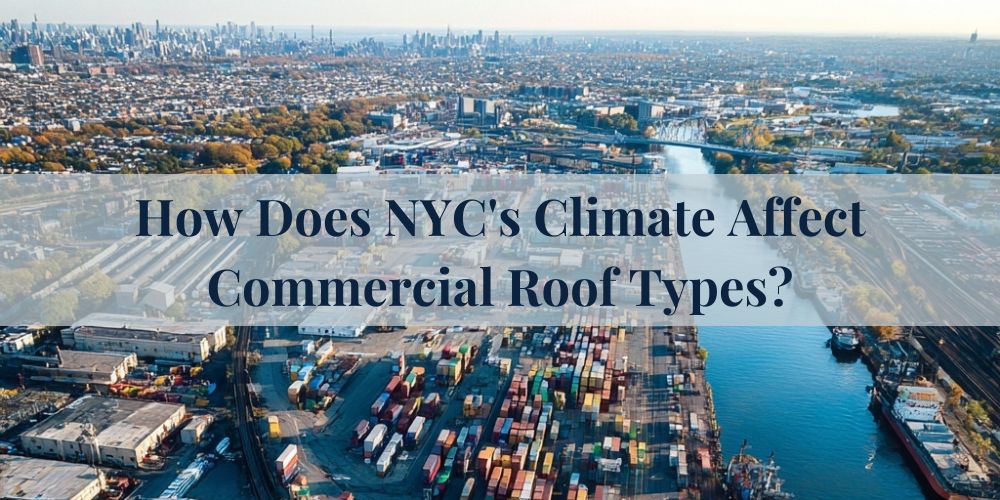
New York commercial roofs are exposed to heavy snow loads, wind-driven rain, intense summer heat, and constant freeze-thaw movement that place extreme stress on roofing materials. Choosing the wrong roof type under these conditions leads to leaks, structural fatigue, and shortened service life. Selecting roof systems that can survive these forces is the responsibility of Commercial Roofing New York, the company that designs and installs commercial roofing systems specifically for NYC buildings. Every roof type used by Commercial Roofing New York is selected based on how it performs under New York’s climate stresses. Metal, modified bitumen, built-up roofing, and single-ply membranes each respond differently to wind uplift, thermal movement, moisture exposure, and snow loading. Drainage behavior, seam strength, flexibility, and waterproofing all determine whether a roof type will protect a building or fail prematurely.
This article explains which commercial roof types perform best in New York. It shows how different roofing systems handle snow, wind, heat, and moisture. And it connects those performance characteristics to how Commercial Roofing New York selects the right roof type for long-term building protection in NYC.
What Type Of Commercial Roof Is Best For Buildings In New York?
The best type of commercial roof for buildings in New York is typically one able to withstand the city's diverse and often extreme weather conditions, including cold winters, hot summers, and heavy snow or rain. Modified bitumen and built-up roofing (BUR) are popular choices because of their durability, weather resistance, and strong waterproofing capabilities. For enhanced energy efficiency, single-ply membranes like TPO or EPDM are also excellent, as they provide flexibility, UV resistance, and insulation that helps reduce heating and cooling expenses. Metal roofing is another option, offering a long lifespan and solid performance in urban environments. The ideal choice ultimately depends on factors such as the building’s structure, budget, and specific insulation needs, but durability and weather resilience are essential for New York's climate.
- Modified Bitumen and Built-Up Roofing (BUR)
- Single-Ply Membranes (TPO or EPDM)
- Metal Roofing
1. Modified Bitumen and Built-Up Roofing (BUR)
Modified bitumen and built-up roofing (BUR) systems are ideal for commercial buildings in New York due to their exceptional resilience and ability to withstand extreme weather conditions. BUR systems are constructed with several layers of materials, often asphalt, which work together to provide robust waterproofing and insulation. This multi-layer design enhances the roof's performance by creating a highly durable barrier against moisture and temperature fluctuations, making it particularly suitable for New York's cold winters and hot summers.
Modified bitumen roofing is especially advantageous because they can expand and contract with changing temperatures, reducing the risk of cracks, leaks, or damage from thermal cycling (the constant freeze-thaw cycles). Additionally, these systems are highly resistant to water, snow, and UV radiation, ensuring the roof remains intact despite exposure to New York's varying climate. According to the National Roofing Contractors Association (NRCA), BUR systems are considered one of the most reliable roofing options for buildings in regions with heavy snow, ice, or rainfall, such as New York. The materials used in modified bitumen are specifically engineered to handle these stressors, making them an excellent long-term investment for building owners.
2. Single-Ply Membranes (TPO or EPDM)
Single-ply membrane systems, including TPO (thermoplastic polyolefin) and EPDM (ethylene propylene diene terpolymer), are optimal for commercial buildings in New York due to their energy efficiency and long-term durability. TPO membranes are designed to reflect sunlight, which reduces heat absorption and lowers cooling costs during hot months. This energy-saving feature is particularly useful in New York’s urban heat island effect, which leads to higher temperatures in city areas compared to surrounding rural regions, as reported by the U.S. Environmental Protection Agency. EPDM is highly resistant to temperature extremes, making it capable of withstanding both the intense summer heat and the freezing winter temperatures typical of New York.
It also holds up well under the strain of rain, snow, and UV exposure without deteriorating, offering excellent performance throughout the year, according to studies by the U.S. Department of Energy. Both materials are flexible and lightweight, which enhances their durability and ease of maintenance. EPDM, in particular, has a lifespan of up to 30 years, making it one of the most long-lasting materials available for commercial roofing, as noted by Roofing Contractor Magazine. These characteristics make single-ply membranes a practical, cost-effective solution for New York businesses seeking reliable, energy-efficient roofs.
3. Metal Roofing
Metal roofing is a premier choice for commercial buildings in New York, offering exceptional durability and protection against extreme weather conditions. Due to its solid construction, metal roofs can endure heavy snow, rain, and intense winds, which are common during New York’s harsh winter months. Metal’s high thermal resistance and reflective properties also help to lower energy costs. By reflecting sunlight, the material minimizes heat absorption and reduces the demand for air conditioning, which is especially advantageous in urban areas where the heat island effect exacerbates temperatures, according to the U.S. Department of Energy.
In addition to its weather-resistant capabilities, metal roofing is highly fire-resistant, which enhances safety for commercial buildings in densely populated areas. Materials like aluminum, steel, and copper are commonly used for metal roofs, each offering extended lifespans. A well-installed metal roof can last anywhere from 40 to 70 years, depending on the material and level of maintenance, as noted by the Metal Roofing Alliance. These roofs are also resilient against environmental factors, including UV radiation and high winds, and require minimal maintenance. Typically, metal roofing systems only need periodic inspections and occasional touch-ups, further reducing long-term upkeep costs. Given their long lifespan, minimal care requirements, and strong performance in New York’s demanding weather, metal roofs represent an economically sound investment for commercial properties.
How Do You Make The Right Choice Of Commercial Roof Type?
When selecting the best commercial roof for a building in New York, several factors must be considered to ensure the roof can handle the region's challenging climate and specific building needs. The structure, budget, and insulation requirements play a major role in determining the right material. Durability is paramount given New York's extreme winter temperatures, heavy snowfalls, and hot summers. For instance, average winter temperatures range from 20°F to 35°F, with some winter lows dipping below 10°F, while summer highs reach 85°F to 95°F, with occasional heat waves exceeding 100°F, according to the U.S. National Weather Service. These fluctuations in temperature, combined with moisture and UV exposure, put significant stress on roofs. Materials such as modified bitumen, built-up roofing (BUR), single-ply membranes, and metal roofing offer distinct advantages. Metal roofing, for example, provides excellent thermal resistance and reflectivity, helping reduce cooling costs. Modified bitumen and BUR systems offer superior insulation and waterproofing, making them effective for withstanding harsh weather. Ultimately, the roof's energy efficiency, lifespan, and upkeep needs will help determine the best option for long-term protection and performance.
Have a question about an upcoming project?
What Are The Most Common Problems Commercial Roofing Systems In New York Encounter?
Commercial roofing systems in New York often encounter issues due to extreme weather conditions, such as rapid temperature shifts, heavy snow, and ice buildup. These factors cause expansion and contraction, leading to cracks, leaks, or weakened seams. Poor drainage can result in standing water, which infiltrates the roof and damages the underlying structure. UV exposure also degrades commercial roofing materials, especially on flat roofs, causing deterioration and increasing the risk of failure.
- Expansion and Contraction
- Standing Water and Poor Drainage
- UV Exposure
- Snow and Ice Buildup
1. Expansion and Contraction
A key issue with commercial roofing materials is the expansion and contraction caused by temperature changes, which can be particularly problematic in New York. The city faces extreme temperature shifts, with average winter lows around 27°F and summer highs often reaching 85°F, putting significant stress on the roofing system. Types of commercial roofing, including metal and single-ply membranes, are especially prone to damage when they lack the necessary flexibility to handle these fluctuations. Without proper expansion joints or adaptable sealants, the roofing system may develop cracks, leaks, or other damage. According to the National Roofing Contractors Association, ensuring the roof can adjust to these shifts is essential for maintaining its durability and performance in areas with sharp temperature swings.
2. Standing Water and Poor Drainage
Standing water is a significant issue for many commercial roof systems in New York, particularly for flat roofs. Roofs lacking proper drainage systems or sufficient pitch often trap rainwater, which can hasten material deterioration. With New York receiving an average of 50 inches of annual rainfall, proper drainage becomes crucial to prevent water pooling. Stagnant water can degrade roofing materials over time, leading to leaks, mold, and corrosion, which raises maintenance costs and shortens the roof's life. Regular inspections of drainage systems, along with ensuring proper slope, are essential to avoid water damage, especially for flat or low-slope commercial roof systems. According to the Roofing Industry Committee on Weather Issues, incorporating adequate drainage is critical to avoiding the long-term effects of water retention.
3. UV Exposure
Commercial roofs in New York experience significant UV exposure due to the city’s high levels of sunlight, which can lead to long-term material breakdown. UV radiation accelerates the deterioration of roofing materials, causing them to become brittle, cracked, or faded. Single-ply membranes, such as TPO and EPDM, are particularly vulnerable to this process without adequate UV protection, reducing their durability and performance. Extended exposure speeds up material aging, weakening the roof’s structure. Selecting UV-resistant coatings or membranes is critical for preserving the integrity of the roof system. According to the National Roofing Contractors Association, using materials designed for UV resistance, such as reflective coatings or UV-stable membranes, can significantly extend a roof's lifespan, especially in regions with abundant sunlight like New York.
4. Snow and Ice Buildup
Snow and ice accumulation create considerable challenges for commercial roof systems in New York, particularly during the winter months. These weather conditions add considerable weight to the roof, which may lead to structural stress or even failure in extreme cases. With average annual snowfall reaching 25 inches, commercial roofs must be designed to support heavy snow loads. Metal roofs and modified bitumen systems are more adept at shedding snow, but they still require frequent maintenance to prevent ice dams. Ice dams occur when melted snow refreezes at the roof edges, blocking water drainage and resulting in leaks and water damage. The Roofing Industry Committee on Weather Issues recommends regular inspections and maintenance during the winter months to prevent ice buildup, ensuring the long-term reliability and function of the roof system.