
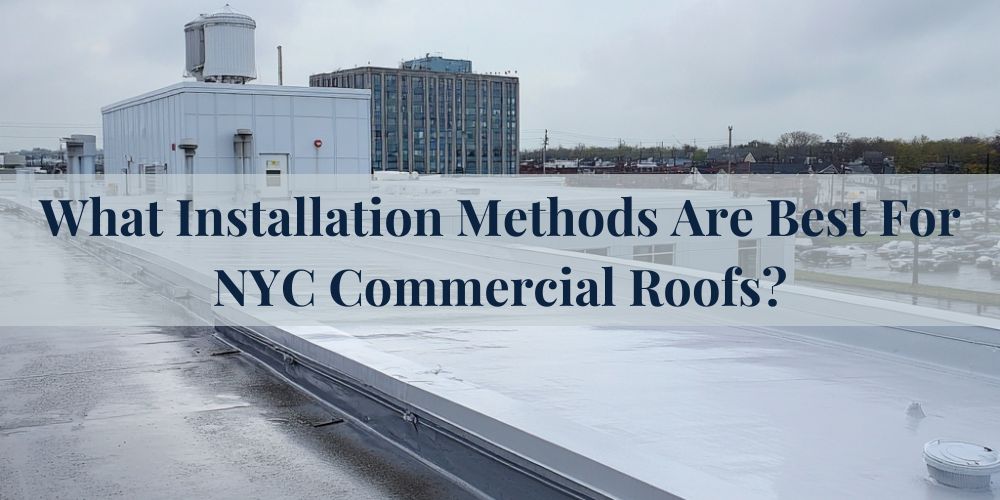
Commercial roof installation methods in New York City are the specific fastening, sealing, and assembly techniques used to attach roofing systems to buildings so they remain watertight and structurally stable under the city’s extreme climate. These methods determine whether a roof can survive wind uplift, snow load, freeze-thaw movement, and driving rain without seams opening, membranes tearing, or water entering the building. Commercial Roofing New York applies these installation methods across NYC to ensure commercial roofs remain secure, sealed, and fully functional through every season.
New York City’s climate places constant stress on roof systems through heavy snowfall, high winds, intense summer heat, and repeated freeze-thaw cycles that cause materials to expand, contract, and shift. Improper fastening patterns, weak seam welding, poor insulation attachment, or inadequate drainage layouts allow these forces to pull roof systems apart and create hidden water entry points. Installation methods must therefore be engineered to control uplift, shed snow and water, and allow thermal movement without breaking the waterproof barrier.
For commercial building owners and facility managers in NYC, understanding how installation methods affect roof performance is critical to preventing leaks, structural damage, and premature roof failure. Choosing the right materials is not enough if they are installed using methods that cannot survive this climate. Below, we’ll break down how different installation methods work, compare how they perform under NYC weather conditions, and explain why proper installation is one of the most important factors in long-term roof protection.
How Does Commercial Roofing Stand Up to New York's Unique Climate?
Commercial roofing in New York City is specifically designed to withstand the state's varied and demanding climate using a combination of adept material selection and skilled installation practices. The roofing systems have to endure hot, humid summers, freezing winters, persistently high UV index, coastal salt air, and frequent freeze-thaw cycles. The versatility in New York’s weather pattern underscores the significance of carefully choosing your commercial roof system.
The five key factors that make commercial roofing sturdy and durable in New York's diverse climate include seam integrity, wind uplift resistance, UV and ozone resistance, freeze-thaw cycle endurance, and salt air corrosion tolerance.
- Seam Integrity
- Wind Uplift Resistance
- UV and Ozone Resistance
- Freeze-Thaw Cycle Endurance
- Salt Air Corrosion Tolerance
1. Seam Integrity
Seam integrity is the quality and stability of the connections formed between the individual pieces of the roof membrane.
Given the high wind speeds and variable temperatures in New York, maintaining seam integrity is crucial to commercial roofing in the city. It negates the chances of seam separation induced by dynamic wind velocity or dramatic thermal changes.
The physical mechanism involves well-sealed and tightly bound seams to prevent water and air infiltration that can weaken the roofing system and lead to premature failure. For instance, using thermoplastic Membrane roofing that involves hot-air welding creates robust seams while enhancing overall roof longevity. Regular inspection for seam damage is a key part of roof maintenance in New York, preventing minor seam issues from becoming significant failures.
2. Wind Uplift Resistance
Wind uplift resistance is the roof's ability to withstand the upward pressure exerted by strong wind currents.
In the face of New York's harsh storms and coastal wind speeds, a high wind uplift resistance is essential for ensuring the longevity and integrity of commercial roofing. A well-implemented roofing system will withstand these conditions, effectively combating the uplift forces.
The primary line of defence against wind uplift is the fasteners and attachment system. Properly installed mechanical fasteners or adhered systems anchor the insulation and membrane to the substrate, preventing the separation and potential loss of roof sections. In a state like New York, where hurricanes are a constant threat, specifying a roof system with superior wind uplift resistance is crucial.
3. UV and Ozone Resistance
UV and ozone resistance refers to the roof's ability to withstand continuous exposure to ultraviolet (UV) rays and ozone without deteriorating prematurely.
New York experiences a persistently high UV index and occasional high ozone concentration days, which can be detrimental to roofs without adequate protection. Therefore, commercial roofing systems in the city require special attention to UV and ozone resistance capabilities.
Durable roofing membranes such as EPDM, TPO, and PVC offer substantial resistance to UV and ozone exposure. These materials prevent cracking and chalking, thus improving the lifespan of the roofing system. A reflective roof coating can also reduce UV impact, minimizing thermal stress and associated problems.
4. Freeze-Thaw Cycle Endurance
Freeze-thaw cycle endurance refers to the ability of a roofing system to withstand the stress caused by freezing and thawing processes.
New York experiences many freeze-thaw cycles during its cold winters. Maintaining freeze-thaw cycle endurance is critical to prevent roof damage in this unique climatic condition.
Roofs can undergo significant stress during freeze-thaw cycles as water expands upon freezing, potentially causing cracks in the roofing components. Roofs with high-quality water-resistant insulation and proper drainage system help alleviate these concerns. Suitable roof design that enables proper snow and ice removal can also significantly improve freeze-thaw resistance.
5. Salt Air Corrosion Tolerance
Salt air corrosion tolerance is the ability of a roof to withstand the corrosive effects of salt in the coastal air without significant degradation.
In cities like New York, which are close to the sea, the corrosiveness of the coastal salt air can impact commercial roofing negatively. Thus, it's important to incorporate roofing systems with materials known for their high salt air corrosion tolerance.
Metal roofs are often considered for their impressive salt air corrosion resistance, thanks to special protective coatings like galvalume or zinc. Furthermore, using PVC or TPO membranes, which are inherently resistant to sodium, provides an additional layer of protection against the corrosive coastal environment. Regular inspections and proper maintenance ensure that the corrosion is timely addressed, further extending the lifespan of commercial roofs in such challenging environments.
Have a question about an upcoming project?
What Impacts Does New York's Coastal Weather Have on Roof Longevity and Maintenance?
New York's coastal weather directly affects commercial roofing systems, particularly through seam integrity, wind uplift resistance, chemical exposure tolerance, ponding water behavior, and attachment method. The local weather conditions pose challenges in maintaining the durability, efficiency, and lifespan of commercial rooftops.
The key factors that significantly impact commercial roofing longevity and the necessary maintenance in New York include:
- Seam Integrity
- Wind Uplift Resistance
- Chemical Exposure Tolerance
- Ponding Water Behavior
- Attachment Method
1. Seam Integrity
Seam integrity refers to the robustness and impermeability of the joints between roofing membrane sections.
In the coastal areas of New York, the combined influences of salinity, humidity, and regular freeze-thaw cycles can degrade the seams of roofing membranes. Therefore, ensuring seam integrity is crucial to maintaining roof longevity in this climate.
The physical mechanism behind this is the continual expansion and contraction of the roofing membrane due to temperature fluctuations, which can cause strain on the seams, leading to splits and cracks. For example, EPDM (Ethylene Propylene Diene Terpolymer) roofing commonly used in commercial buildings requires regular inspections for seam integrity, particularly after the freeze-thaw cycles common in New York's winter months. Any detected failure should be promptly repaired to prevent water infiltration and further damages.
2. Wind Uplift Resistance
Wind uplift resistance is the ability of a roofing system to withstand wind pressures without becoming dislodged or damaged.
The coastal climate of New York experiences regular high wind events, particularly during hurricane season, making wind uplift resistance a key factor in roof longevity and maintenance. A higher wind uplift resistance ensures that the roofing membrane, flashings, and fasteners remain secure in these conditions.
The principle behind wind uplift resistance is based on the pressure difference created by wind flowing over and under the roof surface. As wind velocity increases, it can lift and potentially detach improperly anchored roofing elements. Hallmarks of wind uplift damage may include loosening of fasteners and billowing of the roofing membrane. Consequently, ongoing checks of the fastening system and strong component materials play integral roles in increasing wind uplift resistance and ensuing roof longevity in New York's coastal environment.
3. Chemical Exposure Tolerance
Chemical exposure tolerance is the degree to which roofing materials can withstand exposure to chemicals without degradation.
New York's coastal atmosphere, marked by high salinity and industrial pollutants, necessitates commercial roofing materials with a high chemical exposure tolerance. This factor directly influences the longevity and maintenance demands of the roof.
The corrosive nature of salt and other airborne pollutants may accelerate the degradation of roofing membranes, fasteners, and flashings. Thus, it’s key to select materials with a higher resistance, such as PVC (Polyvinyl Chloride) or TPO (Thermoplastic Olefin) membranes, that can withstand these harsh conditions. Additionally, regular cleaning of the roof surface helps to reduce chemical accumulation and minimize its detrimental effects.
4. Ponding Water Behavior
Ponding water behavior refers to the capability of a roof to effectively prevent or eliminate water accumulation on its surface.
In the damp climate of coastal New York, managing ponding water is crucial for maintaining roof longevity, as standing water can lead to roof system deterioration or failure.
After heavy rainfall, water may pool on flat or low-slope commercial roofs, causing additional weight and pressure. This can lead to sagging of the roof deck, development of leaks, and growth of algae or moss. For instance, in EPDM roofing, ponding water can exacerbate deterioration rates due to increased UV exposure and concentration of pollutants. Employing suitable insulation and drain systems and ensuring regular maintenance checks can significantly limit the effects of ponding water behavior.
5. Attachment Method
The attachment method relates to how the roofing materials are fastened to the substrate.
In New York's coastal weather, the attachment method can directly influence the longevity and maintenance requirements of commercial roofs due to the frequent high winds and freeze-thaw cycles.
Adequate attachment ensures the roofing elements are secured and withstand challenging weather conditions. The physical force exerted by high winds or thermal contraction can dislodge poorly attached components, leading to leaks or failures. For example, in mechanically fastened TPO roofing systems, the fasteners must be inspected regularly and tightened or replaced as needed. This guarantees a secure attachment and preserves the integrity and lifespan of the roof.
How Do You Optimize ROI with Commercial Roofing Selections in New York?
Optimizing ROI with commercial roofing in New York involves selecting materials and systems that directly respond to the city's unique climatic factors, including severe winter temperatures, summer heat and humidity, and potential high wind scenarios. Careful roof system selection, preventative maintenance planning, and strategic performance optimization all play crucial roles in maximizing life-cycle cost efficiency.
The following are critical factors that contribute to the optimization of ROI with commercial roofing selections in New York:
- Thermal Shock Resistance
- High-Wind Uplift Resistance
- Ponding Water Tolerance
- Snow Load Bearing Capacity
- Frost-And-Thaw Durability
1. Thermal Shock Resistance
Thermal shock resistance refers to the roof system's ability to withstand sudden changes in temperature.
New York experiences hot summers and freezing winters, creating conditions ripe for thermal shock. Improving a roof's thermal shock resistance can lead to increased longevity and cost-effectiveness in such an environment.
The physical mechanism behind thermal shock involves the rapid contraction and expansion of roofing materials. For example, a rubber roof membrane might contract (shrink) in harsh winters and expand (swell) under intense summer heat. Excessive thermal cycling weakens the bonds holding the membrane, flashing, and even attachment systems like fasteners, potentially leading to breaches and leaks. To forestall these scenarios, a thermal shock-resistant roofing system with more robust seam integrity can be installed, complemented by regular inspections and prompt maintenance of problem areas.
2. High-Wind Uplift Resistance
High-wind uplift resistance refers to a roof's ability to withstand lifting forces from strong winds.
As New York occasionally experiences strong coastal storms, investing in a system with high wind resistance can significantly improve the integrity and lifespan of a commercial roof.
Wind can create upward pressure on the roof, particularly at the corners and edges, causing the membrane to lift if not well-anchored. For instance, during Hurricane Sandy, rooftops with inadequate fastening systems were susceptible to severe wind uplift damage. Building owners can enhance wind resistance with upgraded attachment systems and regular checks for loose fasteners and seams, all of which ensure the system can cope with potential wind uplift challenges.
3. Ponding Water Tolerance
Ponding water tolerance indicates a roof's ability to withstand water buildup without negative effects such as leakage or structural failure.
Heavy rainfall during New York's humid summers can lead to ponding, jeopardizing roofing lifespan and performance. Proper drainage and water-resistant systems can mitigate these risks.
Rooftops, particularly flat ones, may accumulate standing water, exerting direct weight and increased pressure on the membrane and roof substrate. Over time, water may infiltrate less robust materials, causing deterioration and leaks. Specifying a robust roofing membrane and integrating expertly designed drainage systems can help fight potential ponding water. Regular inspection of drains to clear blockages also improves water flow and prevents water accumulation.
4. Snow Load Bearing Capacity
Snow load bearing capacity refers to a roof's ability to handle the weight of accumulated snow and ice without structural compromise.
New York's winters regularly burden roofs with significant snowfall. Having a roof system that can efficiently support these loads boosts roof durability and ROI.
Excessive snowfall can place a massive weight load on the roof, straining the structural support and potentially causing deformation or even collapse. For example, a commercial roof with insubstantial insulation or inadequate structural support could buckle under a heavy snowfall. To tackle this, a roof should have sufficient load-bearing construction and superior insulation that can maintain internal warmth and minimize snow accumulation. Regular snow removal is also key to mitigating this risk.
5. Frost-And-Thaw Durability
Frost-and-thaw durability is a measure of how well the roof can withstand the repeated freezing and thawing of moisture.
In the context of New York's icy winters, it is critical to choose a roof system that can cope with recurring freeze-thaw cycles.
In the frost-and-thaw process, trapped moisture expands when freezing, exerting pressure on roof components. Repeated cycles can degrade membrane integrity, promote leak formation, and ultimately impair roof longevity. A commercial roof with proper coating and superior seam integrity, for instance, can provide resilience against frost-related deterioration. Regular inspections to spot and swiftly repair such vulnerabilities further preserve roof integrity, extending its service life and enhancing ROI.
Need Help With Commercial Roofing In New York?
Optimal roof installation methods in commercial spaces significantly mitigate operational risk, enhance the performance of building systems, and model cost-efficiency across the long term in New York's unique climate. It's not merely about having a roof over one's head - it's about ensuring the quality, durability, and sustainability of that roof. Key vulnerabilities such as inefficient drainage or flawed seams can lead to substantial damage and unexpected repair costs. In the face of New York's exposure to hot-humid summers and cold, harsh winters, the challenge escalates - affecting the freeze-thaw cycle and leading to potential UV damage.
If you're grappling with issues like active leaks, an aging roof, or the looming storm season, don't delay - get in touch with Commercial Roofing New York today. Our team of seasoned professionals is ready to provide assistance through a thorough inspection and assessment of your roofing system. Using the contact form is the first step towards ensuring the longevity and resilience of your commercial roof. With the ever-rising costs of roofing maintenance and repairs, there has never been a more urgent time to act. Trust us for a consultation that's insightful, action-oriented, and completely focused on your commercial needs.