
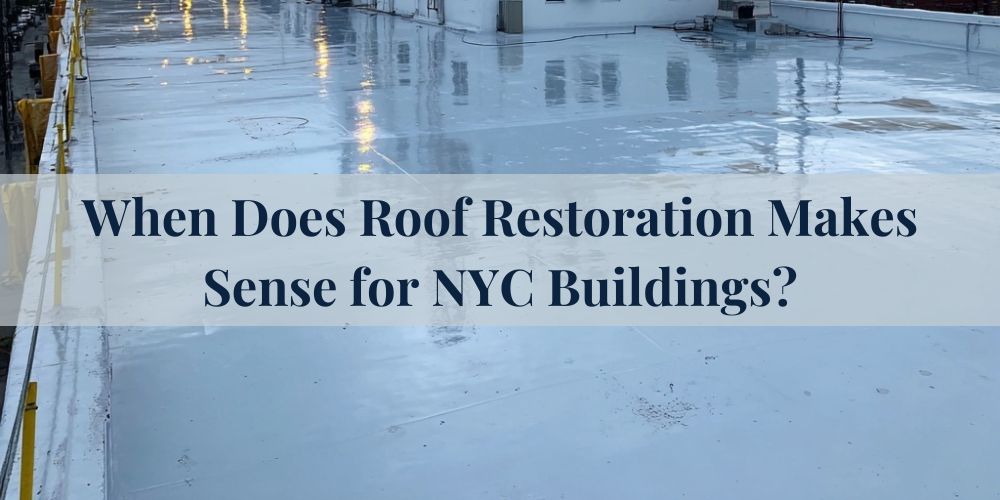
Choosing whether to restore or replace a commercial roof in New York requires understanding how much life remains in the existing system and how well it can still protect the building from water and weather. Making that determination is the responsibility of Commercial Roofing New York, the company that evaluates and restores commercial roofs for NYC properties. Every restoration assessment performed by Commercial Roofing New York is designed to determine whether the existing roof can be sealed, reinforced, and protected to extend its service life without the cost and disruption of full replacement. By examining membrane condition, moisture levels, insulation performance, and drainage, the company identifies when restoration is the most effective solution.
This article explains how Commercial Roofing New York decides when roof restoration makes sense for New York commercial buildings, how restoration improves waterproofing and performance, and why timely restoration is a powerful way to protect property value in this climate.
How Does Commercial Roofing Perform Under New York's Unique Climate Conditions?
Commercial roofing in New York is engineered to resist the unique array of local climatic stressors, employing specialized roof components and designs to ensure their performance. Staying up against New York's varied climate challenges—including cold winters, hot and humid summers, coastal salt air, heavy hail, and high winds—requires specific attention to the roof's resilience, durability, and weatherproofing capabilities.
The performance of commercial roofing under New York's unique climate conditions revolves chiefly around five key factors:
- Seam Integrity
- Wind Uplift Resistance
- Thermal Shock Tolerance
- Hail Damage Resistance
- Coastal Salt Air Tolerance
1. Seam Integrity
Seam integrity refers to the waterproofness and structural soundness of the joint where two sections of roofing membrane meet.
New York's freeze-thaw cycles can test the seam integrity of commercial roofs heavily. Frequently changing temperatures cause the roofing material to contract and expand, which may lead to seam splits and leaks over time.
This behavior is often pronounced in membrane roofing systems like TPO, where seams are typically heat-welded or mechanically fastened. For instance, a blustery winter day in New York can cool the roof inducing contraction, followed by a hasty warm-up causing expansion—this continual cycling can lead to seam failures. To avoid these effects, commercial rooftops in New York often need frequent inspection and maintenance to ensure seams remains watertight.
2. Wind Uplift Resistance
Wind uplift resistance pertains to a roof’s capability to withstand the negative pressure created by swirling winds, which can pull roofing materials up and away from the substrate.
New York's susceptibility to hurricane-force winds, particularly in coastal regions, places a priority on wind uplift resistance. Building heights, especially for skyscrapers, can amplify these wind effects.
Commercial roofing materials, including membranes and insulation layers, are anchored to the roof deck using mechanical fasteners or adhesive bonds to resist wind uplift. For example, in the wake of Hurricane Sandy, structures with properly installed and maintained roofing systems showed significantly less wind damage. Regular inspection of the attachment systems is crucial to assure their continued performance in high-wind events.
3. Thermal Shock Tolerance
Thermal shock tolerance is a roof's capacity to withstand rapid temperature changes without leading to premature degradation or failure.
New York's climate varies greatly from hot humid summers to cold winters, introducing regular thermal shocks to commercial roofs. High solar reflectance is particularly important in the city's urban heat islands to minimize shock exposure.
Materials like PVC and EPDM membranes offer high thermal shock resistance due to their inherent material properties and reflective coatings. These materials contract and expand with temperature changes without cracking, a crucial trait considering New York's infamous heatwaves exchanging rapidly with thunderstorms. Regular assessment and maintenance ensure these materials sustain their thermal shock tolerance over their lifespan.
4. Hail Damage Resistance
Hail damage resistance speaks to a roof's ability to withstand the physical impact of hailstones without cracking or puncturing.
New York occasionally experiences severe hailstorms, which can damage the surface of commercial roofs, leading to diminished performance and leaks.
Impact-resistant roofing materials, such as modified bitumen or robust single-ply membranes, can prevent the hail from puncturing the roof's exterior. For instance, a violent hailstorm may leave dents in a metal roof, but the membrane underneath shielded by a gravel surface, remains undamaged, preventing water intrusion. Regular inspection following hail events can help identify and address any areas of impact damage.
5. Coastal Salt Air Tolerance
Coastal salt air tolerance is the capacity of commercial roofing materials to resist the corrosive effects of salt-laden air, common in coastal regions.
Commercial buildings in New York's coastal areas often have to contend with this salty environment. Salt can accelerate the corrosion and degradation of some materials, affecting roof performance and lifespan.
Stainless steel or aluminum flashings, chemically resistant membranes like TPO and PVC, and protective roof coatings can mitigate the risks of salt-induced corrosion. As an example, a commercial building facing the ocean may be subjected to constant salt-laden winds. Appropriate material selection and routine rinsing of the roof's surface can help maintain the roof system's performance and longevity in these challenging conditions.
Have a question about an upcoming project?
What Impact Do New York's Weather Extremes Have on Commercial Roof Lifespan and Maintenance?
New York's weather extremes significantly impact the lifespan and maintenance requirements of commercial roofs by presenting a variety of climatic stressors. This range from temperature fluctuations to harsh winter conditions, strong wind events and exposure to solar UV radiation. These stressors, when combined with the unique architectural features of commercial buildings, place significant strain on roofing materials and systems.
Here are the five critical factors that distinctly influence commercial roofing lifespan and maintenance in New York:
- Thermal Cycling Impact on Membrane Integrity
- Wind Uplift Resistance
- Freeze-thaw Cycle Effect on Expansion Joints and Flashing
- Solar UV Exposure and Coating Performance
- Snow Load Capacity and Drainage Design
1. Thermal Cycling Impact on Membrane Integrity
This refers to how frequent and severe temperature shifts affect the roof's membrane.
In New York, where sweltering summers transition into freezing winters, thermal cycling is a constant reality. This exacerbates the strain on roofing membranes, thereby affecting commercial roof lifespan.
Drastic temperature changes cause the roofing membrane to rapidly expand and contract. A membrane that continuously undergoes this cycle can eventually weaken and crack, leading to water intrusion. For instance, a single-ply membrane roof might split under excessive thermal strain. To mitigate this, maintenance protocols need to involve routine checks and possible membrane reinforcement, particularly before seasonal weather transitions.
2. Wind Uplift Resistance
This involves the roofing system's ability to withstand wind pressures without dislocation or damage.
New York, particularly its coastal regions, experiences high winds, especially during hurricane season. The potential for wind uplift poses a challenge to the integrity of commercial roofing systems in the state.
Strong winds exert an upward force on the roofing system, potentially leading to dislocation of roofing components. For example, if the fasteners and adhesives of a built-up roof aren't resistant enough, they might yield to wind pressures. Thus, specifications and maintenance in New York should account for wind uplift resistance. This includes reinforcing attachment systems, using high-strength fasteners, and regularly checking seam integrity.
3. Freeze-thaw Cycle Effect on Expansion Joints and Flashing
This considers how repeated cycles of freezing and thawing affect roofing components like expansion joints and flashings.
The freeze-thaw cycle is common in New York's cold winters, which can induce stress and possible damage to these components, negatively impacting roof lifespan and maintenance.
Freezing temperatures can cause any water trapped in the joints and flashings to freeze and expand, potentially causing splits or cracks. When the ice thaws, the resulting water can intrude the roofing system. For example, the metal flashing of a modified bitumen roof could be susceptible to such damage. Preventive maintenance should involve regular inspections of these components for indications of potential freeze-thaw damage.
4. Solar UV Exposure and Coating Performance
This covers the coating's ability to withstand continuous exposure to solar UV radiation.
Despite New York's varied climate, it experiences a significant amount of sunlight across the year. This regular UV exposure can degrade commercial roofing components over time.
UV rays can cause the roofing material to dry out and crack, decreasing its waterproofing capability. A EPDM membrane, without UV-resistant coating, might suffer premature degradation in such a scenario. This necessitates the use of UV-based coatings and regular coating maintenance for commercial roofs in the state.
5. Snow Load Capacity and Drainage Design
This refers to the roof's ability to support accumulated snow weight and its effective evacuation via a well-designed drainage system.
With heavy snowfall common in New York's winters, commercial roofs need adequate load capacity and proper drainage to prevent collapse or water intrusion.
Excess snow accumulation can overburden the roof and potentially lead to structural failure. Also, improper or blocked drains can lead to ponding that encourages water leakage. For example, an inadequately supported flat roof with clogged roof drains might encounter these issues. To avoid such problems, regular snow removal and drain cleanings should be part of the maintenance protocol, particularly during the winter season.
How to Determine the Best Commercial Roofing Choice for Long-term ROI in New York?
The best commercial roofing for long-term return on investment (ROI) in New York is capable of withstanding the varied climatic conditions of a mixed weather region, while also meeting stringent city building codes. Factors such as wind uplift resistance, reflective performance, freeze-thaw cycle tolerance, drainage efficiency, and chemical exposure resilience play significant roles in the selection.
The following essential components should be considered in making the best roofing choice for maximum ROI:
- Wind Uplift Resistance
- Reflective Performance
- Freeze-Thaw Cycle Tolerance
- Drainage Efficiency
- Chemical Exposure Resilience
1. Wind Uplift Resistance
Wind uplift resistance refers to a roof's ability to withstand the pressure exerted by strong winds without detaching.
In New York, where the city is exposed to varying wind speeds, a roof's wind uplift resistance directly impacts its longevity and therefore long-term ROI. Increased resistance intimates reduced risk of roofing failure due to wind damage.
A roofing system with superior fastening methods and seam integrity will exhibit better wind uplift resistance. For instance, mechanically attached roof systems withstand high winds better than others. However, these systems need regular inspection and maintenance comparing to fully adhered systems to minimize the risk of fastener back-out or seam failure.
2. Reflective Performance
Reflective performance measures a roof's ability to reflect solar radiation instead of absorbing it.
A roof with a high reflective performance reduces heat absorption during New York's hot summer months, greatly reducing cooling costs. This factor is crucial for long-term ROI, significantly cutting down energy expenses over the roof's lifespan.
Using a roofing material with a higher reflectance value like coated membrane can significantly reduce the impact of solar radiation. White membranes offer a better reflection of sunlight, reducing thermal shock, and contributing to the prolonged life of the roof. However, reflectivity must be combined with effective insulation to maximize energy savings.
3. Freeze-Thaw Cycle Tolerance
Freeze-thaw cycle tolerance implies a roof's ability to endure alternating freezing and thawing conditions without damage or deterioration.
In New York, where winters can be harsh with significant freeze-thaw cycles, roofing materials need to be resilient to this cycle to maintain structural integrity and ensure long-term ROI. Failure to withstand these cycles may trigger premature roofing failure, thus reducing ROI.
Materials such as modified bitumen or PVC can endure continuous freeze-thaw cycles without significant damage. Thoroughly sealed seams and flashing are also vital to prevent leakages during thawing periods. Regular maintenance to clean drains of sectionalized snow will also extend the roof's lifespan.
4. Drainage Efficiency
Drainage efficiency refers to a roof's effectiveness at draining water to prevent ponding.
New York's heavy periods of rainfall necessitate good drainage efficiency to avoid unnecessary water buildup on rooftops. Better drainage means less water infiltration, water damage, and consequently, better ROI.
A commercial roof should have a suitable slope and reliable drainage system, like strategically placed drains and scuppers that ensure efficient water removal. Regular inspection ensures that drains stay clean and water move off the roof rapidly, reducing the risk of leaks, structural damage, and shortened roof life.
5. Chemical Exposure Resilience
Chemical exposure resilience refers to a roof's ability to resist the deteriorating effects of pollutants and environmental toxins.
New York's pollutant-rich urban environment makes chemical exposure resilience critical for commercial roofing. Increased resilience translates to less required maintenance, lowered repair costs, and improved long-term ROI.
EPDM and PVC membranes demonstrate excellent resistance to chemical exposure, ensuring their durability. A roofing professional can conduct periodic inspections to check for erosion or any other signs of chemical damage. This proactive measure allows for early detection and repair, further enhancing long-term ROI.
Need Help With Commercial Roofing In New York?
In NYC, commercial roof restoration holds undeniable importance for minimizing operational risk, enhancing building performance, and cutting back on long-term costs. The city's uniquely mixed climate poses distinct challenges, from dealing with extreme UV exposure in summers to freeze-thaw cycles in winter. Seams and flashing are key vulnerabilities often overlooked, where water ingress can cause substantial damage. Improper drainage also invites ponding water that accelerates roof deterioration, while inadequate wind uplift resistance can lead to disastrous roof failures in stormy situations.
Don't wait until an active leak or a sudden roof failure nudges you into taking action. With oncoming weather changes and consistent roof aging, it's imperative to proactively address potential issues. Use the contact form to reach out to Commercial Roofing New York. Our team is well-versed in performing thorough inspections, offering expert consultations, and assessing multiple facets of your commercial roof’s condition. We strive to provide solutions that work within your timeframe, your budget, and the unique architectural needs of your building. Do not let deferred maintenance become an operational liability, act today!