
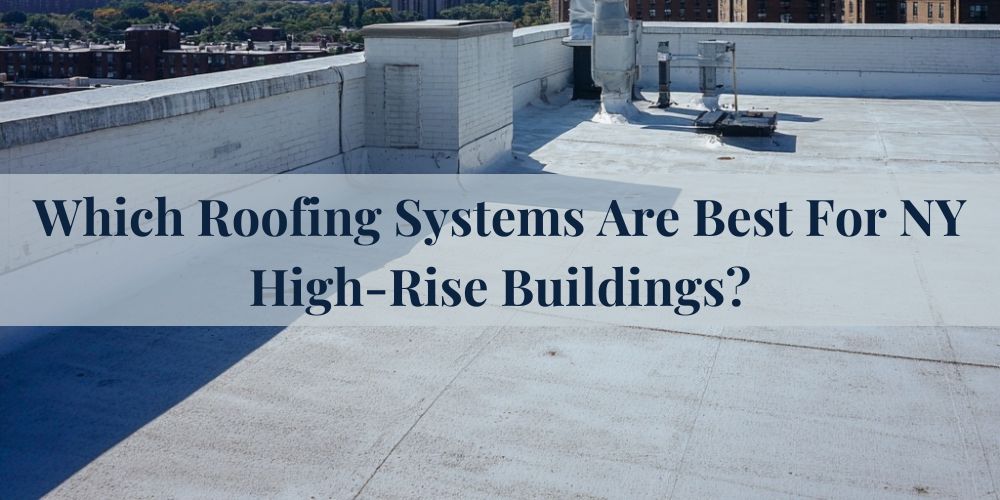
High rise buildings in New York place unique demands on roofing systems because of wind exposure, structural movement, and the need for reliable waterproofing far above street level. Selecting and installing the right roofing system for these conditions is the responsibility of Commercial Roofing New York, the company that designs and builds commercial roofs for NYC high rise properties. Every high rise roof installed by Commercial Roofing New York is engineered to handle wind uplift, temperature movement, drainage challenges, and long term weather exposure without losing performance. Roofing membranes, insulation assemblies, and attachment systems are chosen to keep tall buildings sealed, stable, and energy efficient in the city’s demanding climate.
This article explains how Commercial Roofing New York selects the best roofing systems for New York high rise buildings, how different systems perform under these conditions, and why specialized design is essential for protecting vertical commercial properties.
How Well Does Commercial Roofing Perform in New York's Climate?
Commercial roofing in New York's climate generally performs well, due to the optimal choices made in material and design tailored for varied weather conditions. Significantly, the combination of freezing winters, heavy snowfall, and occasional heavy rainstorms during the year all influence the selection and specifications of commercial roofing systems in New York. This ensures optimal performance and longevity within the complexity of the region's climate.
Some key factors that contribute to the performance of commercial roofing in New York’s climate include seam integrity, thermal cycling resistance, snow load tolerance, ponding water behavior, and corrosion resistance. Each of these factors directly correlates to securing durability and weather resilience in commercial roofing structures in the state.
- Seam Integrity
- Thermal Cycling Resistance
- Snow Load Tolerance
- Ponding Water Behavior
- Corrosion Resistance
1. Seam Integrity
Seam integrity refers to the bonding strength of the roof seams in commercial roofing systems.
Considering New York's climatic conditions and their effects on roofing systems, seam integrity is indispensable. It directly impacts how well the commercial roof will withstand the frequent freeze-thaw cycles common in New York.
The seams of a commercial roofing system can split or buckle under the influence of thermal cycling. High-quality, technician-performed seam welding during installation can result in robust integrity of the roofing system, mitigating the chances of water intrusion that would otherwise lead to system failure. For instance, thermoplastic membranes like TPO or PVC offer heat-welded seams that provide superior seam integrity against these conditions.
2. Thermal Cycling Resistance
Thermal cycling resistance is the capacity of a roofing system to withstand repeated temperature fluctuations.
Given New York's climate, from its hot, humid summers to its freezing winters, thermal cycling resistance is a critical factor in the performance and life expectancy of commercial roofing systems in this region.
Thermal cycling can cause materials to expand and contract, resulting in possible damage to the membrane and the flashings of the roof system. By choosing roofing systems with high thermal cycling resistance such as EPDM roofs, buildings can efficiently handle the temperature changes without compromising on roof integrity, thus reducing the risk of premature roof failure.
3. Snow Load Tolerance
Snow load tolerance is a measure of a roofing system's ability to withstand the weight of accumulated snow.
In New York, substantial snowfall can put significant pressure on commercial roofing systems. Therefore, a roof's snow load tolerance contributes fundamentally to its overall performance and longevity in the region.
Excessive snow can cause deformation and compromise the structural integrity of the roofing system, leading potentially to cave-ins. Proper design and materials, such as enforcing joists and using high tensile strength membranes, can help enhance a roof's snow load tolerance. Also, regular snow removal from the roof surface is a crucial maintenance measure to avoid exceeding the weight limit.
4. Ponding Water Behavior
Ponding water behavior refers to how a roof system handles the accumulation of water on its surface.
New York's varied seasonal rainfall can often lead to water pooling on the roof. The ability of commercial roofing to manage this ponding water is a significant factor in its overall performance.
Extended periods of standing water can degrade the membrane, increase the risk of leaks and reduce the roof's lifespan. Built-up roofs (BUR) and modified bitumen roofs exhibit excellent resistance to ponding water due to their multi-layer system and surfacing material. Proper drainage design, including the installation of internal drains and tapered insulation, is also crucial to minimize ponding issues.
5. Corrosion Resistance
Corrosion resistance is the ability of any roofing material to withstand degradation due to harsh environmental conditions.
In coastal areas of New York, the salt air from the ocean can cause corrosion to metal components in commercial roofing systems, including fasteners and flashings. Hence, corrosion resistance significantly impacts the longevity and performance of commercial roofs.
Corrosion can cause weak spots and failures in the roofing system, compromising its structural integrity and making it susceptible to further damages from weather elements. Use of corrosion-resistant materials like stainless steel or copper for roof components, or applying protective coatings on metal surfaces, can considerably enhance the corrosion resistance of the roof. Regular inspections for corrosion and timely repair or replacement of affected components are vital preventive measures.
Have a question about an upcoming project?
What Impact Does New York's Weather Have on the Lifespan and Maintenance of Commercial Roofing?
New York's unpredictable, harsh weather significantly shortens commercial roofing lifespans and increases maintenance needs. From heavy snowfall to high winds and heat waves, these elements directly affect the performance of crucial roofing components. Additionally, factors like freeze-thaw cycles, coastal salt air, and elevated UV exposure due to the city's geographical location make ongoing maintenance a key factor for the longevity of commercial roofs in New York.
The key factors that directly influence commercial roofing in New York, dictated by its unique climate conditions, are seam integrity, wind uplift resistance, freeze-thaw behavior, reflective performance, and coating corrosion resistance. These elements, described in the following list, play a pivotal role in determining the lifespan and needed maintenance of commercial roofing systems.
- Seam integrity
- Wind uplift resistance
- Freeze-thaw behavior
- Reflective performance
- Coating corrosion resistance
1. Seam integrity
Seam integrity refers to the strength and durability of the overlapping sections in the roofing membrane.
In New York's cold climate, expanding and contracting due to temperature fluctuations can weaken these seams, threatening the integrity of the entire roof. Severe weather patterns, commonplace in the region, put additional pressure on these critical seal points.
As a physical mechanism, fluctuating temperatures cause repeated contraction and expansion that can lead to seam failure. For instance, in a heavy snowfall, the weight of snow puts a massive load onto the roof. As the snow melts and refreezes, an increase in pressure and volume can force open seams, leading to leaks. Regular inspections and enforcing seam areas with sealants or heat welding can reduce the risk of these failures and extend the roof's lifespan.
2. Wind uplift resistance
Wind uplift resistance is the roofing's ability to withstand wind forces without detaching from the building structure.
New York frequently experiences high winds, putting a heavy toll on commercial roofing systems. If the roofing is not designed to withstand these forces, there can be disastrous consequences, particularly for buildings with a larger roof surface area exposed to wind.
Physical mechanisms include attachment systems, such as mechanical fasteners or adhesive bonds that anchor the roof membrane to the substrate, becoming strained under high winds. A strong gust can lift parts of the roof, starting with weakened seams, and lead to serious structural damage. The geographic location and the roof's design, material, and installation quality can also affect wind resistance. In maintenance terms, regular wind resistance inspections can identify weak points early on and allow for necessary reinforcements or repairs.
3. Freeze-thaw behavior
Freeze-thaw behavior defines how roofing material responds to cycles of freezing and thawing.
Fluctuations between freezing and thawing are a prominent factor in New York. Not all roofing materials can efficiently cope with these cycles, leading to premature degradation.
The freeze-thaw cycle causes roofing materials to expand when moisture inside them freezes and then contract when it thaws. This can result in cracking, flaking, or crumbling, particularly in coatings, flashings, and insulation. Freeze-thaw cycles can also compromise drains, causing ice blockages that lead to ponding water. Regular inspections ensure drains remain clear and materials maintain their integrity, thereby preventing damage and prolonging the life of the roof.
4. Reflective performance
Reflective performance is the capacity of a commercial roof's surface to reflect sunlight and reduce heat absorption.
New York undergoes periods of strong sun exposure and intense heat waves, making reflective performance important. Improving reflective performance can also help to mitigate urban heat island effects common in densely populated areas, like New York.
The physical mechanism at work here relates to how darker surfaces absorb more heat, leading to increased thermal load on the roof. Over time, this can cause the roofing materials to degrade more quickly. A coating with high reflective performance reduces heat absorption, mitigating this risk. This also eases the building's cooling requirements, resulting in reduced energy consumption.
5. Coating corrosion resistance
Corrosion resistance is the ability of a roof coating to resist damage from corrosive elements in the environment.
In New York, the coastal salt air can lead to increased corrosion, particularly influencing metal roofing components or systems. Enhanced corrosion-resistant coatings are therefore crucial for the longevity of commercial roofs in the city.
When metallic components, like flashings or fasteners, are exposed to salt air, they can oxidize and start to deteriorate. This makes them weak spots where leaks can develop. To mitigate this, corrosion-resistant coatings can be applied. Not only do these coatings help maintain structural integrity, but they also greatly reduce the rate of oxidative reactions, helping to prolong the lifespan of these metal components and the roof as a whole.
What Factors Should Influence Your Commercial Roofing Decisions in New York?
Your commercial roofing choices in New York should be primarily influenced by climate-related factors and structural paradigms. The city’s mixed climate cycles and its unique architectural environment necessitate careful consideration of technical specifications for optimal roof performance.
The five key factors that should guide your roofing decisions in New York are:
- Wind uplift resistance
- Freeze-thaw behavior
- Ponding water management
- Reflective performance
- Membrane puncture resistance
1. Wind Uplift Resistance
Wind uplift resistance refers to a roof's ability to withstand the forces and pressures exerted by strong winds.
In New York's mixed climate, storms and hurricanes are common, making wind uplift resistance a top priority when choosing a commercial roofing system. The architectural landscape also plays a role as surrounding skyscrapers can channel winds, exacerbating uplift forces.
Failure to achieve appropriate wind resistance can result in membrane, flashings, and insulation blow-offs. Strong winds, for instance, can create differential air pressure across a roof, compromising the attachment system. A real-world example is the numerous office buildings in Manhattan that lost roofing components during Hurricane Sandy. To mitigate this risk, roof systems need robust fastening, proper edge metal detailing, and regular inspections to detect wind damage early.
2. Freeze-Thaw Behavior
Freeze-thaw behavior relates to how a roof can accommodate the repeated freezing and thawing of moisture within its system.
New York's cold winters and fluctuating temperatures necessitate roofing systems with good freeze-thaw behavior. It's particularly crucial for roofs with low slopes, which are common in the city’s commercial sector.
Failure in freeze-thaw behavior can lead to moisture penetration as trapped water can freeze, expand, and crack the roofing envelope. A clear example would be critical infrastructure like the subway system being subject to leaks due to such breaches in the roof. To prevent this, roofing elements like flashings and seams must be properly sealed, while substrates need to effectively repel water. Thermal insulation can also ensure minimal heat loss, reducing the possibility of internal freezing.
3. Ponding Water Management
Ponding water management refers to a roof's ability to effectively drain accumulated water.
In New York, with its regular precipitation and many flat-roofed buildings, effective management of ponding water is crucial. Improper water drainage can worsen roof unit weight and structure integrity issues.
If water continues to pool on a roof, it may seep into the roof substrate or insulation layers, speeding up the deterioration of these components. For instance, on an inadequately graded roof of a commercial building, standing water from a heavy rainstorm could remain trapped. A well-designed roof should incorporate appropriate slopes, adequate roof drains, and water-resistant roofing membranes to combat this issue.
4. Reflective Performance
Reflective performance refers to a roof's ability to reflect solar radiation, reducing heat absorption.
In New York, especially in summer months, solar heat can significantly increase the buildings’ cooling demands. Roofing systems with high reflective performance can help mitigate this problem.
If a roof has poor reflective performance, it absorbs more heat, which can accelerate the aging of roofing materials and create thermal stress. For example, a black EPDM roof in direct sunlight may experience considerable expansion, potentially leading to membrane wrinkling. To enhance comfort and prolong roof life, it is advisable to choose membranes or roof coatings with high solar reflectance.
5. Membrane Puncture Resistance
Membrane puncture resistance is a measure of a roof's ability to resist damage from impact and foot traffic.
Due to New York's urban setting, commercial roofs often house HVAC units and other equipment, requiring frequent service that puts demands on puncture resistance. Moreover, storm debris or hail can pose puncture threats.
Punctures in the roof membrane allow water to infiltrate the roof system, leading to common issues such as insulation saturation and interior damage. An example of this is a roof unit on a high-rise with regular maintenance visits, resulting in punctures from dropped tools. To reduce potential puncture damage, a high-quality roof membrane must be installed. Proactive maintenance can also spot and repair punctures early, before they cause severe roof system damage.
Need Help With Commercial Roofing In New York?
The significance of comprehensive commercial roofing solutions for NYC high-rise apartment buildings cannot be overstated. In this bustling metropolis, operational risk, building performance, and long-term costs are intricately linked to the quality and durability of roofing systems. Roofs with poorly designed drainage systems or improperly fitted flashing may succumb to the pressures of heavy rains and biting freeze-thaw cycles prevalent in New York's cold climate, inevitably leading to escalating repair costs. Furthermore, the dense urban environment and high wind uplift potential heighten the vulnerabilities associated with seams and ponding water, threatening the overall stability of your high-rise investment.
If you're experiencing active leaks or beginning to see the signs of an aging roof, don't wait for the escalating repair costs. We strongly urge you to use the contact form today. At Commercial Roofing New York, we specialize in proactively managing these and many other roofing challenges. Whether you require an in-depth roof assessment, drainage correction, or expert consultation, we have the professional confidence and commercial integrity to ensure a superior solution. Prepare for the upcoming storm season and protect your high-rise buildings with our comprehensive commercial roofing solutions. Don’t defer maintenance. Partner with us and experience quality roofing services with minimal business interruptions and improved building performance.