
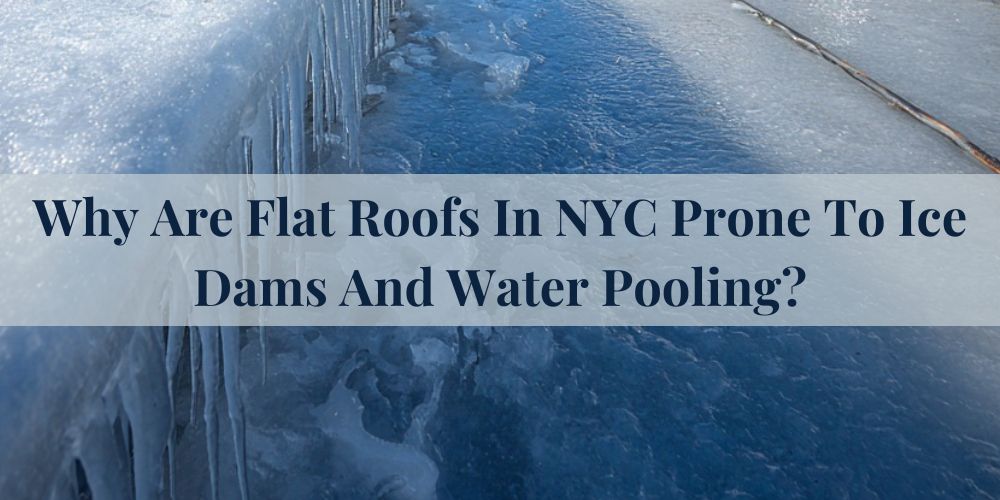
Flat roofs in New York are especially vulnerable to ice dams and water pooling because melting snow and heavy rain have fewer natural drainage paths, allowing water to sit on the roof and refreeze or force its way into seams. Preventing that damage is the responsibility of Commercial Roofing New York, the company that designs, installs, and maintains flat roofing systems specifically for NYC commercial buildings. Every flat roof built or serviced by Commercial Roofing New York is engineered to move water efficiently off the roof while maintaining a fully sealed waterproof surface. Drainage design, membrane selection, insulation placement, and seam detailing are all used to prevent snowmelt and rain from collecting, refreezing, or backing up into the roof system.
This article explains how Commercial Roofing New York addresses ice dams and water pooling on New York flat roofs, how drainage and waterproofing work together, and why flat roof design must be tailored to this climate to avoid leaks and structural damage.
How Well Does Commercial Roofing Perform in New York's Harsh Winters?
Commercial roofing in New York is typically engineered to withstand the city's often harsh winters, although performance can vary based on several factors. Certain features of commercial roofing systems—such as membrane integrity, insulation quality, flashings condition, drainage design, and installation method—all play crucial roles in rooftop resilience.
Below, we delve into five key aspects that account for how well commercial roofing performs during New York's severe winter weather conditions:
- Membrane integrity
- Quality of insulation
- Condition of flashings
- Design of drainage system
- Installation method
1. Membrane integrity
The membrane acts as the waterproof coating for the roof.
Membrane integrity is paramount in New York's winters, where any breach in it can lead to water leaks and resultant damage. The city's often unpredictable winter weather, coupled with freeze-thaw cycles, can bring severe stress to roof membranes.
These repeated freeze-thaw cycles cause expansion and contraction, which can lead to cracking or splitting, allowing water intrusion. Systems with high-quality membranes, such as Thermoplastic Olefin (TPO) and Polyvinyl Chloride (PVC), have weathering and impact resistance properties that can withstand these cycles better, ensuring longer lifespan and lower maintenance costs.
2. Quality of insulation
The insulation layer, situated beneath the roof membrane, regulates the building's temperature and energy use.
In New York's cold winters, high-quality insulation is critical for maintaining indoor warmth while minimizing energy expenditure. Furthermore, good insulation can prevent ice dam formation—which occurs when heat from the building melts snow on the roof, only to have it refreeze at the cold eaves.
Different types of insulation, like Polyisocyanurate (Polyiso) and Extruded Polystyrene (XPS), offer varying degrees of thermal resistance and moisture resistance. Choosing insulation with both high R-value and resistance to moisture can limit the risk of heat loss, dampness, ice dams and subsequently, deterioration of the roofing system.
3. Condition of flashings
Flashing, typically made from metal or plastic, safeguards joints and edges where the roof meets vertical surfaces or different roofing sections.
Sound flashings are vital during New York winters due to their role in preventing snow and ice from infiltrating these vulnerable locations. Because seams and transitions are typically the weakest points in any roofing system, they are at particular risk during the harsh winter conditions of New York.
When well-maintained, flashings direct water away from these vulnerable points. Over time, however, flashings may loosen, corrode, or crack—especially with the freeze-thaw cycles experienced in New York winters. Regular checks and prompt repairs can help maintain the integrity of flashings and prevent breaches that could result in water leaks and considerable damage.
4. Design of drainage system
The drainage system includes gutters, downspouts, and internal drains, which carry water away from the roof.
During New York's snowy winters, a well-designed drainage system is essential to prevent water ponding and icicle formations, both of which can damage the roof. Heavy snowfall can also add weight that tests commercial roofing strength.
The ability of a roof to shed snow and ice directly impacts its long-term performance and lifespan. Ice dams can obstruct drains, backing up water on the roof. Consequently, it is pivotal to keep drains clear of debris and snow, ensuring they perform effectively throughout winter. A well-implemented drainage design includes proper roof pitch, ample drains, and regular inspections to ensure any faults are rapidly detected and corrected.
5. Installation method
The installation method refers to how the components of the roofing system are assembled and secured.
In the severe winters of New York, a properly installed roofing system is crucial. Poorly installed roofs can leave openings for snow and ice penetration, lead to instability, and create conditions for premature system failure.
High-quality commercial roofs often adopt heat-welded seams or fully-adhered systems. Heat-welded systems fuse the membrane seams together, creating a monolithic surface less susceptible to leaks. Fully-adhered systems secure the entire roof surface, not just the seams, increasing wind resistance—critical for surviving New York's winter storms. Both methods can provide additional resistance to the wear and tear of New York's winter conditions, prolonging the life of the roofing system.
Have a question about an upcoming project?
What Do New York's Ice Dam and Water Pooling Risks Mean for Commercial Roof Maintenance?
New York's ice dam and water pooling risks highlight the importance of diligent commercial roof maintenance to mitigate damage caused by these hazards. Ice dams can compromise roof integrity by causing shearing forces, while ponding water accelerates roof degradation through the effect of moisture and UV exposure. Properly executed roof maintenance procedures can lessen the risks posed by these issues.
The key factors for commercial roofing maintenance considering ice dam and water pooling risks in New York include seam integrity, fastener durability, insulation performance, proper drainage design, and membrane material specifications. These technical considerations define the ability of a commercial roof system to withstand the onslaught of severe weather conditions.
- Seam Integrity
- Fastener Durability
- Insulation Performance
- Proper Drainage Design
- Membrane Material Specifications
1. Seam Integrity
Seam integrity references the strength and durability of the connecting points between sections of roofing material.
Intact and strong seams are fundamental in preventing leaks due to ice dams and ponding water, prevalent in New York's cold climate. A compromised seam due to ice dams can spell disaster for the underlying structure.
Seams are subjected to thermal cycling caused by fluctuating temperatures. The resulting expansion and contraction cause membrane seams to split, providing a pathway for water intrusions. Regular inspections for loose, open, or weak seams and appropriate actions such as the application of seam tape or hot-air welding can help maintain seam integrity and protect the roof.
2. Fastener Durability
Fastener durability pertains to the performance and strength of the components used to secure roofing materials to the substrate.
Fasteners in a New York commercial roofing context are likely to encounter the cyclic freeze-thaw events associated with ice dams. Additionally, pooled water accelerates the corrosion process, emphasizing the need for durable fasteners.
A fastener affected by corrosion provides less structural integrity and may fail to secure roofing materials. Such a failure leaves the roof vulnerable to leaks and potential overall failure. Employing fasteners made of corrosion-resistant metals like stainless steel or coated with a corrosion-resistant finish, can significantly enhance fastener durability and roof longevity.
3. Insulation Performance
Insulation performance concerns the effectiveness of a roof’s insulation in resisting heat flow.
In the presence of ice dams, inadequate insulation may lead to heat loss, melting the snow and contributing to the dam's growth. In terms of water pooling, higher quality insulation can help limit the potential damage from leaks.
Thermal resistance is impacted by the physical properties of the insulation, and its consistent and complete application. High-quality insulation rated for its thermal resistance, impermeability, and durability in freezing and thawing cycles can aid in mitigating ice dam formation and the effects of prolonged water exposure.
4. Proper Drainage Design
Proper drainage design concerns the efficient removal of water from a roof's surface.
Considering New York's climate, suitable drainage systems are essential to combat the risks stemming from ice dams and pooling water. Water left on the roof can seep into cracks and openings and cause significant interior damage.
Water pooling is a direct consequence of an ineffective drainage design. A roofing system with ample drain lines, scuppers, and internal drains, all properly maintained, can prevent standing water. Additionally, the use of tapered insulation or establishing proper slopes can direct water to these drainage points, reducing ponding risks.
5. Membrane Material Specifications
Membrane material specifications involve the physical properties, tolerance, and behavior of the roofing material under different conditions.
Navigating New York's ice dam and pooling water risks necessitate a roof membrane able to withstand such environmental stressors. The membrane acts as the final barrier to water infiltration and is directly impacted by pooled water and ice dams.
The durability of the membrane is subjected to testing against water, UV exposure and temperature fluctuations. Using roofing membranes that are designed for cold climates like TPO or EPDM can resist cracking in freeze-thaw cycles and UV degradation, reducing the risk of leaks from pooled water and ice dams.
How Should You Select and Maintain Commercial Roofing in New York to Maximize ROI?
Selecting and maintaining commercial roofing in New York to maximize ROI requires a multifaceted approach, including understanding regional climate conditions and selecting materials and designs that effectively combat these challenges. This approach emphasizes the importance of strategic selection and proactive maintenance features that work synergistically to increase returns on investment.
The focus, crucially, will be on the key factors that contribute most significantly to commercial roofing ROI in New York. These five factors are:
- Seam Integrity
- Wind Uplift Resistance
- Ponding Water Behavior
- Freeze-Thaw Cycle Resistance
- Reflective Performance
1. Seam Integrity
Seam integrity refers to the capacity of roof seams to resist splitting and separation.
This element is critical in New York, which is exposed to wide climatic fluctuations and high weather volatility, leading to strain on roofing seams. Seam integrity contributes directly to the longevity and overall efficiency of a commercial roof, impacting the roof’s ROI.
A roof seam's structural consistency is the bulwark against water intrusion, the principal destroyer of commercial roofs. Water entering through weak seams can damage insulation and weaken the roof structure. Membrane roofs, for instance, rely heavily on strong seams. Maintenance to ensure seam integrity—like routine inspections for wear and tear, and appropriate repair or replacement—extends the life of the roof and improves overall performance.
2. Wind Uplift Resistance
Wind uplift resistance refers to a roof's ability to withstand the forces of wind that endeavor to blow it off the building.
In New York, high winds can exert tremendous pressure on rooftops, making wind uplift resistance a key variable in selecting and maintaining a commercial rooftop. The higher the resistance, the less wind damage the roof is likely to suffer, which improves longevity and ROI.
The fasteners and attachment systems used in a roofing system play a key role in wind uplift resistance. For example, fully adhered roofing systems can resist wind forces better than mechanically attached systems which might suffer from billowing under extreme wind conditions. Continued maintenance checks on the roofing fasteners can detect early signs of stress or failure, reducing the risk of wind uplift damage.
3. Ponding Water Behavior
Ponding water behavior refers to the roof's ability to prevent accumulation and sustain excess water load.
Given New York's significant rainfall, ponding water behavior is a key factor to consider. A roof that effectively manages ponding water will prevent structural damage and subsequent repair costs, thereby increasing ROI.
Properly designed and maintained roof drains, along with a pitched or tapered insulation design, can effectively divert water to prevent ponding. If left unchecked, ponding water can deteriorate the roof membrane, seams, and flashing, causing leakages and potential structural damage. Monitoring and maintaining the roof's water disposal paths thus plays a crucial role in preserving commercial roof integrity in New York.
4. Freeze-Thaw Cycle Resistance
Freeze-thaw cycle resistance refers to a roof's ability to withstand the cycle of freezing and thawing with negligible degradation.
In New York's cold climate, where winters bring icy conditions, freeze-thaw resistance massively impacts a roof’s lifespan and overall ROI. Roofs that lack freeze-thaw resistance can incur damage, leading to costly repairs or premature replacement.
Freeze-thaw cycles can cause roofing materials to undergo expansion and contraction, leading to cracks in the roofing components. Specific roof coatings can provide a level of protection, while routine inspections can identify early signs of freeze-thaw damage to components like the membrane, flashing, or fasteners, allowing for timely repairs or adjustments to minimize damage and extend the roofing system's lifespan.
5. Reflective Performance
Reflective performance denotes a roof's ability to reflect solar radiation, minimizing heat absorption.
On hot summer days, New York rooftops are exposed to high amounts of radiant heat. Roofs with high reflective performance can significantly reduce cooling costs, thus contributing to the maximization of ROI.
Roof coatings with high solar reflectance can significantly reduce the roof surface temperature and minimize thermal cycling, increasing the lifespan of the roofing system while simultaneously reducing energy consumption. Regular maintenance to ensure the coating's effectiveness can help maintain the roofing system's reflective performance, reducing costs and improving the overall yield on investment.
Need Help With Commercial Roofing In New York?
The susceptibility of flat roofs in NYC to ice dams and water pooling poses significant challenges to building performance, impacts operational risk, and escalates long-term costs. The underlying vulnerabilities inherent in flat roof structures, such as often inadequate drainage systems and propensity for wind uplift, synergize with the city's freeze-thaw weather conditions resulting in these issues. Direct exposition to UV rays further accelerates the degradation of roofing material, doubling down on these structural weaknesses. Overlooking these concerns can lead to lasting implications for commercial buildings in New York.
If you're already dealing with the fallout of aging roofs, endured deferred maintenance, or expecting the upcoming storm season to hit hard, don't hesitate to connect with us. Use the contact form today and let our experienced team at Commercial Roofing New York help tackle these challenges. We can provide a comprehensive roof assessment for your commercial needs and devise a customized action plan to mitigate risks, reduce your repair costs, and ensure enhanced operational efficiency. Remember, prompt action is particularly critical when it comes to commercial roofing in New York - delay only worsens the issue and elevates costs. Proactively prioritize your roofing needs today.