
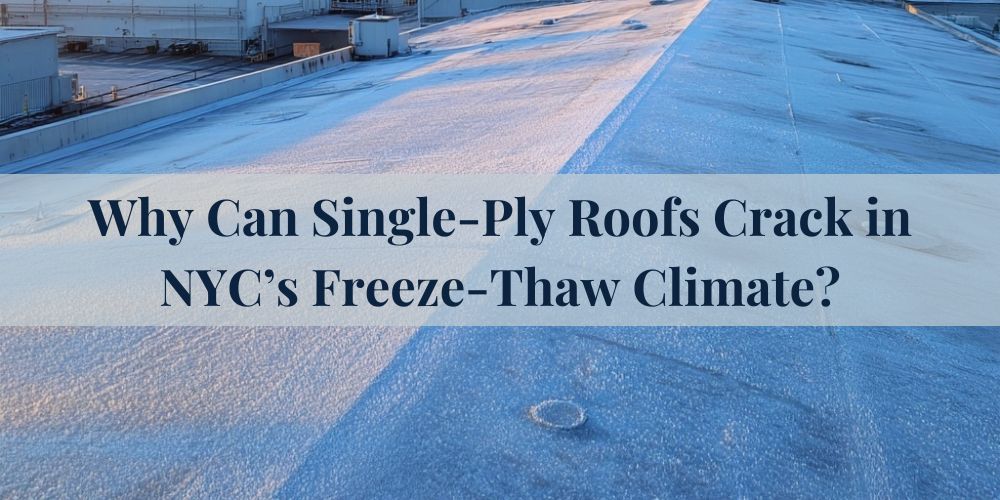
Single ply roofing systems in New York are exposed to repeated freezing and thawing that forces the membrane to expand, contract, and flex as temperatures swing throughout the year. Preventing that movement from turning into cracks and leaks is the responsibility of Commercial Roofing New York, the company that installs and maintains single ply roof systems for NYC commercial buildings. Every single ply roof built by Commercial Roofing New York is engineered to remain flexible and sealed under extreme temperature changes. Membrane selection, seam welding, insulation design, and attachment methods are all chosen to absorb thermal movement without allowing the waterproof layer to fail.
This article explains how Commercial Roofing New York protects single ply roofs from freeze thaw cracking in New York, how system design prevents membrane damage, and why proper installation and maintenance are critical in this climate.
How Does Commercial Roofing Perform in New York's Freeze-Thaw Climate?
Commercial roofing in New York's freeze-thaw climate significantly depends on material flexibility, installation quality, and routine maintenance, impacting its overall performance and longevity. This is because variations in temperature can directly impact the material's moisture management, thermal cycling resistance, and wind uplift performance. Furthermore, ensuring the roof's membrane, insulation, and fastening systems can adequately withstand these factors is key to the roof's long-term performance.
The performance of commercial roofing in New York's climate centers on five key factors:
- Membrane Flexibility
- Seam Integrity
- Thermal Cycling Resistance
- Wind Uplift Resistance
- Drainage Systems and Ponding Water Behavior
1. Membrane Flexibility
Membrane flexibility refers to a roof's ability to bend, expand, and contract.
As a response to New York's freeze-thaw climate, the membrane's flexibility becomes crucial. Fluctuations in temperature cause the roofing membrane to expand and contract regularly.
This constant change can lead to prematurity roof fatigue if the membrane lacks adequate flexibility. For instance, EPDM rubber roofing is a common choice due to its high flexibility, even in extreme temperatures. Regular inspections to spot any possible tears or cracks can help ensure the membrane remains functional and protects against water intrusion.
2. Seam Integrity
Seam integrity refers to the reliability of the connections between roofing materials.
In New York's freeze-thaw cycles, maintaining seam integrity is essential. This is because extreme fluctuations in temperature can compromise the bonds that hold the roofing materials together.
Heating and cooling cycles can cause seams to expand and contract, leading to potential seam failure and causing leaks. Using a hot-air welded seam system, such as with PVC or TPO roofing membranes, can provide a stronger, more reliable seam. Regular inspection of seam integrity is an essential part of routine maintenance.
3. Thermal Cycling Resistance
Thermal cycling resistance is a roof's capacity to withstand fluctuations in temperature without compromising its structure.
With extreme fluctuations in temperature characteristic of New York's climate, roofing systems must exhibit high thermal cycling resistance. This inconsistent weather pattern can lead to material degradation if not properly managed.
Roofing materials, like elastomeric coatings, can assist in managing thermal cycling by expanding and contracting with the changing weather. Ensuring a high-quality insulation system can also help minimize internal temperature fluctuations, reducing the impact on the roofing system.
4. Wind Uplift Resistance
Wind uplift resistance refers to a roof's ability to withstand the forces of wind trying to lift the roofing materials off the structure.
New York's climate, often prone to strong winds, demands a high level of wind uplift resistance in commercial roofing systems. Without it, wind can lift the roof membrane, leading to possible roof system failure.
Roof fastening systems and adhesive attachment methods can enhance wind uplift resistance. Ballasted roof systems, typically using gravel or pavers to hold the roof membrane, also demonstrate excellent wind uplift resistance. However, they require regular inspections to ensure no ballast displacement, which could compromise wind resistance.
5. Drainage Systems and Ponding Water Behavior
Drainage systems and ponding water behavior pertain to how efficiently a roof sheds water and prevents standing water, respectively.
In New York's freeze-thaw cycles, proper drainage systems are vital along with strategies to mitigate ponding water. Trapped water can freeze and damage the roof surface and underlying insulation.
Installing drainage components such as roof drains and scuppers, and ensuring a design that encourages positive water flow, can eliminate standing water. Regular maintenance to clear debris from drains and streets also helps minimize potential ponding water. If left unchecked, these areas can cause severe damage to the roof system, especially during freezing conditions.
Have a question about an upcoming project?
What Impact Does New York's Harsh Weather Conditions Have on Commercial Roofing Lifespan and Maintenance?
New York's extreme weather conditions significantly shorten the lifespan and increase the maintenance needs of commercial roofing systems. These effects are chiefly brought about by factors such as temperature swings, snow load, turbulent winds, exposure to precipitation, and freeze-thaw cycles. Each of these elements takes a toll on various aspects of a commercial roof.
Specifically, these five key factors impact commercial roofing lifespan and maintenance requirements in New York:
- Thermal cycling effect on membrane integrity
- Protracted snow load impact on roof structure
- Wind uplift resistance in high-velocity events
- Precipitation exposure and flashing durability
- Freeze-thaw cycles and drain functionality
1. Thermal cycling effect on membrane integrity
Thermal cycling refers to the repeated expansion and contraction of roofing materials due to temperature fluctuations.
In New York, daily and seasonal temperature swings are quite dramatic, directly impacting the roofing membrane's lifespan and maintenance. The consequential thermal cycling effect can compromise the roof's integrity by causing membrane fatigue and splits.
When the roof material heats, it expands and when it cools, it contracts. Over time, this constant motion can weaken the membrane, leading to splits or cracks that allow water intrusion. For instance, a TPO or EPDM membrane on a commercial roof might show signs of hasty wear and tear, necessitating frequent inspections and maintenance work. Technicians must regularly monitor the roof for cracks, check the bonded seams, and promptly conduct repairs to prevent massive water damage and extend the roof's lifespan.
2. Protracted snow load impact on roof structure
Protracted snow load refers to the prolonged weight and pressure exerted on a roof due to snow accumulation.
New York's heavy snowfall in the winter months contributes to significant roof loads, affecting both the roof structure's durability and maintenance needs. Furthermore, the sheer weight can cause the roof to sag or, in extreme cases, collapse.
In a real-world scenario, after a New York blizzard, the accumulated feet of snow on a commercial roof drastically increases the load, stressing the structure, fasteners, and underlying support systems. Over time, excessive snow load can lead to structural deformation or fastener displacement. Given this threat, commercial buildings require frequent roof inspections during snow season and, in some instances, a reinforcement of their structure to withstand these challenging conditions.
3. Wind uplift resistance in high-velocity events
Wind uplift resistance refers to a roof's ability to withstand wind forces without displacement or detachment.
High winds in New York, particularly during storm events, test a commercial roof's wind uplift resistance, impacting the system's lifespan and maintenance schedule. Strong winds can lift the roof membrane, damage fasteners, or entirely strip roofing sections.
For instance, a nor'easter, common in New York, can produce hurricane-like winds, exerting significant pressure on a commercial roof's attachment systems. If the roofing system fails to resist this force, it may result in detached flashing or uprooted membranes leading to leaks or substantial damage. Therefore, ensuring adequate fastenings, secure seams, and sturdy flashing forms a critical part of routine roof maintenance in anticipation of New York's wind events.
4. Precipitation exposure and flashing durability
Precipitation exposure refers to the roof's continuous contact with rain, snow, ice, and hail, while flashing durability involves the robustness of roofing components designed to prevent water penetration.
In New York, frequent exposure to precipitation tests a commercial roof's flashing durability and increases its maintenance requirements. Extended exposure to moisture can lead to leaks, rust, and deterioration of flashing components.
Suppose a commercial building in New York has metal flashing around its roof edges and penetrations. In that case, the high annual rainfall can lead to rapid corrosion and rusting, reducing the flashing's effectiveness and leading to leaks or water damage. Timely maintenance involving routine inspections, rust removal, and application of protective coatings can mitigate these risks and extend the roof's service life.
5. Freeze-thaw cycles and drain functionality
Freeze-thaw cycles refer to the repetitive sequence where the water freezes and thaws, causing expansion and contraction, while drain functionality pertains to the roof's ability to effectively remove water.
Freeze-thaw cycles in New York can interfere with a commercial roofing system's drain functionality, directly impacting the roof's maintenance and lifespan. Clogged or frozen drains can result in ponding water, exerting extra weight on the roof and compromising its structure.
The water accumulation on a commercial roof can freeze and expand, damaging the drain pipes. Once the ice thaws, it can flood the blockage into the drainage system, causing further issues and potential water damage. Regular roof inspections, prompt drain cleaning, and the use of heat tape to prevent freezing are critical maintenance tasks to ensure the reliability of commercial roof drains in New York's cold winters.
How Can You Optimize Your Commercial Roofing Choices for Durability and Cost-Effectiveness in New York's Climate?
To optimize your commercial roofing choices for durability and cost-effectiveness in New York, it's critical to select materials and systems that withstand the city's diverse climate conditions. This involves considering factors like wind uplift resistance, freeze-thaw resilience, solar reflectance, water drainage systems, and seam integrity. Each of these components plays a vital role in the long-term performance of your commercial roof.
Let's dive into these key specifications that ensure roofing durability and money-saving efficiency in New York's challenging climate:
- Wind Uplift Resistance
- Freeze-Thaw Resilience
- Solar Reflectance
- Efficient Water Drainage Systems
- Seam Integrity
1. Wind Uplift Resistance
Wind uplift resistance refers to a roofing system's ability to withstand strong winds without displacement or damage.
In New York, high-velocity winds, especially in coastal areas, can become a severe factor for roof longevity, emphasizing the need for wind uplift resistance. Enhanced wind resistance reduces the risk of roof damage, failure, and subsequent repair or replacement costs.
Firmly attached roofing membranes and fasteners prevent separation during heavy winds. For example, a mechanically attached system can provide superior hold-down strength, maintaining the roof's integrity during storm events and reducing the possibility of wind uplift. Regular inspection and maintenance are also crucial to ensure all components remain secure.
2. Freeze-Thaw Resilience
Freeze-thaw resilience is the roof's ability to withstand cycling from below-freezing temperatures to thaw conditions without sustaining damage.
New York's winters bring icing and snow accumulation, which can lead to freeze-thaw cycles on your roof. A roof with high freeze-thaw resilience maintains its structural integrity and prevents expensive water damage.
Roofing systems such as elastomeric membranes, known for their flexibility, have high freeze-thaw resilience. This flexibility allows these membranes to contract and expand in response to temperature swings, reducing the risk of cracks and leaks. For instance, silicone-based roofing coatings can stand up to freeze-thaw cycles, providing a durable, watertight layer over the membrane and increasing the roof’s lifespan.
3. Solar Reflectance
Solar reflectance is a material property that measures its ability to reflect sunlight, thereby reducing heat absorption.
In New York's summer, high solar reflectance contributes to a building's energy efficiency and a roof's lifespan. Less heat absorption means decreased thermal stress on the roof and less demand for air conditioning indoors.
A white or light-colored roof coating can significantly increase a roof's solar reflectance, reducing the surface temperature of the roof. Single-ply membranes such as TPO or PVC display high solar reflectance, thereby contributing to reduced energy consumption and preventing premature degradation from UV damage.
4. Efficient Water Drainage Systems
An efficient water drainage system effectively removes rainwater off the roof, reducing the chance of water ponding and related problems.
With New York's substantial annual precipitation, having an efficient roof drainage system is essential to prolonging the roof's life and preventing water intrusion. Drainage systems protect the roof structure from moisture damage and minimize chances of leaks inside the building.
Proper design of drains, scuppers, and gutters, along with a slight roof pitch, helps to ensure rapid water removal. For example, including a tapered insulation system can provide the necessary slope for effective drainage, avoiding ponding issues and prolonging the roof’s service life.
5. Seam Integrity
Seam integrity relates to the durability and impermeability of a roof's joints, or seams – the areas most vulnerable to water intrusion.
In the diverse weather conditions of New York, ensuring long-term seam integrity is key to maintain the waterproofing performance and longevity of a commercial roof. High-quality seams resist weathering effects and reduce potential points of failure.
Quality seam work, especially in single-ply roofing systems, involves the correct application of adhesives or the use of heat welding to create a continuous, watertight membrane. Regular inspection and preventative maintenance of seams can identify potential problem areas before they evolve into leaks or larger failures—thereby extending the roof's lifespan and saving on potential repair costs.
Need Help With Commercial Roofing In New York?
In New York’s harsh freeze-thaw climate, cracking of single-ply membranes is not just a cosmetic issue. They can pose serious operational risks to your building. Vulnerabilities especially at the seams and flashing can compromise the membrane's integrity, negatively impacting the building's overall performance and causing long-term costs to skyrocket. The freeze-thaw cycles that characterize New York’s climate can exacerbate these issues, causing further damage to these critical roof components. Hence, maintaining the health and integrity of commercial roofs in this city must be a top priority for all building owners and facilities teams.
Don't wait for active leaks to prompt action. If your commercial roof shows signs of aging or damage, particularly after a freeze-thaw cycle, it's time to reach out to the experts. At Commercial Roofing New York, we have proven strategies to increase the longevity of your roof while significantly reducing the odds of costly repairs or replacements down the line. If you're worried about your roofing standing the test of time in New York's challenging climate, use the contact form to schedule an inspection and consultation. We're confident we can help you strategically manage your roofing assets, ensuring the health and durability of your building for years to come.