
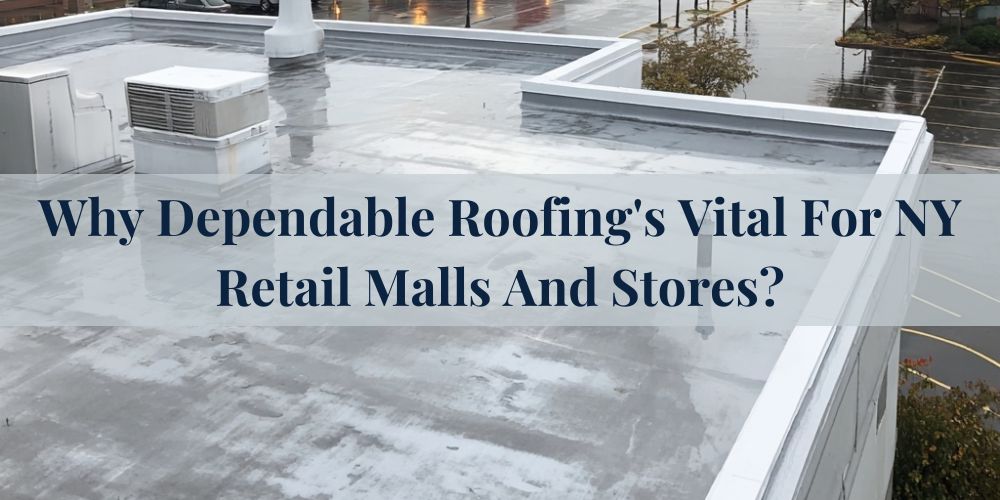
Retail malls and stores in New York depend on their roofs to keep customers, inventory, and daily operations protected from weather related disruptions. Providing that protection is the responsibility of Commercial Roofing New York, the company that designs, installs, and maintains commercial roofing systems for retail properties across NYC. Every retail roof built or serviced by Commercial Roofing New York is engineered to stay watertight, structurally stable, and energy efficient under heavy foot traffic, large interior spaces, and New York’s extreme weather conditions. These systems are designed to prevent leaks, protect merchandise, and maintain comfortable indoor environments for shoppers and staff.
This article explains how Commercial Roofing New York delivers reliable roofing for New York retail malls and stores, how proper roof performance supports business continuity, and why professional roofing management is essential for retail facilities in this climate.
How Does Commercial Roofing Perform Under New York's Unique Climate Conditions?
Commercial roofing in New York is uniquely challenged by a blend of climate conditions, including harsh winters and hot, humid summers. This requires robust roofing systems specifically designed to withstand these diverse and often extreme conditions.
The key factors that drive the performance of commercial roofing under New York's climate conditions include thermal cycling resilience, freeze-thaw durability, water intrusion prevention, wind uplift resistance, and snow load capacity.
- Thermal cycling resilience
- Freeze-thaw durability
- Water intrusion prevention
- Wind uplift resistance
- Snow load capacity
1. Thermal Cycling Resilience
Thermal cycling resilience refers to the roof's ability to withstand the repeated expansion and contraction due to temperature changes.
In New York, where large temperature swings between day and night are common, particularly in the spring and fall, thermal cycling resilience becomes critical in ensuring the longevity of the roof system. Failures in this aspect can lead to the deterioration of roofing materials.
When the roofing system's components, such as the membrane and sealants, continuously expand and contract, it can stress the seams, potentially leading to splits or cracks. These micro-damages can then allow for water penetration, compromising the integrity of the roof. Controlling thermal movement with high-quality materials and proper installation can greatly extend the lifecycle of a commercial roof in New York.
2. Freeze-Thaw Durability
Freeze-thaw durability measures the roofing system's ability to resist damage caused by the freezing and thawing of water.
During New York's notoriously harsh winters, roofs must withstand the accumulation and subsequent melting of ice and snow. The freeze-thaw cycle can seriously compromise the durability of the roof.
Water can seep into the tiny cracks of the roofing components, freeze when the temperature drops, and expand, causing further cracks. When the ice thaws, it creates a path for more water to penetrate, accelerating the deterioration of materials like flashings and fasteners. Therefore, selecting a roof design and materials with high freeze-thaw durability is essential for reducing long-term maintenance costs.
3. Water Intrusion Prevention
Water intrusion prevention involves the roof's design and materials working together to keep moisture out of the building.
New York's climate includes periods of heavy rainfall, especially during spring. Moreover, ponding water on flat commercial roofs can be a common issue, making water intrusion prevention vital for New York's commercial buildings.
Roofing systems with strong water-resistant membranes and properly installed flashings can keep moisture from entering the building. Additionally, effective drainage systems and sloped roofing design can help prevent ponding water. By avoiding water intrusion, businesses can avoid costly repairs and potential interior damage related to mold and structural decay.
4. Wind Uplift Resistance
Wind uplift resistance is the roof's ability to stay attached to the building during high wind conditions.
Coastal regions of New York State, like New York City, are susceptible to strong winds, particularly during hurricane season. Therefore, a roof's wind uplift resistance is crucial.
When the winds hit a building, the pressure difference can cause the roofing materials, especially on the edges and corners, to lift and possibly blow off. Properly designed roofing systems use secure fasteners and adhesive bonds to hold down the roof membrane and other components, minimizing wind damage. Thus, to combat wind uplift, the design should include wind-resistance considerations based on local wind speed data.
5. Snow Load Capacity
Snow load capacity refers to the maximum amount of snow weight that a roof can safely support.
In New York, heavy snowfall can lead to large amounts of snow accumulating on rooftops, particularly on flatter commercial roofs. This creates a need for a robust snow load capacity.
Snow can be significantly heavy, and if too much accumulates on a roof without being appropriately disbursed or removed, it can cause structural damage or even a roof collapse. A well-insulated roof with adequate snow load capacity can prevent such scenarios. It involves careful calculation of anticipated snow loads during the design stage, as well as periodic removal of snow during winter months to alleviate stress on the roof structure.
Have a question about an upcoming project?
What Risks and Maintenance Challenges Does New York's Weather Pose for Commercial Roofing?
New York's variable climate imposes significant risks and maintenance challenges to commercial roofing systems. These include factors such as freeze-thaw cycles, high wind uplift pressures, prolonged exposure to UV radiation, heavy rain and snow loads, and the occasional coastal salt air. To better understand, let's examine the key factors influencing roofing performance in New York’s climate.
- Freeze-Thaw Cycle Impact on Membrane Durability
- Wind Uplift Resistance of Roofing Fasteners and Seams
- UV Radiation Degradation of Roof Coating
- Effects of Heavy Rain and Snow Loads on Roof Drains and Flashing
- Corrosion of Roofing Components from Coastal Salt Air
1. Freeze-Thaw Cycle Impact on Membrane Durability
The freeze-thaw cycle refers to the process of water freezing and then thawing on a surface.
In New York, the frequent freeze-thaw cycles during winter can severely compromise the integrity of the roofing membrane. This process is amplified when the roof is exposed to significant temperature fluctuations.
As water seeps into micro-cracks and freezes, it expands, widening the cracks. When thawing occurs, the enlarged cracks allow more water intrusion, thereby creating a vicious cycle. This can lead to membrane cracking, making the roof susceptible to leaks. Therefore, ensuring the durability of the membrane and proper inspection to mitigate the impact of freeze-thaw cycles are crucial in New York's climate.
2. Wind Uplift Resistance of Roofing Fasteners and Seams
Wind uplift resistance refers to a roof's ability to withstand the forces of wind attempting to lift it off the building structure.
In the coastal regions of New York, high wind pressures pose a serious challenge to the durability of commercial roofing systems. This threat is particularly high for fasteners and seams, which are crucial for the structural integrity of the roof.
When high wind forces act on the edges of the roof, uplift pressures can dislodge fasteners and open seams, making the roof vulnerable to blow-offs or leaks. Therefore, a commercial roofing system in New York requires robust fasteners and well-sealed seams to adequately resist wind uplift.
3. UV Radiation Degradation of Roof Coating
UV radiation degradation of roof coating refers to the breakdown of a roof's protective coating due to prolonged exposure to ultraviolet radiation.
New York's summer could enhance UV exposure, which without a resistant roof coating, speeds up the degradation process. This degradation can lead to a shortened lifespan for commercial roofing systems in the area.
Over time, UV radiation can cause the roof coating to crack, blister, or peel, leaving the underlying components susceptible to further damage. Therefore, the use of UV-resistant coatings is paramount for extending the life of the roof membrane in New York's sunny months.
4. Effects of Heavy Rain and Snow Loads on Roof Drains and Flashing
Heavy rain and snow loads refer to the accumulation of significant quantities of precipitation on the roof.
In New York, heavy rain and snow are not uncommon, challenging the capacity of roof drains and flashing to properly evacuate water off the roof. Increasing loads can amplify these challenges.
Without efficient drainage, standing water can cause weight strain on the roof structure, increasing the risk of structural failure. Flashings could also bear stress and might crack or peel over time, leading to water leakage. Proper design of roof drains and sturdy flashings are, therefore, critical to withstand the challenges posed by New York's heavy rain and snow.
5. Corrosion of Roofing Components from Coastal Salt Air
Corrosion of roofing components from coastal salt air refers to the damaging effects of salty sea air on a building's roof elements.
The coastal regions of New York are frequently exposed to salty air, which can have a corrosive effect on certain roofing components like metal flashings or fasteners.
Over time, the salt air can eat away at these components, weakening their structural integrity and making them susceptible to failure. Additionally, rusted components can stain the roof membrane, diminishing the aesthetic appearance of the building. The selection of corrosion-resistant materials and periodic inspection is crucial for commercial roofing systems in the coastal regions of New York.
How Should New York Retailers Choose and Maintain Commercial Roofing for Optimal ROI?
To optimize return on investment (ROI), New York retailers should select and maintain commercial roofing keeping in mind the region-specific factors and the performance of the roofing system. This includes understanding the influence of the local climate, the various failure modes, and essential roofing specifications that enhance durability under specific conditions.
The following key factors help New York retailers optimally choose and maintain commercial roofing systems, thus providing the best ROI:
- Thermal Cycling Effect on Membrane Seams
- Wind Uplift Resistance of the Attachment System
- Chemical Resistance of Roof Coating
- Drainage Design and Ponding Water Management
- Reflective Performance and Heat Loads
1. Thermal Cycling Effect on Membrane Seams
Thermal cycling refers to the impact of fluctuating temperatures on the roofing membrane, particularly at the seams.
For New York retailers, taking thermal cycling into account is crucial, as the city’s climate sees significant temperature swings. The impact on ROI comes from potential water-related damages and the frequency of roof replacements.
Due to its cold winters and hot summers, regular thermal cycling can cause membrane seams to contract and expand. Over time, this can weaken the seams, encouraging splits or cracks and allowing water to infiltrate the system. To prevent this, regular inspection and repair of seams are essential, and choosing a roofing system with a robust seam design can enhance the roof’s resistance to thermal cycling.
2. Wind Uplift Resistance of the Attachment System
Wind uplift resistance refers to the roofing system's ability to resist being lifted or damaged by high winds.
New York is frequently subjected to high winds and storms, which can particularly affect the ROI of commercial roofing systems. A wind-resistant roof translates to reduced maintenance and repair costs.
The wind uplift resistance of a commercial roofing system largely depends on its attachment method. Loose-laid systems can be vulnerable to wind uplift and can result in extensive damage. Hence, fully adhered systems or mechanically fastened systems with wind-rated fasteners offer a better solution in high-wind areas like New York. Regular inspections to ensure the integrity of the fasteners and the attachment system as a whole are crucial for maintaining wind uplift resistance.
3. Chemical Resistance of Roof Coating
Chemical resistance refers to the roof coating's ability to withstand degradation due to chemical exposure.
In the context of New York, exposure to pollutants and other chemical agents can affect roof longevity and ROI if the roof coating does not have adequate chemical resistance.
A roof exposed to pollutants or harsh cleaning agents can deteriorate more quickly if the roof coating isn’t resistant to chemicals. A high-quality, chemically-resistant coating can protect the roofing membrane, extend its lifespan, and reduce the cost of frequent replacements. When maintaining the roof, ensuring the integrity of the coating will, in turn, ensure the roof's ability to resist chemical damage.
4. Drainage Design and Ponding Water Management
Drainage design and ponding water management refer to how well a roof sheds water and prevents the accumulation of standing water.
In New York, where heavy rains are frequent, poor drainage can lead to premature roof failure, impacting the ROI of roofing systems.
A well-designed drainage system with properly installed and maintained drains ensures that water is efficiently removed from the roof, leading to a decreased risk of water damage and ponding. Ponding water can cause structural stress and deteriorate the roofing materials, reducing their lifespan. Regular maintenance activities should include inspections of gutters, downspouts, and drains to keep the water flow unobstructed.
5. Reflective Performance and Heat Loads
Reflective performance concerns the roofs' ability to reflect solar radiation, thus minimizing heat loads and cooling costs.
This factor contributes significantly to the ROI for retailers in New York, particularly during the hot and humid summer months where cooling costs can escalate.
A roof with high reflective performance can deflect solar radiation, reducing the heat load on the building and in turn, lowering the energy demand for cooling. Such roofs specifically benefit from white or light-colored coatings which reflect rather than absorb solar radiation. Keeping the coating maintained and clean maximizes this performance and can lead to substantial energy cost savings in the long run.
Need Help With Commercial Roofing In New York?
The undeniable importance of reliable roofing for retail malls and stores in New York is tied deeply into operational risk, building performance, and long-term costs. The city's unique climate, with its freeze-thaw cycle and occasional strong winds, accentuates the vulnerabilities in roof structure, such as seams and flashing. Issues like ponding water due to improper drainage can drastically shorten a roof's lifespan and lead to costly repairs. Furthermore, a well-maintained commercial roof ensures optimum building performance and longevity, significantly reducing overhead costs in the long run.
If you're facing challenges like active leaks or escalating repair costs, it's time to act. Using the contact form, reach out to Commercial Roofing New York. We specialize in ensuring your roof is prepared for every season, reducing the chances of unexpected expenses due to deferred maintenance or an aging roof. Our professional team provides consultations, assessments, and actionable plans to maximize your roof's potential. Be proactive, not reactive, when it comes to your commercial roof's upkeep.