
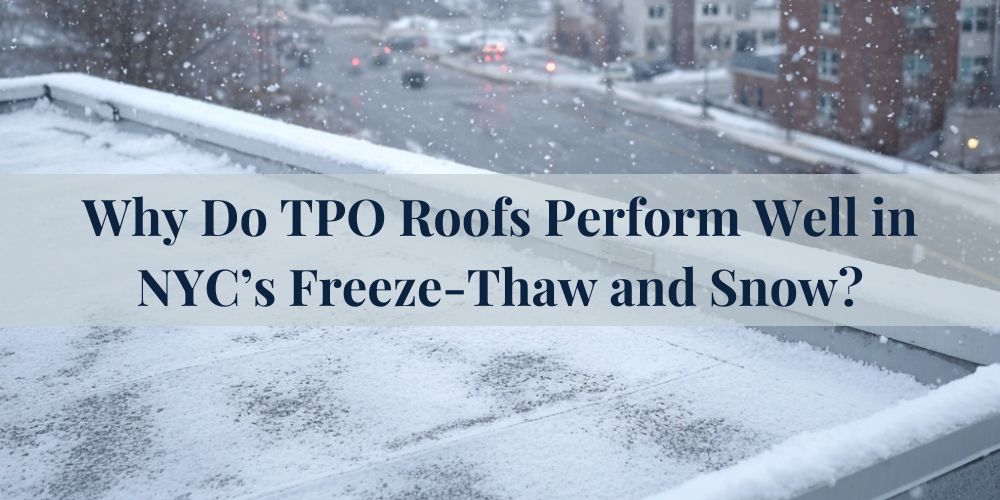
TPO roofing systems in New York must withstand heavy snow loads, standing water, and constant freeze thaw movement that can break down weaker materials. Ensuring TPO performs under these conditions is the responsibility of Commercial Roofing New York, the company that installs and maintains TPO roof systems specifically for NYC commercial buildings. Every TPO roof built by Commercial Roofing New York is engineered to remain flexible in cold temperatures, resist moisture intrusion, and shed snow and water efficiently. Membrane welding, insulation layout, and drainage design are all used to prevent cracking, leaks, and thermal stress.
This article explains how Commercial Roofing New York uses TPO roofing to protect New York commercial buildings from freeze thaw and snow related damage, how system design supports long term performance, and why TPO is a preferred solution in this climate.
How Does Commercial Roofing Withstand New York's Harsh Winters and Freeze-Thaw Cycles?
Commercial roofing in New York is designed with material resilience, superior insulation, and exceptional fastening methods to navigate the challenging winter conditions and frequent freeze-thaw cycles. Advanced roofing materials, carefully selected components, and professional installation methodologies contribute to the roofing system's overall durability and performance.
The following key factors enable commercial roofing systems to withstand the harsh winters and freeze-thaw cycles that characterize the New York climate:
- Resilience of EPDM Roofing Membrane
- Superior Insulation Performance
- Optimized Drainage System
- Elaborate Flashing Details
- Robust Fastening Techniques
1. Resilience of EPDM Roofing Membrane
The EPDM (Ethylene Propylene Diene Monomer) roofing membrane leads the industry in weather resistance.
This rubber-based membrane's elasticity enhances the roofing system's resistance to the severe temperature variations and freeze-thaw cycles that New York endures. Making it a critical factor in the longevity of commercial roofs in the state.
During New York's harsh winters, the EPDM membrane can contract and expand without suffering significant degradation. For instance, when temperatures drop, the membrane contracts, and as they rise, the membrane expands. This flexibility prevents cracks and splits that would otherwise permit water entry. Regular inspections to identify any membrane degradation and timely repairs -- including membrane re-sealing -- can further enhance the roof's longevity.
2. Superior Insulation Performance
Superior insulation is vital in protecting commercial roofs from temperature fluctuations and condensation issues.
High-quality insulation directly combats the detrimental effects of New York's harsh winters and freeze-thaw cycles by reducing the heat transfer through the roofing assembly. It also prevents condensation within the system, a common occurrence in the colder months.
Polyisocyanurate (PIR) is one of the most effective insulation materials used in commercial roofing due to its high thermal resistance. This resistance helps maintain a stable temperature within the roofing assembly, reducing the likelihood of condensation and resulting damage from ice formation and subsequent thawing. Periodic inspections ensure the insulation stays dry and maintains its R-value, which is key to its performance.
3. Optimized Drainage System
An optimized drainage system aids in disbursing water rapidly and efficiently off the roof.
In New York, a well-functioning drainage system is paramount due to the large volumes of snow and ice that melt during thaw cycles. Appropriate drainage prevents pooling or ponding of water, which could freeze and damage the roof structure.
Roof drains and scuppers are set up at strategically calculated intervals to handle water flow off the roof efficiently. Additionally, pitch and slope are integrated into a commercial roofing system's design to facilitate swift water runoff. Regular maintenance of the drainage system, especially before the winter months, ensures that no blockages can disrupt the runoff and result in damaging ponding.
4. Elaborate Flashing Details
Roof flashing contributes greatly to the water-tightness of a commercial roofing system.
In New York's intense freeze-thaw cycles, flashing helps prevent water penetration at critical junctures on the roof, like around vents, chimneys, or alongside walls. It becomes imperative in winters when roofs experience heavy snowfall followed by melting periods.
By using flexible, weather-resistant materials like EPDM, coupled with meticulous installation, roof flashing effectively channels water away from potential penetration points. Regular inspection and maintenance of the flashing preserve its resilience, preventing points of vulnerability from giving way to water intrusion and consequential damage.
5. Robust Fastening Techniques
Robust fastening techniques play a key role in securing the roofing components securely in place.
Given New York's turbulent winter weather, the fastening systems ensure that roofing components such as insulation and membranes remain intact, thus preserving the roofing assembly's structural integrity. In turn, this helps protect against damage from the constant stress of freeze-thaw cycles.
Fasteners made of corrosion-resistant materials and appropriate lengths are used, and their spacing is carefully calculated for optimal security. For instance, screws and plates are ideally suited to secure insulation and membranes, even against uplift forces caused by high winds. Repeat inspections and possible replacement of any deteriorated fasteners as a part of regular maintenance ensure the continuing performance and durability of the roof.
Have a question about an upcoming project?
What Challenges Pose a Threat to the Longevity and Maintenance of Commercial Roofing in New York?
New York's diverse climate conditions and urban environment create unique challenges for the longevity and maintenance of commercial roofing. These include temperature fluctuations, extreme weather conditions, potential chemical exposures, urban heat island effects, and foot traffic.
The key factors that can affect the durability and upkeep of commercial roofs in New York are:
- Temperature fluctuation impact on membrane contraction and expansion
- Resistance to extreme weather conditions
- Chemical exposure tolerance
- Urban heat island effect on reflective performance
- Foot traffic resistance
1. Temperature fluctuation impact on membrane contraction and expansion
This refers to how temperature changes affect a roof's membrane properties.
In New York, commercial roofs are exposed to significant seasonal temperature variation which causes the roof membrane to contract and expand frequently. This can reduce the structural integrity of the roof, leading to possible failures.
The repeated contraction and expansion can cause strain on the seams of the membrane, leading to their rupture. Once ruptured, it leads to the risk of water intrusion, dampening the insulation beneath. For instance, built-up roofs or single-ply membranes experience this phenomenon, which can lead to leaks if not periodically checked and maintained.
2. Resistance to extreme weather conditions
This refers to a roof's ability to withstand severe weather events such as heavy snowfall, hailstorms, and high winds.
New York occasions severe winter storms and high winds which especially stress commercial roofing. This adds an extra layer of challenge to the roof's maintenance and can deteriorate its lifespan.
Heavy snowfalls add weight to the roof, and if not properly designed for snow loads, this can lead to structural damage. High wind uplift can strain roofing materials and attachment systems, damaging the roof edges or seams. For instance, the rubber gaskets around the fasteners of a mechanically attached single-ply roof might be ripped apart in high winds, leading to roof system failure.
3. Chemical exposure tolerance
Chemical exposure tolerance refers to a roof's ability to resist deterioration caused by exposure to harsh chemicals in the air.
New York's dense industrial areas expose commercial roofs to airborne chemicals which can degrade roofing materials. This impacts the roof's longevity and compels more frequent maintenance schedules.
Industrial pollutants or acid rain can affect the membrane or the coating of a commercial roof, leading to premature aging and potential failure. For example, EPDM (ethylene propylene diene monomer) roofing systems are particularly vulnerable to oil and grease, which can lead to membrane swelling and eventual deterioration, necessitating timely inspections and proactive repairs.
4. Urban heat island effect on reflective performance
The urban heat island effect alters a roof's reflective performance – its ability to reflect sunlight and reduce heat absorption.
In New York City's urban landscape, commercial roofs are often surrounded by concrete and asphalt, which absorbs and re-emits heat, enhancing the urban heat island effect. This elevates roof surface temperatures, bending the rules for maintenance and durability.
This increase in temperature accelerates the aging process of roofing materials like membrane and coating, leading to sooner than anticipated roof failure. For instance, PVC (polyvinyl chloride) and TPO (thermoplastic olefin) roofing systems are typically 'cool roofs', but the urban heat island effect might degrade their reflective performance, increasing cooling costs and shortening roof lifespan.
5. Foot traffic resistance
Foot traffic resistance is a measure of how well a roof can withstand the wear and tear caused by foot traffic.
Commercial roofs in New York often serve as areas for HVAC systems, requiring consistent foot traffic for maintenance. Continued foot traffic may lead to physical damage, impacting the lifespan of the roofing system.
Foot traffic can lead to punctures or surface wear in the roofing membrane, making it easier for water to penetrate and damage the insulation layer or substrate below. For example, in a modified bitumen roofing system, excessive foot traffic can wear down the granular surface, exposing the underlying bitumen and causing premature aging and leaks.
How To Choose the Best Commercial Roofing Option in Response to New York's Severe Weather Conditions?
Given New York's diverse and extreme weather conditions, the optimal commercial roofing option demands rigorous criteria. Heavy snowfall, high winds, and consistent freeze-thaw cycles necessitate a roofing system that can withstand these elements and offer durable protection. Furthermore, the choice should accommodate the building's peculiarities and usage requirements.
Five crucial factors play into selecting a commercial roofing system suited for the severe weather conditions of New York. These criteria focus on the physical properties and quality of roofing components to ensure long-term functionality and resilience.
- Seam Integrity
- Wind Uplift Resistance
- Ponding Water Behavior
- Thermal Movement Tolerance
- High Reflective Performance
1. Seam Integrity
Seam Integrity refers to the strength of the joints where individual roofing components meet.
Due to New York's propensity for harsh weather, a roofing system with high seam integrity prevents water and air intrusions. High seam integrity is crucial for limiting the damage from freeze-thaw cycles common in New York winters.
The physical mechanism involves the fusion of membranes at their edges to create strong seams that resist separation. For example, heat welding for thermoplastic PVC or TPO roofs creates seams that, when executed well, are stronger than the membrane itself. This resistance to splitting reduces the risk of failure from water ingress or air leakage, ensuring the roof's long-term durability and the building's interior safety.
2. Wind Uplift Resistance
Wind Uplift Resistance measures a roof's ability to withstand wind forces without displacement or damage.
In storm-prone New York, high winds can create uplift pressures that dislodge poorly secured roofs. A wind-resistant roof is thus vital for commercial buildings in the city's hurricane exposure zone.
Superior wind uplift resistance is achieved by securely fixing the roof's protective membrane to the insulation beneath it, either mechanically with fasteners or through fully adhered attachment systems. Such a system, as seen with PVC roofing, can remain intact even under high wind speeds. Regular maintenance of these attachment points aids in preserving this wind resistance over time, minimizing the risk of roof failure and subsequent interior damage.
3. Ponding Water Behavior
Ponding Water Behavior relates to a roof’s ability to manage the accumulation of water without degradation or damage.
With New York’s heavy and sustained rainfall, a roof’s ability to resist the negative impacts of ponding water is critical. Improper water management could lead to structural damage and potential roof collapse due to added weight.
Ponding water behavior is influenced by the roof design, like optimal slope for drainage, and material properties, such as water resistance of the coating and membrane. For instance, EPDM (Ethylene Propylene Diene Monomer) rubber roofing demonstrates excellent resistance to water and maintains its integrity even under prolonged exposure. Regular inspection and maintenance of drains and gutters ensure effective water management and preserve the roof's durability.
4. Thermal Movement Tolerance
Thermal Movement Tolerance concerns a roof's ability to expand and contract without damage due to temperature fluctuations.
In New York, the large temperature swings between harsh winters and hot summers necessitate a high thermal movement tolerance. Roofing systems with low tolerance may crack or distort, leading to leaks or failures.
The membrane material plays a crucial role in a roof's thermal movement tolerance. For example, TPO roofing is designed to accommodate extensive thermal cycling without structural failure. Its flexibility allows for the necessary expansion and contraction without causing splits or cracks. Given New York's broad temperature changes, regular examination of the membrane and seams is vital to early detection and repair of any thermal damage.
5. High Reflective Performance
High Reflective Performance is a measure of a roof's ability to reflect sunlight and reduce heat absorption.
In New York's hot summers, a highly reflective roof can help manage building temperatures and reduce the demand for air conditioning. This factor is particularly relevant for commercial buildings that can become heat islands.
The reflective performance is primarily dictated by the roof coating. White or light-colored coatings typically have higher reflectivity, like those found in PVC or TPO roofing systems. By reflecting the sun’s rays, these roofs can mitigate the urban heat island effect common in New York City, enhancing the building’s energy efficiency and potentially reducing cooling costs. A regular coating maintenance schedule ensures sustained high reflective performance.
Need Help With TPO Roofing In New York's Harsh Climate?
As we've discussed, TPO roofing's exceptional performance in challenging New York weather patterns significantly mitigates operational risk, enhances building performance, and helps control long-term costs. Through its durable composition and reliable seams, it effectively resists pooling water—a common issue in freeze-thaw cycles that can lead to immense structural damages. Moreover, its superior UV resistance makes it well-suited for the variable New York climate, reducing the likelihood of premature degradation and maintenance costs.
If your facility is battling with the adverse effects of demanding weather or you're concerned about the upcoming storm season, it’s time to deliberate on a resilient option—TPO roofing. Don't let an aging roof or rising repair costs threaten your operations; take action now. Reach out to our seasoned team at Commercial Roofing New York for comprehensive guidance. You can use the contact form on our website to schedule an in-depth inspection, assessment, or consultation today. Our foundation is built upon providing dependable roofing solutions that prioritize your facility's needs in an effective, efficient manner.