
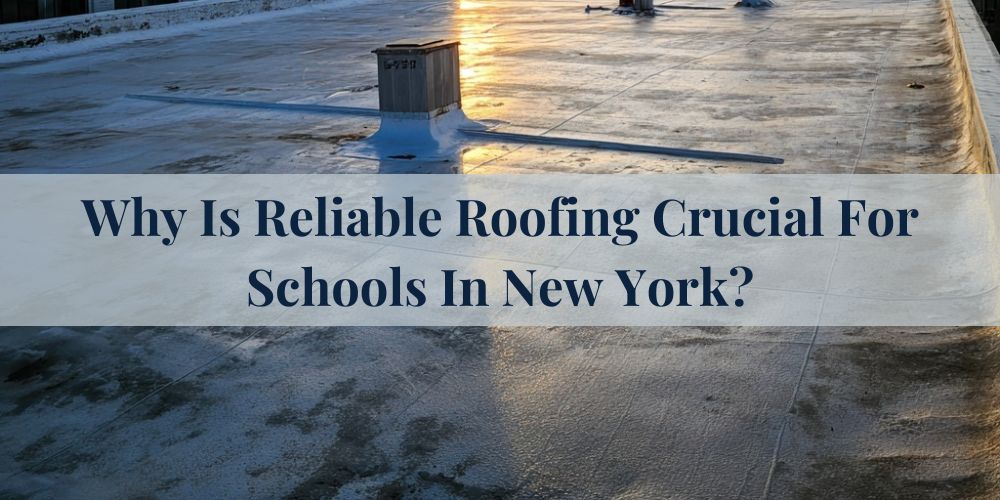
Schools in New York depend on their roofs to keep classrooms dry, safe, and comfortable for students and staff throughout every season. Providing that protection is the responsibility of Commercial Roofing New York, the company that designs, installs, and maintains roofing systems specifically for educational buildings across NYC. Every school roof built or serviced by Commercial Roofing New York is engineered to handle heavy use, constant occupancy, and New York’s extreme weather without risking leaks, temperature instability, or structural damage. Waterproofing, insulation, drainage, and maintenance strategies are all tailored to ensure that learning environments remain safe and uninterrupted.
This article explains how Commercial Roofing New York delivers reliable roofing for New York schools, how proper roof design supports safety and comfort, and why professional roofing management is essential for educational facilities in this climate.
How Does Commercial Roofing Withstand New York's Extreme Weather Conditions?
Commercial roofing in New York withstands extreme weather conditions through robust design, quality materials, and meticulous installation practices. These factors enable it to endure the region's harsh cold winters, high wind loads, and the freeze-thaw cycles that can compromise roofing integrity.
The following key factors ensure commercial roofing in New York is resilient against the city's varying weather conditions:
- Seam Integrity
- Wind Uplift Resistance
- Thermal Shock Resilience
- Substrate Moisture Management
- Fastener Performance
1. Seam Integrity
Seam integrity refers to the strength and durability of the connections between sections of roofing materials.
Given New York's frequent thaw-freeze cycles and high winds, commercial roofs here need impeccably sealed seams to prevent water intrusion and detachment. Any weak point in the seams could lead to costly damage and potential failure of the entire roof system.
The physical mechanism involves using quality adhesives or industrial welding processes to join roofing membrane sections. For instance, EPDM, a popular membrane for commercial roofs in New York, often uses specially-formulated adhesives that maintain strong, flexible bonds through temperature swings and high winds. Regular inspection and maintenance are crucial to identify potential seam failures and perform necessary repairs.
2. Wind Uplift Resistance
Wind uplift resistance in commercial roofing refers to its ability to withstand and minimize the damage caused by wind pressures.
In the face of New York's strong, potentially damaging winds, commercial roofing systems need to be designed to provide high wind uplift resistance. This resistance is paramount for preventing the peeling off or even entire blow-off of the roofing system.
The anchoring system is a critical part of achieving this resistance, with the roofing material firmly attached to the substrate through mechanical fasteners, ballast, or adhesive bonding. It's essential to use wind-tested systems endorsed by recognized standards like FM or UL. These systems, coupled with appropriate perimeter and corner enhancements to minimize wind's leverage, provide robust wind uplift resistance.
3. Thermal Shock Resilience
Thermal shock resilience is a roofing material’s ability to withstand rapid temperature fluctuations without degrading or failing.
Significant temperature swings in New York can cause materials to expand and contract rapidly, leading to roofing damage. Thus, commercial roofs in the city need materials with high thermal shock resilience.
Roof membranes like TPO and PVC perform well in these conditions due to their excellent dimensional stability and consistent mechanical properties across a wide temperature range. Additionally, installing an adequate insulation layer beneath the membrane can minimise the roof’s temperature swings, helping it cope better with changing weather conditions.
4. Substrate Moisture Management
Substrate moisture management deals with how the underlying layer of a roofing system handles and resists moisture intrusion.
Heavy snowfalls and rainstorms in New York can introduce a great deal of moisture, which needs to be effectively managed to avoid compromising the roof's integrity. Wrong handling can lead to rot, mould, and roof deterioration.
Commercial roofs in New York often use concrete or metal substrates, which are durable and non-porous, reducing the risk of moisture soaking through. In addition, proper slope design, combined with efficient drains and scuppers, allows quick and reliable runoff, preventing ponding and potentially damaging ice formations in winter.
5. Fastener Performance
Fastener performance refers to the reliability and effectiveness of the screws, nails, and other components used to secure roofing materials.
New York's severe weather can frequently stress these fasteners, making it essential for them to maintain structural integrity under varying conditions. Failed fasteners could lead to dislodged components and possible roofing failure.
Commercial roofing systems in New York typically utilise corrosion-resistant metal fasteners designed to maintain their hold even under heavy wind loads. The fasteners are driven through the roofing membrane and insulation into the substrate, creating a strong bond that resists wind uplift. However, regular inspections are necessary, especially after severe weather events, to spot signs of fastener failure like loose membranes and address them promptly.
Have a question about an upcoming project?
What Impact Does New York's Unique Climate Have on the Longevity and Maintenance of Commercial Roofing?
New York's fluctuating weather conditions have a significant impact on commercial roofing, stressing the materials and lowering their lifespans. Weather patterns specific to various New York regions can introduce specific conditions, from heavy snow loads to high wind exposure, affecting the maintenance and durability of commercial roofing. Therefore, understanding New York's specific climate features and their impact on roofing systems can lead to better maintenance plans, ensuring prolonged roof lifespan.
The distinctive characteristics of New York's climate influence commercial roofing in the following five primary ways:
- Seam Integrity under Freeze-Thaw Cycles
- Wind Uplift Resistance due to High Wind Exposure
- Chemical Exposure Tolerance from Coastal Salt Air
- Ponding Water Behavior during Heavy Snow and Rainfall
- Reflective Performance in Summer Heatwaves
1. Seam Integrity under Freeze-Thaw Cycles
Seam integrity refers to the strength and resilience of the joints between roofing materials.
New York experiences frequent freeze-thaw cycles during winter months which can stress commercial roofing seams significantly. The integrity of these seams is crucial in keeping a New York building watertight, especially given these harsh conditions.
The freeze-thaw process causes water to expand and contract within the seams, potentially leading to fractures over time. For instance, upon numerous freeze-thaw cycles, a PVC roof's seams may crack, inviting potential leaks and water damage. Regular seam inspection and necessary repairs should be part of a maintenance program to address these issues and prevent costly damage.
2. Wind Uplift Resistance due to High Wind Exposure
Wind uplift resistance refers to a roofing system's ability to withstand forces that can lift and potentially detach it from the building structure.
Situated along the Atlantic coast, New York often encounters high wind conditions, making wind uplift resistance crucial for its commercial roofing systems. These winds can cause extensive damage if roofing components aren't properly secured.
High winds can create a pressure differential across the roof surface, trying to lift the roof off, especially around the corners and edges. For example, an inadequately fastened TPO membrane could potentially be ripped off during a severe windstorm. To counter this, the roofing system should be well-engineered and installed, with robust fasteners and adhesives offering optimal wind uplift resistance.
3. Chemical Exposure Tolerance from Coastal Salt Air
Chemical exposure tolerance references a roofing material's ability to resist degradation from contact with various chemicals.
In coastal areas of New York, commercial roofs must withstand prolonged exposure to salty air, which can accelerate corrosion and decay processes. The corrosive salt particles can particularly affect metal components within the roof system.
Over time, salt air can induce chemical reactions on the roofing components resulting in corrosion. For instance, metallic fasteners and flashing may corrode faster in areas close to the coast. Choosing corrosion-resistant materials like stainless steel for these parts and applying appropriate protective coatings can greatly enhance the roof's lifespan.
4. Ponding Water Behavior during Heavy Snow and Rainfall
Ponding water behavior refers to how a roofing system manages, sheds or holds standing water.
New York's heavy snow packs and intense rainfall can lead to ponding water on commercial roofs. Untreated, this sitting water can stress the roofing system and expedite its wear and tear.
Ponding water can cause vegetation growth, sit heavy on the structure, and eventually penetrate the insulation and membrane, leading to leaks and degradation. For instance, a low-slope EPDM roof may experience certain areas where water tends to accumulate. Roof design should consider positive drainage, and maintenance plans should include regular debris cleaning and checks for pockets of standing water.
5. Reflective Performance in Summer Heatwaves
Reflective performance refers to a roof's ability to reflect solar radiation, thereby reducing heat absorption and keeping a building cooler.
During New York's hot summers, a roof's reflective performance becomes crucial to maintaining a comfortable indoor environment and keeping cooling costs down. Commercial roofs which cannot effectively repel solar heat have higher maintenance needs and reduced longevity.
A roof with low reflective performance absorbs more heat, accelerating weathering and aging of the roof system. For example, a dark-colored BUR roof absorbs more heat, speeding up its material degradation. High-albedo roof coatings can enhance reflective performance by reducing the heat absorbed and transferred into the building, thus extending the roof lifespan.
How Can Schools in New York Determine the Cost-Effectiveness and Sustainability of Their Commercial Roofing Choices?
Schools in New York can assess the cost-effectiveness and sustainability of their commercial roofing options by evaluating critical factors tied to the material's durability, energy efficiency, and adaptability to the state's climatic conditions. These factors, each echoing an aspect of the roof's physical integrity and ability to perform under pressure, help in forming an understanding of the overall value of the investment.
In this context, it is important to take into consideration the five key factors that directly impact a roofing system’s long-term cost-effectiveness and sustainability:
- Thermal Cycling Tolerance
- Wind Uplift Resistance
- Ponding Water Behavior
- Freeze-Thaw Cycle Durability
- Reflective Performance
1. Thermal Cycling Tolerance
Thermal cycling tolerance refers to a roofing system's ability to withstand variations in temperature.
This factor is crucial for schools in New York because the state experiences significant temperature fluctuations throughout the year. A high degree of thermal cycling tolerance is essential to minimize the risk of premature wear and tear, contributing to cost-effectiveness and sustainability.
Severe temperature changes can cause the roofing membrane to expand and contract repeatedly. Over time, this continuous thermal cycling can develop splits in the membrane seams, allowing water to seep in, causing damage to the underlying insulation and substrate. For example, a highly reflective TPO (Thermoplastic Olefin) roofing can resist this repetitive stress better than other materials, reducing maintenance costs and extending the roof's lifespan.
2. Wind Uplift Resistance
Wind uplift resistance is the ability of a roof to withstand the pressures exerted by high-velocity winds without detaching from the substrate.
In New York, where wind storms and hurricanes often occur, a roofing system's wind uplift resistance plays a critical role in its overall integrity and long-term performance. This resistance directly affects cost-effectiveness and sustainability, as roofs with higher wind uplift resistance require less maintenance and replacement.
A commercial roof with strong fasteners and well-bonded seams can resist winds better, preventing the roof's detachment from the structural deck, saving repair or replacement costs. EPDM (Ethylene Propylene Diene Monomer) membranes, for example, offer excellent wind uplift resistance. Ensuring this resistance can mitigate the susceptibility of the roofing system to wind damage, reducing the chances of premature system failure.
3. Ponding Water Behavior
Ponding water behavior refers to how a rooftop responds to standing water after a rainstorm or significant snowmelt.
In New York’s diverse climate, with considerable annual precipitation, roofs must effectively manage ponding water. Water that remains on the roof surface for prolonged periods can infiltrate seams and flashing, damaging the roof's membrane and insulation.
The design of the roof, including the way slopes and drains are constructed, can significantly impact the ponding water behavior. For example, a commercial roof lined with PVC (Polyvinyl Chloride) roofing material tends to have excellent moisture resistance, preventing water infiltration into the roofing system. By addressing ponding water behavior, maintenance needs and costly moisture damage can be minimized.
4. Freeze-Thaw Cycle Durability
Freeze-thaw cycle durability refers to a roof's ability to endure the cyclic process of freezing and thawing without suffering damage.
For schools in New York experiencing cold winters and snow, this factor is crucial for maintaining the integrity of the roof system. A good freeze-thaw cycle tolerance contributes to the sustainable and cost-effective performance of the roof.
Fluctuating temperatures can cause snow and ice to freeze, thaw, and refreeze on a roof surface. This cycle can lead to the formation of ice dams and icicles, which can damage the roof's substrate and flashing if not managed properly. For instance, a polyisocyanurate (PIR) insulation board can effectively withstand these cycles and maintain its structural integrity, reducing the risk of system damage and maintenance costs.
5. Reflective Performance
Reflective performance pertains to a roof's ability to reflect sunlight, reducing the heat absorbed by the building.
In the warm, humid summers experienced in New York, high reflective performance can significantly contribute to a building's overall energy efficiency. This capability aids in cost-effectiveness and sustainability by reducing energy consumption and costs associated with cooling the building.
A roof with a white or light-coloured reflective coating can reflect a significant proportion of solar radiation, keeping the building cooler. For example, a commercial roof with a cool roof coating can significantly reduce air conditioning usage during summer, resulting in a decrease in energy costs. These savings contribute to the roof's overall cost-effectiveness and sustainability.
Need Commercial Roofing Support For Educational Buildings in New York?
Reliable roofing is inherently critical to the operational risk, structural integrity, and long-term expenses of our schools and educational buildings in New York City. These buildings are exposed to the punishing marine and cold climate, which can cause vulnerabilities such as deteriorating seams and flashings, punchy wind uplift, relentless UV exposure, and damaging freeze-thaw cycles. A sturdy roofing system mitigates these issues, bestowing a performance-oriented and cost-effective solution that supports and secures school amenities, keeps our youth protected, and ensures tight control over maintenance costs and future budgets. The right commercial roofing can significantly reduce these threats, bolstering the resilience of our educational facilities and greatly extending their service life.
If you have decided it is time to reduce the risk of active leaks, manage aging roofs, or act preemptively against the upcoming storm season, don't defer your roof maintenance. It's time to use the contact form and reach out to the expertise and ease offered by Commercial Roofing New York. An initial roofing inspection or consultation can pave the way to lower repair costs and enhanced building safeguards. Let your school or educational building in New York be backed by our professional, efficient, and stellar commercial roofing service. Because for us, it's not just about roofing, it's about providing a safe learning environment for the next generation.