
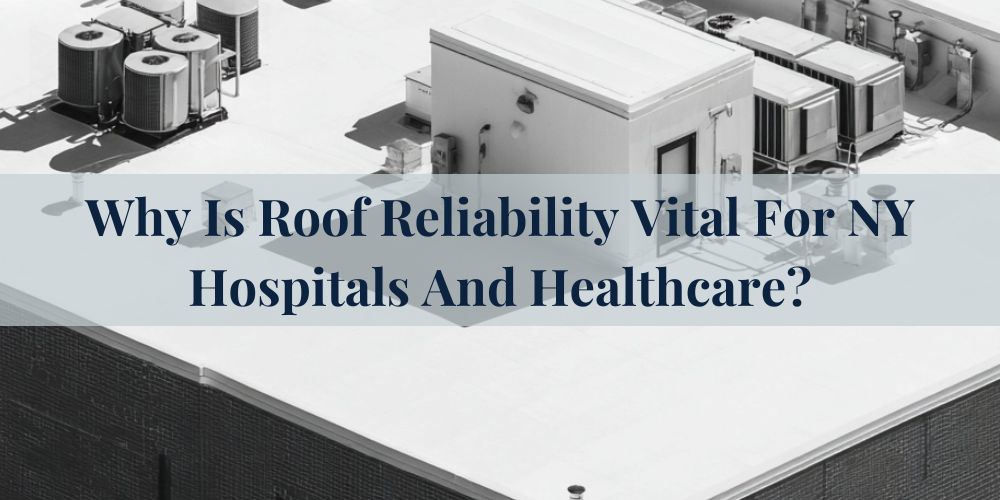
Hospitals and healthcare facilities in New York rely on their roofs to protect patients, medical equipment, and critical operations from water intrusion and temperature instability. Delivering that protection is the responsibility of Commercial Roofing New York, the company that designs, installs, and maintains roofing systems specifically for healthcare buildings across NYC. Every hospital roof built or serviced by Commercial Roofing New York is engineered to remain watertight, structurally secure, and energy efficient under constant use and extreme weather. Waterproofing, insulation, drainage, and maintenance strategies are all tailored to ensure uninterrupted care and safe indoor environments.
This article explains how Commercial Roofing New York provides reliable roofing for New York hospitals and healthcare facilities, how roof performance supports patient safety and operational continuity, and why professional roofing management is essential in this critical sector.
How Does Commercial Roofing Perform Under New York's Unique Climate Conditions?
Commercial roofing in New York is specifically engineered to withstand the city's diverse climatic conditions, demonstrating robust performance against varying thermal responses, precipitation loads, and wind patterns. These systems are designed with extensive durability, tolerant to freeze-thaw cycles, harsh sun exposure, and intense storms, all of which characterize New York's weather. Consequently, their performance heavily relies on crucial factors such as thermal cycling resistance, snow load capacity, wind uplift resistance, salt air resilience, and freeze-thaw endurance.
The performance of commercial roofing under New York's unique climatic conditions is dependent on the following key factors:
- Thermal Cycling Resistance
- Snow Load Capacity
- Wind Uplift Resistance
- Salt Air Resilience
- Freeze-Thaw Endurance
1. Thermal Cycling Resistance
Thermal cycling resistance refers to a roof's ability to sustain repeated fluctuations in temperature without degradation.
With New York's climate oscillating between hot summers and freezing winters, thermal cycling resistance is critical to the performance of commercial roofing in the city. The city's dramatic day-night temperature swings further underscore its importance.
Substantial temperature shifts cause the roof membrane and seams to expand and contract. Over time, this constant strain can lead to cracking and weakened integrity, potentially causing leaks. For example, PVC (polyvinic chloride) roofing, commonly used in New York, is highly tolerant of thermal cycling due to its flexibility and weldability, effectively mitigating the risks posed by fluctuating temperatures.
2. Snow Load Capacity
Snow load capacity is a measure of how much weight from accumulated snow a roof can support without structural damage.
In New York, heavy snowfall is a common occurrence during winter. As such, commercial roofing must have a high snow load capacity to withstand the added weight and pressure.
The strength and reliability of a roof's insulation and support structure are crucial for this capacity. The correct design and installation of these components can help prevent roof collapse or sagging due to heavy snow loads. For instance, a commercial building with a metal roofing system may employ additional purlins or utilize high-tensile steel to increase snow load capacity, reducing the likelihood of costly and dangerous structural failures.
3. Wind Uplift Resistance
Wind uplift resistance is a roofing system's ability to resist being removed or damaged by high-speed wind forces.
In the face of strong gales and summer storms frequented by New York, this resistance becomes a critical determinant of commercial roofing performance. Especially in high-rise buildings common in the city, roofs must endure higher wind speeds.
The fastening systems and the roof membrane's tear resistance are key to this factor. For instance, a TPO (Thermoplastic Olefin) roof with mechanically fastened or fully adhered application provides superior wind uplift resistance. Importantly, periodic inspections and maintenance help ensure the longevity of the fasteners and the roof's overall uplift resistance.
4. Salt Air Resilience
Salt air resilience refers to a roof's ability to resist the corrosive effects of salt-laden air.
In coastal cities like New York, salt air resilience significantly impacts the longevity and performance of commercial roofing. Corrosion from salt can accelerate wear and tear, particularly on metal components of the roof.
The application of rust-resistant coatings, such as zinc or aluminum, can enhance the resilience of these components, while the use of corrosion-resistant hardware can also bolster the roof's overall resilience. An example would be a commercial building in New York's coastal area using a coated metal type such as Galvalume for its roof, known for its resistance to salt air.
5. Freeze-Thaw Endurance
Freeze-thaw endurance is the capacity of a roofing system to withstand the relentless cycle of freezing and thawing characteristic of colder climates.
Given New York's long winters with frequent freeze-thaw cycles, commercial roofs require good freeze-thaw endurance to maintain their integrity over time. This directly impacts the performance and lifespan of New York's commercial roofs.
Roofing materials that have a high tolerance for expansion and contraction and proper roof drainage are essential for strong freeze-thaw endurance. For instance, EPDM (ethylene propylene diene terpolymer) roofing is often used in commercial applications due to its exceptional durability, flexibility, and freeze-thaw resilience. By facilitating the flow of melting snow and ice off the roof, the drainage system can also help minimize ice damming and the resulting damage.
Have a question about an upcoming project?
What Challenges to Commercial Roofing Lifespan and Maintenance Arise from NYC's Weather Risks?
New York City’s diverse and extreme weather conditions introduce unique challenges to the maintenance and longevity of commercial roofing systems. These challenges are driven by several factors that can negatively impact the integrity of the roof, its components, and consequently, its performance.
The following are the key factors that pose challenges to commercial roofing in New York due to its unique weather risks:
- Thermal Cycling and Seam Fatigue
- Hail Impact on Roof Coatings
- Wind Uplift Damage
- Snow Load and Drain Blockage
- Salt Air Corrosion
1. Thermal Cycling and Seam Fatigue
Thermal cycling refers to the expansion and contraction of roofing material due to changes in temperature.
In New York, commercial roofs experience a massive swing in temperatures, from sweltering summer highs to freezing winter lows. This extreme weather variation instigates frequent thermal cycling that influences seam fatigue in roof membranes.
The physical consequence of thermal cycling is its tendency to deform roofing materials, which is particularly damaging to membrane seams. Over time, these seams can split, allowing water intrusion that affects insulation and the underlying substrate. As a result, it intensifies the need for vigilant inspections and maintenance to ensure seam integrity, an essential feature for commercial roofs in NYC's challenging climate.
2. Hail Impact on Roof Coatings
Hail impact refers to the damage inflicted by hailstones on the surface of the roof, particularly on roof coatings.
New York experiences occasional intense hailstorms, which pose risks to commercial roofing systems. The aftermath can lead to significant impairment to the protective roof coatings and underlying membrane.
When hailstones strike, they can crack and degrade the roof's protective coatings, exposing the membrane below to harmful UV radiation and other elements. This degradation reduces the lifespan of the membrane, making hail-resistant coatings and periodic recoating critical for commercial roofing maintenance in the city.
3. Wind Uplift Damage
Wind uplift refers to the force exerted by high winds that can cause the roof to detach from the building structure.
New York City’s geographical location subjects it to periodic storms and hurricanes, making roofs vulnerable to wind uplift damage. This wind force can be particularly destructive to loosely attached or improperly installed roofing systems.
The pressure differentials during high wind events can lead to roof detachment, causing extensive damage to fasteners, flashing, and membranes. To counter this in New York, commercial roofs must be designed and installed with wind-resistant strategies, focusing on secure attachment methods and appropriate use of fasteners.
4. Snow Load and Drain Blockage
Snow load refers to the weight of accumulated snow and ice on rooftops while drain blockage relates to the obstruction caused in the roof drains by ice and debris.
NYC's harsh winters often deliver heavy snowfall, adding substantial weight to roofs and potentially clogging drains. This can strain commercial roofing systems and create pooling water once the snow melts.
The pressure from snow load can lead to structural stress on the roof and ice dam formation at drains, which hampers roof drainage. Prolonged water pooling can compromise the membrane and substrate, leading to leaks and degradation. Preventative winter maintenance in New York commercial buildings should include snow removal and ensuring that drains are clear.
5. Salt Air Corrosion
Salt air corrosion refers to the rusting and decaying of metallic components on the roof caused by airborne salt particles.
As a coastal city, New York poses a risk of salt air corrosion to commercial roofing. This is a particular threat to the metal components of the roofing system, such as fasteners and flashing.
Exposure to salt air, which carries corrosive chlorides, can accelerate the oxidation process in metallic roof elements, leading to their weakening and failure. These changes increase the risk of leaks, affect insulation effectiveness, and ultimately, the roof's lifespan. This underscores the necessity for corrosion-resistant materials in the fixtures and regular maintenance checks in commercial roofing in New York.
How to Optimize Commercial Roofing Choice and Maintenance in New York for Long-Term Value?
To optimize commercial roofing in New York for long-term value, it is important to select high-quality roofing components designed to withstand local weather conditions, and implement regular maintenance. Moreover, understanding how different factors, such as seam integrity, wind uplift resistance, thermal cycling tolerance, and drain design affect roofing performance can greatly enhance roof lifespan and value.
Let's examine the key factors that should be considered to ensure optimal choice and maintenance of commercial roofing in New York:
- Seam Integrity
- Wind Uplift Resistance
- Thermal Cycling Tolerance
- Drain Design and Maintenance
- Moisture Control Mechanisms
1. Seam Integrity
Seam integrity refers to the ability of roof seams to remain sealed and resist splitting or tearing.
This is crucial in New York's cold winters, where freeze-thaw cycles can weaken seams. A roof's longevity and performance heavily depend on its ability to maintain seam integrity.
When roofing membranes contract and expand due to temperature fluctuations, seams become vulnerable to splitting. This can lead to water ingress, potentially damaging the substrate, insulation, and interior of the building. Preventative maintenance, including regular seam inspections and immediate repairs of any detected issues, can ensure long-term roof performance.
2. Wind Uplift Resistance
Wind uplift resistance is a roof's ability to withstand wind forces without detaching from the building structure.
In New York, strong winds are not uncommon and can pose a significant risk to commercial roofs, particularly flat ones. A roof designed with high wind uplift resistance can remain secure and deliver long-term value.
Wind uplift can cause a flat roof membrane to detach from the insulation or substrate, exposing the underlying components to the elements. Reinforced membrane attachment systems and perimeter flashings can enhance wind uplift resistance, minimizing risks of wind-related damage.
3. Thermal Cycling Tolerance
Thermal cycling tolerance is the degree to which a roof can endure repeated cycles of heating and cooling without losing its integrity.
New York's wide range of temperatures demands that commercial roofs have high thermal cycling tolerance. Low-tolerance roofs can result in premature aging and increased maintenance costs over time.
Roofing systems undergo stress and strain due to expansions and contractions with temperature changes. This can cause splitting in the membrane, undermining the roof's waterproofing ability. Selecting roofing materials with high thermal cycling tolerance, such as ethylene propylene diene terpolymer (EPDM), can help optimize long-term roof performance.
4. Drain Design and Maintenance
Drain design and maintenance relate to how effectively a roof sheds rainwater, preventing pooling and saturation of the roof's components.
New York's unpredictable rainfall requires careful attention to drain design and regular maintenance, essential for maintaining a roof's longevity and value.
Insufficient drainage can cause ponding water on flat roofs, which imposes additional weight and can lead to roof collapse. Moreover, standing water can degrade roofing materials over time, causing leaks and structural damage. Regular drainage clearance and inspection help ensure the optimal function of roof drains, preventing water-related problems and extending the roof's lifespan.
5. Moisture Control Mechanisms
Moisture control mechanisms refer to the methods used to manage and prevent the intrusion of moisture into the roof system.
Given New York's humid climate, especially in the summer, strong moisture control mechanisms are critical for long-term commercial roofing value.
Without sufficient moisture control, condensation can accumulate within the roofing layers, leading to corrosion, decay, and mold growth. Moisture can also compromise the insulation's performance, making temperature control in the building more challenging. By incorporating a vapor barrier and proper ventilation in the roof design, and maintaining them regularly, building owners can effectively control moisture levels and extend their roof's longevity.
Need Help With Commercial Roofing For Healthcare Facilities In New York?
The reliability of commercial roofing in healthcare facilities across New York City is pivotal for managing operational risks, optimizing building performance, and reducing long-term costs. Building owners and facility managers should be cognizant of the vital role roofs play. Issues such as poorly installed flashing and inadequate drainage can exacerbate the detrimental impacts caused by the city's freeze-thaw cycles and heavy wind uplift. These vulnerabilities underline the absolute necessity of robust and dependable roofing structures for hospitals and healthcare facilities operating in the unique New York climate.
Don't let aging roofs or the upcoming storm season put your hospital or healthcare facility at risk. Reach out to Commercial Roofing New York to mitigate potential hazards before they transform into crippling problems. We urge you to use the contact form to discuss the specific needs of your institution and schedule an inspection, assessment, or consultation. Our professional team is dedicated to delivering the dependable roofing services your facility requires to continue serving the New York community confidently and securely.